


A trading loss becomes dangerous when it changes how you make the next decision. That is the real subject of this guide to trading loss recovery. The objective is not to erase a red day quickly. It is to restore the conditions that let you execute a repeatable process: defined risk, appropriate size, clear structure, and a mind that is not negotiating with the last trade.
For active SPX and 0DTE traders, this matters even more. Expiration-day options move fast. A normal loss can feel personal because the feedback is immediate. But a planned loss is not proof that your framework failed. It is one sample from a distribution. The damage usually begins when a trader tries to turn that sample into a verdict.
Trading Loss Recovery Starts With Containment
Do not begin recovery by looking for a better trade. Begin by stopping the behavior that can turn a manageable drawdown into an account-level problem. This is how you reduce revenge trading.
That means no doubling size to get back to even. No widening a planned exit because the position “has to come back.” No adding risk to a losing defined-risk structure just because the loss is uncomfortable. And no jumping into a fresh setup because sitting flat feels like failure.
A loss limit only works if it changes your behavior. If you have reached the amount of risk you allocated for the session, the trade is over. Close the platform if necessary. Your ability to trade tomorrow is more valuable than forcing an answer from the market this afternoon.
This is not timid trading. It is professional inventory management. A trader who protects capital and decision quality after a loss has preserved the only things needed to participate in the next valid opportunity.
Separate a Normal Loss From a Process Failure
Not every losing trade requires the same response. This distinction is where most recovery efforts go wrong. Traders often overhaul a viable framework after ordinary variance, while ignoring the execution errors that actually need attention.
A normal loss occurs when you followed the plan. The entry met your structural criteria. The position size matched your risk budget. The risk was defined before entry. You managed the trade according to the rules, and the market moved against the structure. That outcome belongs in the data. It does not require revenge, shame, or a new strategy by tomorrow morning.
A process failure is different. Maybe you traded outside your approved time window. Maybe you sized up because you felt confident. Maybe you entered before confirming the market context, adjusted without a rule, or held past the maximum loss you had already defined. The market did not create that error. Your operating process allowed it.
The response should fit the diagnosis. A normal loss calls for continued disciplined execution. A process failure calls for a specific correction before the next trade. Do not treat both as the same event.
Ask Better Post-Trade Questions
The wrong question is, “Why did I lose?” Markets can move in ways no setup captures perfectly.
Ask instead: Did I take the trade I intended to take? Was the risk known and acceptable before entry? Did my size let me manage without panic? Did I follow the adjustment or exit rule? Was the market environment consistent with the premise?
Those questions move the review from prediction to accountability. They also produce answers you can act on.
Cut Size Before You Try to Recover
After a drawdown, smaller size is not punishment. It is a diagnostic tool.
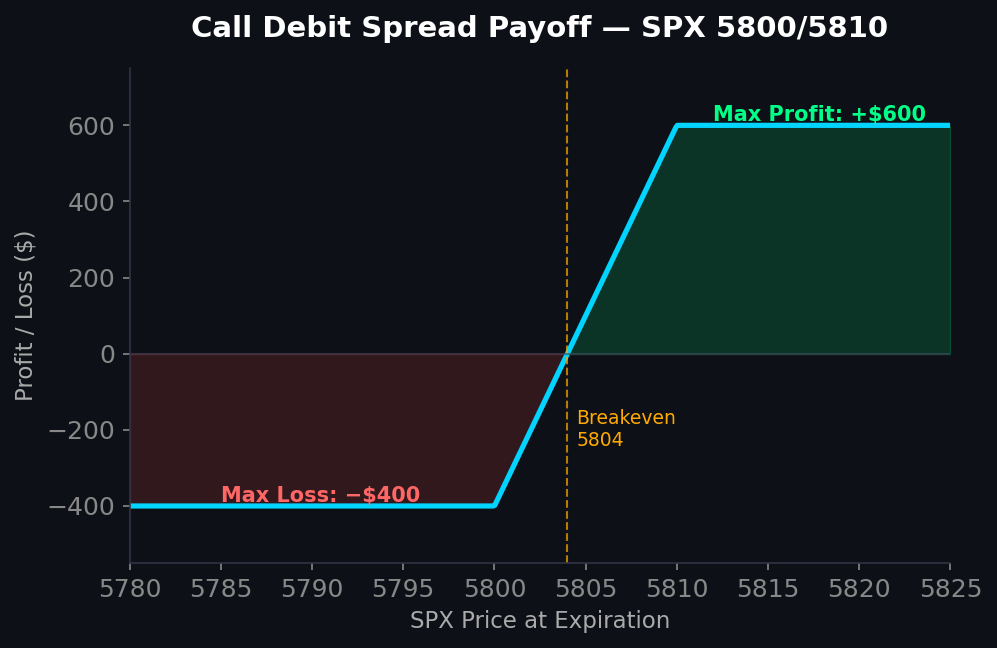
When size is too large, every tick becomes emotionally loaded. You stop reading the market and start watching your P&L. That is especially destructive in 0DTE trading, where price can move quickly and a small delay in judgment can turn into a poor decision. Reduced size creates room to observe, execute, and review without the pressure to be immediately right. Here is a concrete risk sizing example.
There is no universal percentage or contract count that fits every trader. It depends on account size, the maximum defined loss of the structure, your total exposure, and how much decision stress you are carrying. The useful test is simple: if a full planned loss causes you to abandon your rules, the position is too large. The OCC’s options education grounds the defined-risk mechanics.
Trade at a size where a loss is information. Not trauma.
For some traders, recovery means taking only one planned trade for several sessions. For others, it means keeping the same number of trades but reducing the risk allocated to each. The correct choice depends on whether the problem is overtrading, oversizing, poor setup selection, or a broader lack of structure.

Rebuild Around One Repeatable Setup
A drawdown is the worst time to become experimental. Adding new indicators, scanning social media for a hot thesis, and rotating through structures creates noise when you need clean feedback.
Return to one setup you can define in plain language. For an index-options trader, that may mean identifying the relevant positioning, mapping key levels, choosing a defined-risk structure that fits the expected range or directional pressure, and knowing the maximum loss before the order is placed. The exact structure matters less than whether you can explain why it belongs in your framework. Confirm the SPX contract on the Cboe product page.
Positioning matters because it gives you a way to organize market conditions without pretending to predict every move. GEX, key strikes, volatility conditions, and intraday behavior can provide context. They are not commands. They do not eliminate uncertainty. They help you decide whether your setup has a place in the current market.
Not signals. Not alerts. A decision process you can run yourself.
During recovery, resist the urge to make every market day tradable. Some sessions will not offer conditions that match your plan. Staying flat is an execution decision, not a missed opportunity. The trade you avoid can be as valuable as the trade you take.
Use a Recovery Review That Produces Evidence
A trade log should do more than record profit and loss. If all you review is the dollar result, you will keep training yourself to chase outcomes.
Record the structural context before entry, your planned risk, your reason for selecting the trade, and the management rule you intended to follow. Afterward, note whether the result came from market variance or an execution issue. Keep the language factual. “Entered early before confirmation” is useful. “I was stupid” is not.
Then review a meaningful sample, not one emotional day. A handful of trades can expose a clear rule violation, but it cannot reliably prove that a sound framework has stopped working. Look for repeated patterns: size creeping up after wins, exits delayed after losses, entries taken away from key levels, or trades placed when the market context was unclear.
If the same mistake appears three times, do not write a longer journal entry. Create a constraint. That might mean a hard maximum size, a required pre-trade checklist, a limit on the number of entries, or a mandatory pause after a loss. Good rules reduce the number of decisions you must make while stressed.
Measure Execution Before Outcome
Your recovery scorecard should include execution measures alongside P&L. Did you respect the maximum risk? Did you trade only approved conditions? Did you follow your plan without discretionary improvisation? Did you stop when your session rules said to stop?
A profitable trade with poor execution is not a success worth repeating. That is the heart of process versus outcome trading. A planned loss executed correctly is. This is the mindset shift that removes the risk of ruin from the center of your trading life and puts process there instead.
Do Not Borrow Confidence From the Next Trade
Many traders want the next winner to prove they are back. That need creates pressure, and pressure creates bad selection. A single profitable trade does not repair a broken process. A single loss does not discredit a sound one.
Confidence should come from evidence: you defined risk, chose appropriate size, followed the framework, and reviewed the result honestly. Repeat that enough times and confidence becomes less emotional. It becomes earned trust in your own operating system.
That is the point of recovery. Not to feel certain about the next trade, but to become the trader who can take it without needing certainty. The market will keep offering uncertainty. Your job is to meet it with a structure that keeps one loss from deciding what happens next.
Frequently Asked Questions
How do you recover from a trading loss?
Start with containment, not a better trade: stop the behavior that turns a drawdown into an account-level problem, honor your daily loss limit, cut size, rebuild around one repeatable setup, and run a review that produces evidence. Recovery restores the conditions for a repeatable process, not a fast erase of a red day.
Should you increase size to recover a loss faster?
No. Doubling size to get back to even, widening a planned exit, or adding risk to a losing structure is how a manageable drawdown becomes an account-level problem. A single winner does not repair a broken process, and a single loss does not discredit a sound one.
How do you tell a normal loss from a process failure?
A normal loss happens when you followed the plan: valid entry, correct size, defined risk, rules-based management, and the market simply moved against the structure. A process failure is trading outside your window, sizing up on confidence, entering before confirmation, or holding past your defined maximum loss. Match the response to the diagnosis.
Why cut size after a drawdown?
Smaller size is a diagnostic tool, not punishment. When size is too large you stop reading the market and start watching your P&L, which is destructive in fast 0DTE conditions. Trade at a size where a loss is information, not trauma, using the test: if a full planned loss makes you abandon your rules, it is too large.
What should a recovery trade review measure?
Execution alongside profit and loss: did you respect maximum risk, trade only approved conditions, follow the plan without improvisation, and stop when session rules said to. Review a meaningful sample for repeated patterns, and if the same mistake appears three times, create a constraint rather than a longer journal entry.
FATTAIL BRIEFINGS
Get FatTail briefings in your inbox
Pick the lists you want. FOMC Alerts is selected by default.