


A planned 0DTE SPX loss can feel personal when it happens fast. You had a thesis. You waited for the setup. Then price moved, the structure reached its defined loss, and suddenly the next trade feels like a chance to make the day right.
That is the moment when traders need to know how to reduce revenge trading. Not with a motivational quote or a promise to be more disciplined tomorrow. With an operating system that makes emotional escalation harder to execute.
Revenge trading is not simply taking another trade after a loss. A second trade may be completely valid. Revenge trading begins when the need to erase a feeling replaces the conditions required by your plan. You are no longer managing risk. You are negotiating with the market. This is the heart of recovering from a drawdown.
Why Revenge Trading Is So Expensive in 0DTE
0DTE options compress time, movement, and decision-making into a single session. That is precisely why they demand structure. A position that is sensibly sized and defined-risk can be managed as planned. The OCC’s options education is a good grounding in the defined-risk structures behind that. An oversized position can turn a normal move into a threat response.
After a loss, many traders make the same error: they try to recover the prior loss by increasing size, relaxing entry criteria, or taking a structure they do not fully understand. They often call it being aggressive. It is not aggression. It is abandoning the math because the outcome hurt.
The market does not know your entry, your daily P&L, or what you think you are owed. It will not provide a clean recovery simply because you were wrong on the last trade. A trader who accepts that quickly has an advantage over the trader searching for justice.
The goal is not to eliminate losses. That is fantasy, and chasing it creates the very behavior you are trying to stop. The goal is to make each planned loss small enough, ordinary enough, and documented enough that it does not get to rewrite your next decision.
Reduce Revenge Trading Before the Opening Bell
You cannot rely on willpower at the exact point your nervous system is activated. The best defense is installed before the first position is opened.
Start with a daily loss limit that is meaningful relative to your account and your strategy. This is not a vague intention to “be careful.” It is a predefined point at which you are done placing new risk for the session. A daily stop is not a prediction that the market will stay difficult. It is protection against the version of you who wants to force a resolution.
Then define risk per trade in advance. If one normal loss makes you feel an urgent need to win it back, your position size is too large. This is why small risk per trade matters. Reduce it. A smaller loss may feel less exciting, but excitement is not the job. Staying capable of executing the next qualified setup is the job.
Your entry conditions need equal clarity. In SPX 0DTE, that may include your view of positioning, key levels, expected range, structure selection, maximum risk, and the reason the setup fits current conditions. When those conditions are not present, there is no trade. Not signals. Not alerts. Not a chart that “looks ready.”
Write your rules in language that leaves little room for mid-session improvisation. The more subjective your plan, the easier it is to bend after a loss.
Use a Reset Protocol After Every Loss
A loss does not require a dramatic reaction. It requires a short review. Build a repeatable reset protocol that separates a valid planned loss from a process failure.
After a position closes, step away from the order-entry screen long enough to interrupt the impulse to click again. Then answer four questions:
- Did the trade meet every entry requirement before I entered?
- Was the maximum risk and position size within my plan?
- Did I manage the position according to predefined rules?
- Is a new setup present now, independent of the trade that just lost?
The first three questions classify the completed trade. The fourth question determines whether you have permission to place another one.
If the trade was valid and lost, record it as a planned rep. See how to manage a losing streak. The market produced an unfavorable outcome inside a process designed to contain it. Nothing needs to be repaired. If the trade violated your rules, do not try to fix the error with another trade. Fix the error by stopping, documenting it, and adjusting the process outside market hours.
This distinction matters. A process loss calls for acceptance. A discipline loss calls for accountability. Neither calls for immediate retaliation.

Make Size Boring Again
Revenge trading usually becomes visible in the trade after the loss, but it often starts with the first position being too large. Oversizing makes every fluctuation feel consequential. It turns a risk graph into an emotional trigger.
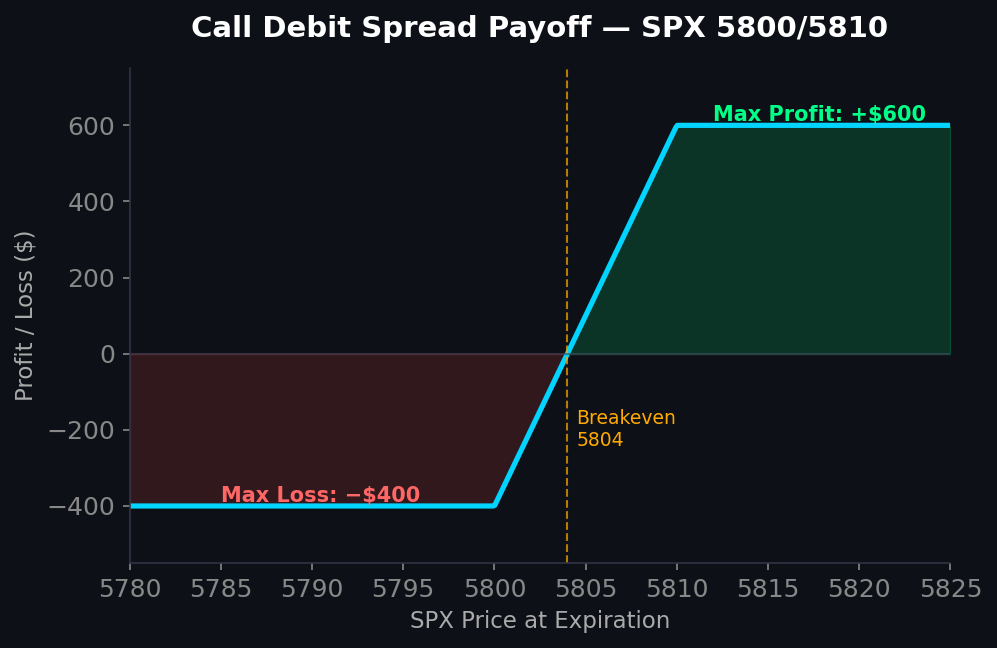
Defined-risk structures are useful because they make the maximum loss knowable at entry. But defined risk is not the same as appropriate risk. A trade can have a capped loss and still be far too large for your account, your daily limit, or your ability to execute calmly.
Size should let you follow the plan when the trade is uncomfortable. Investor-education bodies like the SEC stress predefined risk limits for exactly this reason. If you cannot watch a normal adverse move without changing your rules, cutting too early, adding impulsively, or searching for a new trade to offset it, the size is not professional for you yet.
There is a trade-off here. Smaller size will make each winning day less dramatic. Good. Dramatic days are often expensive training for bad habits. Your first objective is durability: the ability to take a sequence of outcomes without putting the account or the process at risk.
Stop Scoring Yourself by Today’s P&L
Revenge trading feeds on a narrow scoreboard. When your only score is whether you are green or red by the close, a normal losing trade feels like a verdict on your competence.
Use process metrics instead. Track whether you entered only qualified setups, sized correctly, respected defined risk, followed management rules, and stopped when your daily limit or rule set required it. These are actions under your control. Daily P&L is not.
This is not an excuse to ignore results. Results matter over a meaningful sample. But one session cannot prove that your framework works or that it has failed. A sample of trades, recorded consistently and reviewed honestly, can tell you whether your assumptions, structure selection, and execution need improvement.
FatTail.ai teaches traders to use trade logs and risk tools for this reason. The point is not to admire analytics after the fact. It is to find the recurring moment where your process breaks: entering outside your plan, using too much size, holding past a rule, or trading again because a loss made you uncomfortable.
Know When a Second Trade Is Valid
A common overcorrection is deciding that any trade after a loss is revenge trading. That is not true. If your framework allows multiple independent setups in a day, passing every later opportunity because the first trade lost can also be emotional decision-making.
The test is simple: would you take this exact trade if the prior one had been a winner? If the answer is no, do not take it. If the answer is yes, confirm that it fits your size limits, daily risk limits, and defined entry rules.
A valid second trade is based on current market information. A revenge trade is based on the emotional residue of the last one. Those are not subtle differences when you write them down.
Build Accountability Into the Routine
Private rules are easy to reinterpret. A documented routine is harder to escape. Before the session, state your conditions and risk limits. During the session, record entries and management decisions. After the session, review both winning and losing trades without treating either as proof of identity.
Look for language that reveals emotion: “I had to get it back,” “I knew it would reverse,” or “I could not end red.” Those phrases are not market analysis. They are warnings that your decision-making has shifted from probability to pride. Managing that shift is a mindset skill; our trading psychology reading list helps.
You do not need to become emotionless to trade well. You need a process that recognizes emotion without handing it the controls. Defined risk, correct size, a daily stop, and a post-loss reset give you that structure. That is core risk management.
The next time a planned loss lands, let it be what it is: one contained outcome in a larger body of work. Close the position. Review the process. Then earn the right to take the next trade.
Frequently Asked Questions
What is revenge trading?
Not simply taking another trade after a loss, a second trade can be valid. Revenge trading begins when the need to erase a feeling replaces the conditions required by your plan. You stop managing risk and start negotiating with the market, usually by oversizing or relaxing entry criteria.
How do you reduce revenge trading?
Install the defenses before the opening bell: a meaningful daily loss limit, defined risk per trade small enough that one loss does not create urgency, and clear entry conditions with no room for improvisation. You cannot rely on willpower once your nervous system is activated.
What is a reset protocol after a loss?
Step away from the order screen long enough to interrupt the impulse, then answer four questions: did the trade meet every entry requirement, was risk and size within plan, did you manage to predefined rules, and is a new setup present now independent of the trade that just lost?
When is a second trade after a loss valid?
The test: would you take this exact trade if the prior one had been a winner? If no, do not take it. If yes, confirm it fits your size limits, daily risk limits, and entry rules. A valid second trade is based on current information; a revenge trade is based on the emotional residue of the last one.
How do you know if you are revenge trading?
Watch your own language: “I had to get it back,” “I knew it would reverse,” “I could not end red.” Those are not market analysis, they are signs your decision-making has shifted from probability to pride. Scoring yourself only by today’s P&L feeds the behavior.
FATTAIL BRIEFINGS
Get FatTail briefings in your inbox
Pick the lists you want. FOMC Alerts is selected by default.