


Most traders learn how to sell covered puts as the first step of the wheel strategy — sell a put on a stock you want to own, get paid while you wait, and buy at a discount if assigned. The concept is sound. The execution is where most traders fail because they skip the structural context that determines whether the premium is worth the obligation.
A covered put — more accurately called a cash-secured put — means you sell a put option while holding enough cash to buy 100 shares if assigned. The “covered” part refers to the cash reserve, not a stock position. Understanding how to sell covered puts properly means understanding when the premium landscape favors the seller, when skew is working for or against you, and when the gamma environment supports stability over chaos.
How to Sell Covered Puts: The Mechanics
When you sell a covered put, you collect premium upfront and accept the obligation to buy 100 shares at the strike price if the option is exercised. Your cash reserve covers the potential purchase. If the underlying stays above your strike through expiration, the put expires worthless and you keep the full premium. If it drops below, you buy shares at an effective cost basis of the strike price minus the premium collected.
The maximum profit is the premium received. The maximum loss occurs if the underlying drops to zero — you would own worthless shares purchased at the strike price, offset only by the premium collected. In practice, selecting quality underlyings and appropriate strikes makes this theoretical maximum irrelevant. The real risk is buying shares at a price that the market then pushes significantly lower.
This is the foundation of every put selling strategy. You are not betting on direction. You are accepting a price you would be comfortable paying for the underlying, collecting premium for that willingness, and letting time decay work in your favor.
Why Covered Puts Belong in a Portfolio Strategy
The covered put is not a trading strategy. It is an acquisition strategy. This distinction matters because it changes every decision — strike selection, underlying choice, position sizing, and management.
Traders who sell covered puts on stocks they would never want to own are speculating on premium, not investing. When assignment happens — and it will — they are stuck holding shares they do not want at a price the market has moved below. The premium collected becomes a footnote in a larger loss.
Structural traders approach covered puts differently. They identify underlyings they want to own at specific prices, then sell puts at those prices to get paid while they wait. If assigned, they own shares they wanted at a price they chose. If not assigned, they collect premium and repeat. The selling strategy works because the outcome is acceptable regardless of which way the underlying moves.
This is why covered puts pair naturally with the wheel strategy. Sell puts until assigned. Once assigned, sell covered calls against the shares. Collect premium in both directions. The wheel works because every outcome is a planned outcome — not a surprise.
Strike Selection for Covered Puts
Strike selection is where most covered put sellers make their biggest mistake. They chase premium by selling strikes too close to the money, then panic when assignment becomes likely. The correct approach starts with the price you want to pay, not the premium you want to collect.
Start with your target buy price. If you want to own a stock currently trading at $150 but would only buy at $135, sell the $135 put. The premium you collect — perhaps $2.00-$3.00 depending on DTE and VIX levels — reduces your effective buy price to $132-$133. You are getting paid to place a limit order.
Use the expected move as a guide. The expected move tells you the range the market is pricing in for a given expiration. Selling puts inside the expected move means the market considers assignment plausible. Selling outside the expected move means assignment requires a larger-than-expected decline. Both are valid approaches depending on conviction.
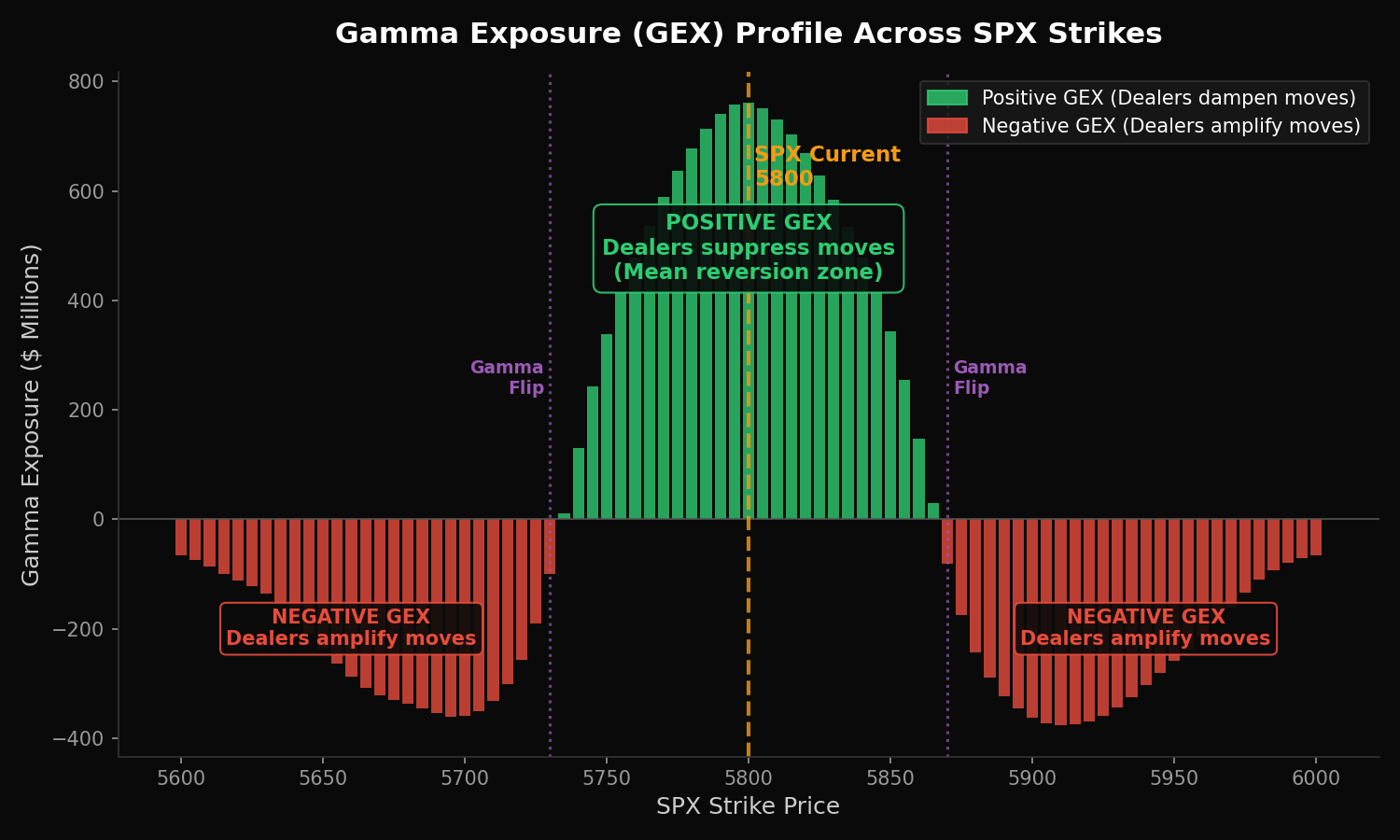
Check GEX levels for structural support. Place strikes at or near levels where positive dealer gamma creates natural support. These are prices where dealer hedging activity dampens declines — the structural floor that protects your short put. If a GEX level sits at $138 and you sell the $135 put, you have structural support above your strike.
Avoid earnings windows. Selling covered puts into earnings announcements is a common trap. The premium is rich because the risk is real. A post-earnings gap below your strike creates immediate assignment at a price that may take quarters to recover. If you want premium around earnings, use credit spreads to define the risk.
How to Sell Covered Puts in Different VIX Regimes
The VIX determines how much premium you collect and how likely assignment becomes. Both variables shift with the volatility regime.
Low VIX (below 15). Premiums are thin. A 30-day covered put might collect $0.80-$1.20 on a $100 stock. The probability of assignment is low, but the income barely justifies the capital tied up. In this environment, the structural case for covered puts is weak. The premium does not adequately compensate for the tail risk of a volatility spike that moves the underlying well below your strike.
Moderate VIX (15-22). The sweet spot for covered put sellers. Premiums are meaningful — $2.00-$4.00 on a $100 stock at 30 DTE. The elevated volatility provides enough premium to create a genuine discount on your target buy price. Furthermore, moderate VIX environments tend to be stable. The premium landscape rewards sellers without exposing them to the regime shifts that destroy positions.
High VIX (above 25). Premiums are extremely rich, but the environment is dangerous. High VIX means the market is pricing in large moves. Selling covered puts here can work — you collect substantial premium and your effective buy price drops significantly. However, if the underlying drops 15-20%, assignment at your strike minus premium is still a losing position. High VIX covered puts require conviction in the underlying and willingness to hold through extended drawdowns.
Managing Covered Puts After Entry
The management approach for covered puts is simpler than for most options strategies because the outcome is binary: you either keep the premium or you buy the shares. Both outcomes should be acceptable at entry.
Take profits at 50-75%. If the put decays to 25-50% of its original value quickly, close it and redeploy. Holding to expiration ties up capital for diminishing returns and exposes you to late-expiration gamma risk.
Roll down and out if threatened. If the underlying drops toward your strike and you no longer want assignment at that price, roll the put down (lower strike) and out (later expiration) for a credit. This extends the trade while lowering your effective buy price. Only roll if the credit justifies the capital commitment and the extended timeline.
Accept assignment when appropriate. If the underlying hits your strike and you still want to own shares at that effective price, let assignment happen. This is not a failure — it is the planned outcome. Immediately begin selling covered calls against the assigned shares to continue collecting premium.
Monitor the skew environment. Steepening skew means the market is pricing in more downside risk. If skew steepens significantly while your covered put is open, reassess whether your strike still represents a price you would be comfortable paying. The market is telling you something — listen.
Covered Puts vs Naked Puts vs Spreads
The mechanics of a covered put and a naked put are identical — you sell a put option. The difference is whether you hold cash to cover assignment. However, this distinction matters for risk management and psychology.
Covered (cash-secured) puts force discipline. The capital is set aside. You cannot allocate it elsewhere. This natural constraint prevents overextension — a common failure mode for put sellers who use margin to sell more contracts than their account can support.
Naked puts use margin, freeing capital for other positions. The risk is identical, but the temptation to over-leverage is real. A margin call during a market selloff forces you to close positions at the worst possible time.
Credit spreads (bull put spreads) add a long put below the short put, capping maximum loss. This is the defined-risk alternative for traders who want premium income without the full capital commitment of cash-secured puts. The credit collected is smaller, but the risk-reward ratio is often superior.
For portfolio-level covered put selling, the cash-secured approach is structurally sound. For tactical premium collection, spreads are more capital-efficient. Both belong in a complete options selling toolkit.
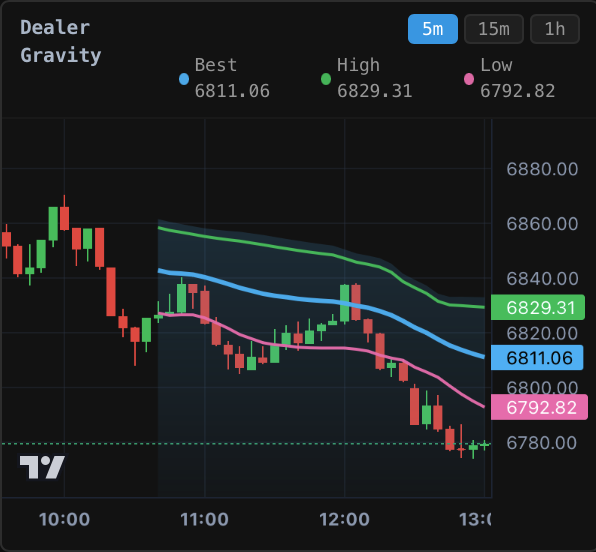
The daily pre-market analysis in Observer ($17/week) provides the structural context for every covered put decision — GEX profile, VIX regime, expected move, and dealer gravity levels. Activator ($97/month) adds real-time tools and weekly coaching. Navigator ($267/month) provides daily direct coaching with Ernie. Compare all plans here.
The Bottom Line
Learning how to sell covered puts is not about chasing premium on whatever stock has the highest implied volatility. It is about identifying underlyings you want to own, selecting strikes at prices you would happily pay, and collecting premium while the market pays you to wait. The structural context — GEX regime, VIX level, skew environment — determines whether the trade has genuine edge or is simply gambling with a comfortable-sounding name.
Deploy covered puts in moderate VIX with positive gamma. Avoid them in high-VIX panic environments unless you have deep conviction in the underlying. Accept assignment as a feature, not a flaw. Every other approach to selling covered puts treats the premium as the goal when it should be treated as a bonus.
That structural read starts with Observer ($17/week): daily GEX profiles, gravity levels, expected move, and VIX context. Activator ($97/month) adds real-time tools and weekly coaching. Navigator ($267/month) provides daily direct coaching with Ernie. Compare all plans here.
Frequently Asked Questions
What is a covered put in options trading?
A covered put — also called a cash-secured put — means selling a put option while holding enough cash to buy 100 shares if assigned. You collect premium upfront. If the underlying stays above your strike, you keep the premium. If it drops below, you buy shares at your strike price minus the premium collected. The cash reserve “covers” the obligation.
How much capital do you need to sell covered puts?
You need enough cash to buy 100 shares at the strike price per contract. For a $50 stock at a $45 strike, that means $4,500 in cash reserves. For a $200 stock at a $180 strike, that means $18,000. The capital requirement makes covered puts most practical on lower-priced underlyings or in accounts with substantial cash allocations.
Is selling covered puts a good income strategy?
It can generate consistent income in the right environment — moderate VIX, positive GEX, and stable underlyings. However, treating it purely as income ignores the real risk of assignment in declining markets. The best approach uses covered puts as an acquisition tool — collecting premium while waiting to buy shares you want to own at prices you have chosen.
What happens when a covered put gets assigned?
You buy 100 shares of the underlying at the strike price. Your effective cost basis is the strike price minus the premium you collected. If you sold a $50 put for $2.00 and get assigned, your effective purchase price is $48 per share. After assignment, many traders immediately sell covered calls against the shares to continue generating income — this is the wheel strategy.
Should you sell covered puts during earnings?
Generally no. Earnings create binary outcomes that override structural support. The premium is elevated because the risk is real — a post-earnings gap can move the underlying well below your strike. If you want put premium around earnings, use defined-risk structures like credit spreads that cap your downside rather than accepting unlimited assignment risk.
FATTAIL BRIEFINGS
Get FatTail briefings in your inbox
Pick the lists you want. FOMC Alerts is selected by default.