


Every options education site explains how to sell put options the same way: collect premium, hope the stock stays above your strike, repeat. That version is incomplete. It treats put selling as a passive income strategy and ignores the structural forces that determine whether the trade actually works — skew, dealer positioning, and the volatility regime that defines every premium dollar you collect.
Selling puts is not inherently bullish. It is a bet on stability. The distinction matters because the risk profile of a short put is fundamentally different from a long stock position, even though both profit when the underlying stays flat or rises. Understanding how to sell put options means understanding when the environment supports premium collection — and when it sets a trap.
How to Sell Put Options: The Core Mechanics
When you sell a put option, you accept the obligation to buy the underlying at the strike price if assigned. In exchange, you collect premium upfront. If the underlying stays above your strike through expiration, the option expires worthless and you keep the full premium. If it drops below the strike, you either buy the shares at an effective cost basis of strike minus premium (cash-secured) or face losses that accelerate as the underlying falls (naked).
The maximum profit is fixed — the premium collected. The maximum loss is substantial — the underlying can theoretically drop to zero. This asymmetry is the defining feature of every premium collection strategy. You win frequently but in small amounts. You lose infrequently but in large amounts. The math only works when you choose the right environment for the trade.
Two structural variants exist. A cash-secured put means you hold enough cash in the account to buy 100 shares at the strike price if assigned. A naked put means you sell without that cash reserve, using margin instead. The risk profile is identical — the only difference is how the broker handles collateral. Both variants require the same structural analysis before entry.
Why Most Put Selling Advice Is Wrong
The standard approach to selling puts treats it as a mechanical process: sell 30-45 DTE puts at the 0.30 delta strike, collect premium, manage at 50% profit or 200% loss. This mechanical approach ignores everything that actually determines whether the trade succeeds.
The premium you collect is not random. It reflects the market’s pricing of risk at that specific strike and expiration. When premiums are rich, it usually means the market is pricing in genuine risk — elevated VIX, steep skew, negative gamma exposure. Selling into that environment means collecting premium precisely when the market structure supports the move that would destroy your position.
Conversely, when premiums are thin, the market is pricing in stability. The income per contract is lower, but the probability of that income materializing is structurally higher. Most put sellers chase rich premiums without understanding why those premiums are rich. This is the core mistake. The premium framework that works is not about maximizing premium — it is about matching your trade to the regime.
How Skew Affects Put Selling
Options skew directly determines the premium landscape for every put you sell. Out-of-the-money puts carry higher implied volatility than equidistant calls because institutional hedging demand, crash risk asymmetry, and dealer pricing all inflate downside protection.
For put sellers, this creates a paradox. The elevated IV on OTM puts means you collect more premium than a symmetric model would suggest. Steep skew inflates your credit. However, that same steep skew exists because the market is pricing in genuine downside risk. The premium is rich because the danger is real.
Structural traders read skew as context, not as opportunity. Steep skew in a negative gamma environment means dealer hedging will amplify any decline — precisely the scenario that crushes short put positions. Flat skew in a positive gamma environment means the structure supports stability — the ideal regime for collecting premium.
The 25-delta risk reversal tells you how expensive puts are relative to calls. When it widens beyond its 30-day average, put premiums are elevated. When it narrows, they are compressed. Put sellers who ignore this signal are flying blind. They collect premium without knowing whether the structural environment supports the trade.
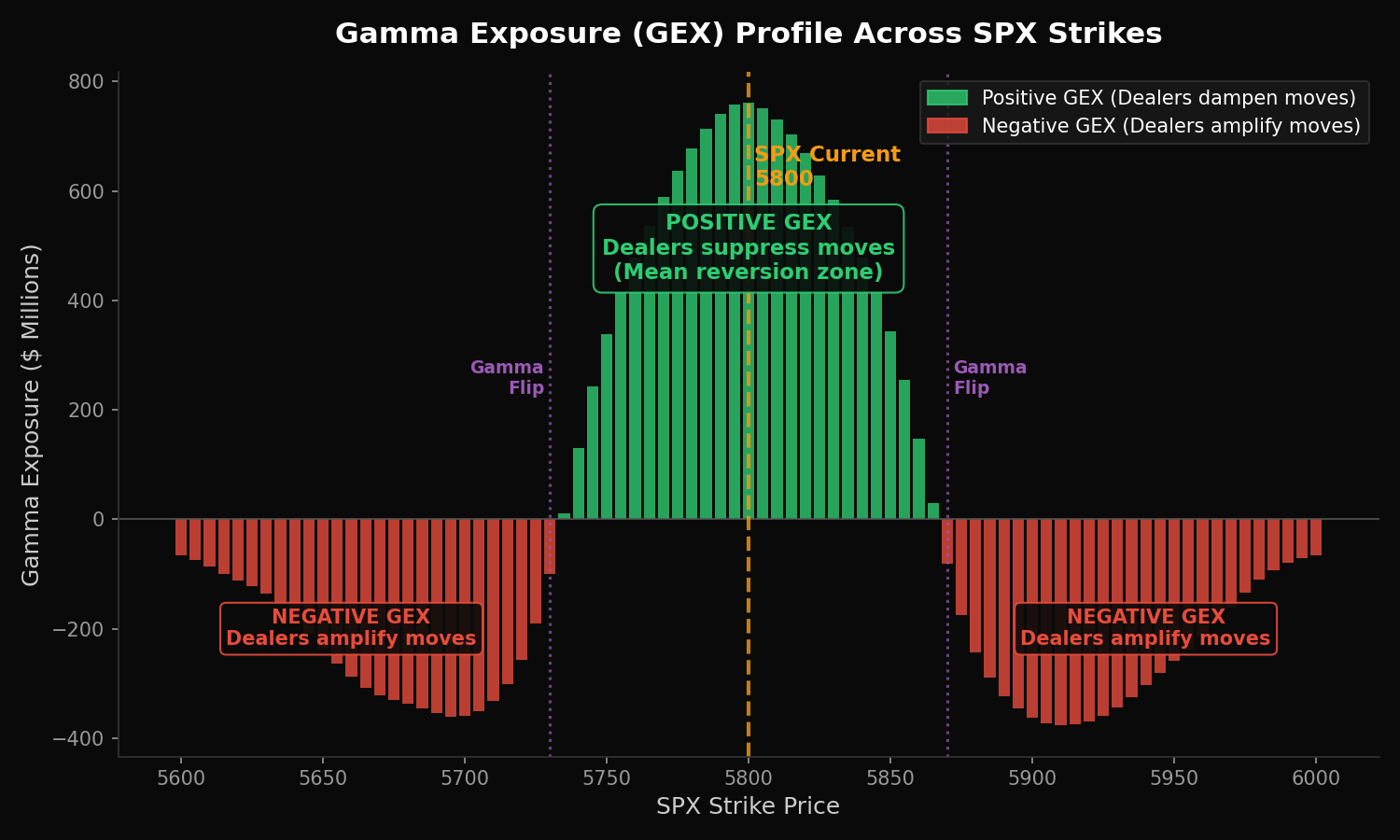
The GEX Regime and Put Selling
Gamma exposure is the single most important variable for put sellers. It determines whether the market structure will protect your position or destroy it.
In a positive GEX regime, dealers are long gamma. When the underlying drops, dealers buy the dip to hedge. When it rises, dealers sell the rip. This creates mean reversion — the structural floor that makes premium collection work. In this environment, selling puts is supported by the market microstructure itself. Moves are dampened. Your short puts decay in a range-bound market. This is where the selling strategy generates consistent returns.
In a negative GEX regime, dealers are short gamma. When the underlying drops, dealers sell to hedge — amplifying the decline. There is no structural floor. Moves accelerate. Selling puts in this environment means your position faces unlimited downside amplification from the very market makers who are supposed to provide liquidity. The premium you collected becomes irrelevant when a 2% drop turns into a 5% drop because of negative gamma feedback.
The GEX flip level — the price where dealer positioning shifts from positive to negative gamma — is the critical reference point. Selling puts below the GEX flip is structurally dangerous. Selling puts above it is structurally supported. This context is more important than any strike selection formula.
When to Sell Put Options and When to Avoid
The environment dictates the trade. Understanding how to sell put options starts with recognizing the regimes that support the strategy — and the ones that do not.
Sell puts when: VIX is in the 15-22 range (elevated enough for decent premium, not so high that regime shifts are likely). GEX is positive above the market. Skew is flat to moderately steep. The expected move is contained. No major catalysts are imminent.
Avoid selling puts when: VIX is above 25 and rising. GEX is negative at or below the market price. Skew is steep and steepening. Order flow shows institutional put buying is accelerating. Earnings or FOMC are within the option’s expiration window.
Scale down when: VIX is below 13 (premiums are too thin to compensate for tail risk). The market has rallied aggressively for multiple weeks without a pullback (mean reversion risk increases). The premium selling edge evaporates when there is no premium worth selling.
The worst put selling losses come from ignoring regime. Traders sell puts mechanically — same strike, same DTE, every week — and eventually hit the one week where the structure is actively working against them. A single loss can erase months of premium collected.
Put Selling vs Credit Spreads
Most traders who learn how to sell put options eventually face the same question: naked (or cash-secured) puts vs credit spreads. The choice is not about preference. It is about risk tolerance and capital efficiency.
A cash-secured put ties up significant capital. Selling one SPX put at a 5,000 strike requires $500,000 in cash collateral. The premium collected might be $500-$1,500 depending on the strike and DTE. The return on capital is small. The theoretical maximum loss is enormous.
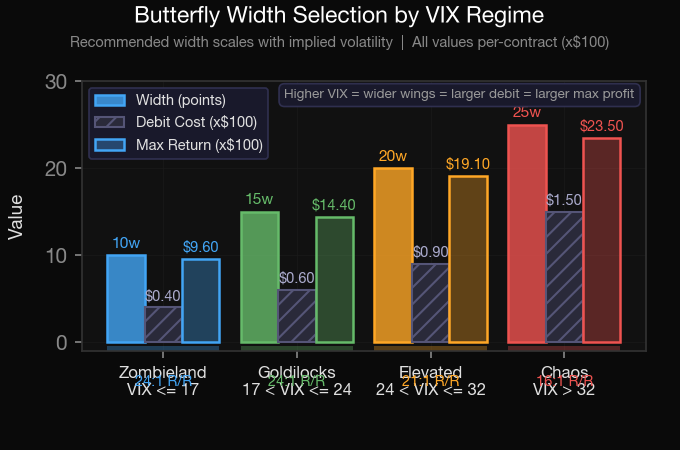
A bull put spread caps the downside by buying a lower-strike put as protection. The credit collected is smaller than the naked put, but the risk is defined. A 5-wide SPX put spread might collect $1.50 in credit with a maximum loss of $3.50 — a much more efficient use of capital.
Structural traders favor spreads in uncertain regimes and naked puts only when the gamma environment is strongly supportive. In practice, the premium approach most professionals use combines both — wider spreads when conviction is high, tighter spreads when the environment is mixed.
How to Sell Put Options and Manage the Position
Entry is half the trade. Management determines whether you keep the premium.
Take profits early. Close at 50-75% of max profit. Holding to expiration exposes you to gamma risk in the final days — the theta acceleration that helps you is offset by the gamma risk of being close to the strike with little time premium left.
Cut losses mechanically. If the premium doubles (your loss equals the credit collected), close the position. Hoping for recovery is how small losses become catastrophic ones. The premium you collected was compensation for defined risk, not a license to hold through unlimited downside.
Watch the Greeks. Delta tells you how much directional exposure you carry. As the underlying drops toward your strike, delta increases — your position gets more directional. Gamma tells you how fast delta is changing. Near expiration, gamma spikes for near-the-money options, making your position increasingly volatile.
Roll or close before events. Earnings, FOMC, and major economic data releases cause IV expansion and contraction that can overwhelm your position. If a catalyst falls within your option’s expiration, close or roll before the event rather than gambling on the outcome.
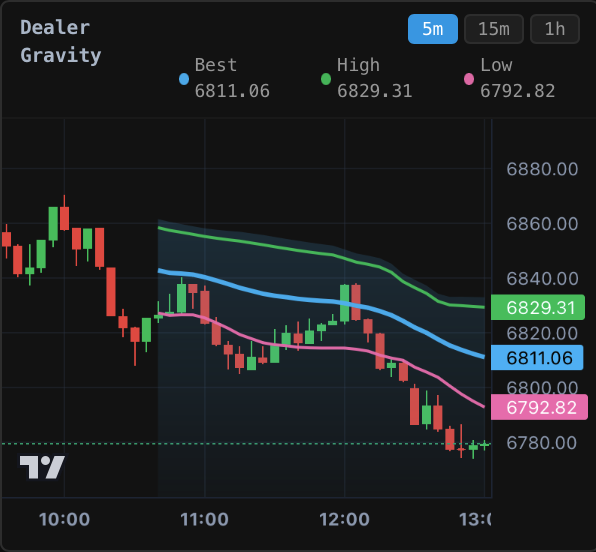
The daily pre-market analysis in Observer ($17/week) provides the structural context that determines whether your put selling positions are protected or exposed — GEX profile, VIX regime, expected move, and dealer gravity levels. Activator ($97/month) adds real-time tools and weekly coaching. Navigator ($267/month) provides daily direct coaching with Ernie. Compare all plans here.
The Bottom Line
Learning how to sell put options is not about memorizing strike selection rules. It is about reading the environment that determines whether those rules work. The selling strategy that generates consistent returns requires positive GEX, moderate VIX, contained skew, and no imminent catalysts. Remove any of those conditions and the edge disappears.
Sell puts when the structure supports it. Use credit spreads when the structure is mixed. Stay flat when the structure is hostile. The premium is not the edge. The environment is the edge. Every other approach to selling puts is gambling with a persistent illusion of safety.
That structural read starts with Observer ($17/week): daily GEX profiles, gravity levels, expected move, and VIX context. Activator ($97/month) adds real-time tools and weekly coaching. Navigator ($267/month) provides daily direct coaching with Ernie. Compare all plans here.
Frequently Asked Questions
What does it mean to sell a put option?
Selling a put option means accepting the obligation to buy the underlying at the strike price if the buyer exercises. You collect premium upfront as compensation for this obligation. If the underlying stays above the strike through expiration, you keep the premium. If it drops below, you buy shares at the strike price or take a loss on the contract.
Is selling puts risky?
The maximum loss on a short put is the strike price minus the premium collected — the underlying can theoretically drop to zero. This makes naked put selling one of the highest-risk premium strategies in terms of maximum drawdown. Cash-secured puts limit the practical impact because you already hold the capital to absorb assignment, but the loss is still real.
How much money do you need to sell put options?
Cash-secured puts require enough capital to buy 100 shares at the strike price. For a $50 stock, that means $5,000 per contract. Margin accounts allow naked put selling with less capital, but the broker sets margin requirements based on the underlying price and volatility. SPX put selling requires substantially more capital due to the index level.
What is the best strike to sell puts at?
There is no universally best strike. The 0.20-0.30 delta range offers a balance between premium collected and probability of profit. However, strike selection without structural context is incomplete. The GEX profile and skew steepness matter more than the delta number alone. Sell strikes above key support levels and above the GEX flip where dealer positioning supports your trade.
Is selling puts better than buying calls?
They serve different purposes. Selling puts profits from stability and time decay. Buying calls profits from directional moves. Selling puts wins more often but with capped gains. Buying calls wins less often but with uncapped potential. The options market prices both sides fairly over time — the structural edge comes from matching the strategy to the regime, not from choosing one over the other.
FATTAIL BRIEFINGS
Get FatTail briefings in your inbox
Pick the lists you want. FOMC Alerts is selected by default.