


A 0DTE position can be green at 3:59 p.m. and settle differently than the number you expected. That is not bad luck. It is usually a trader confusing a quoted index level, an option mark, and the official settlement value. This index options settlement mechanics guide covers the distinction, because defined risk only works as intended when you understand how the contract finishes.
For SPX traders, settlement is not an administrative detail. It is part of the trade plan. Your structure, size, exit decision, and willingness to hold through the close should all account for it. The OCC’s options education is a good grounding in exercise and settlement.
Index options settle in cash, not shares
Broad-based index options such as SPX are generally cash-settled. This is a key difference in SPX vs ETF options. If your contract expires in the money, you do not wake up owning or shorting a basket of stocks. The clearing process calculates the contract’s intrinsic value and credits or debits cash.
The basic math is straightforward. At settlement, a call is worth the settlement value minus its strike, if that result is positive. A put is worth its strike minus the settlement value, if that result is positive. Multiply that intrinsic value by the contract multiplier, typically 100 for SPX options.
If the settlement value is 6,000 and you own a 5,990 call, its cash value is 10 points, or $1,000 before commissions and fees. If you sold that call as part of a defined-risk spread, the same calculation applies to each leg. Your final result is the net cash value of the spread.
That sounds simple because it is. The trouble starts when traders assume the displayed index price at a particular moment is automatically the settlement value. It may be close. It is not always the same thing.
PM-settled and AM-settled contracts are different events
The first question is not, “Is this SPX?” The first question is, “Which expiration and settlement style am I trading?” Contract specifications matter. Verify the product details in your broker platform and exchange materials before placing the trade. The Cboe SPX contract specifications list each settlement type.
PM-settled options
Most daily SPX expirations traders use for 0DTE are PM-settled. Their settlement value is based on the official closing level of the index on expiration day. This is why the final minutes can carry outsized consequences for short strikes near the market.
But PM settlement does not mean you should expect every quote on your screen to match the final settlement calculation tick for tick. Markets are moving, option quotes can be wide, and the official value is determined through the index’s established calculation process. A few points can decide whether a short option finishes out of the money, partially in the money, or fully in the money.
For a defined-risk vertical, that does not create unlimited exposure. It does determine the realized loss within the width of the structure. That distinction matters. A planned maximum loss is still a loss you must be sized to accept.
AM-settled options
Some standard monthly SPX contracts are AM-settled. Their final settlement value is based on the opening prices of the component stocks on expiration morning, not the index close from the prior afternoon.
This can create a gap between what the market appeared to show at Thursday’s close and where the contract actually settles on Friday morning. Not every component opens at the same instant. The opening settlement process can take time as constituent opening prices are established.
Holding an AM-settled position overnight is therefore a different risk decision from holding a PM-settled 0DTE position into the close. Do not treat them as interchangeable just because both contracts reference SPX.

The close is a risk window, not a finish line
Retail traders often frame expiration as a binary win: hold, let options expire worthless, collect the premium. That mindset overweights a small credit and underweights the risk concentrated in the final minutes.
Near a short strike, gamma is high. Small index moves can create large changes in an option’s value. Liquidity can shift. Bid-ask spreads can widen. A position that was comfortably outside your risk threshold can move into a zone where the settlement outcome is uncertain.
This is where process beats prediction. You do not need to forecast the final candle. You need a rule for what you will do when the market approaches your short strike, when your risk graph reaches a preset threshold, or when the remaining credit no longer justifies carrying settlement risk.
Closing early can leave money on the table. Holding can preserve more premium. Neither is automatically right. The correct choice depends on the structure’s remaining risk, your size, the time left, and the rule you established before the trade. What is not professional is inventing the rule after the market moves against you. See how to manage expiration day.
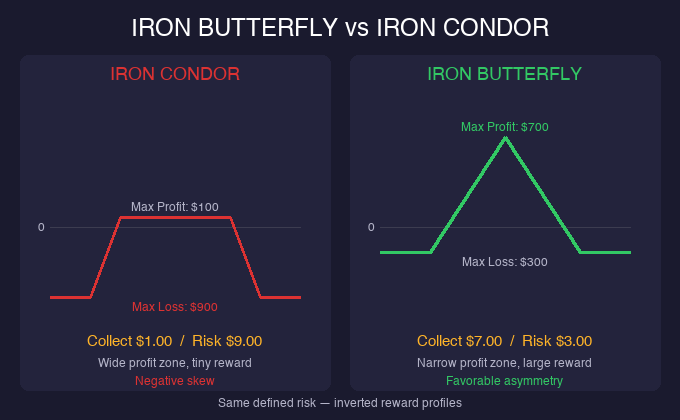
Settlement risk looks different in defined-risk spreads
A vertical spread has a known maximum loss at entry when both legs remain intact. That is the point. You can size the position so a full loss is a planned rep, not an account-level event.
Consider a 10-point-wide credit spread. If both options expire out of the money, it settles for zero and you retain the credit received. If the index settles between the strikes, one leg can have intrinsic value while the other expires worthless. If it settles beyond both strikes, the spread reaches its maximum intrinsic loss, offset by the original credit.
The important point is that settlement value is calculated leg by leg. A spread is not simply labeled “winner” or “loser” based on whether the index crossed one strike. The final debit or credit follows the difference between the legs’ intrinsic values.
That is also why short-strike proximity deserves respect. A trader may say, “It is only one point in the money,” as if the issue is trivial. One point is meaningful when multiplied by contracts, and it can become several points quickly during the close. Position size turns a manageable outcome into stress, or keeps it a normal business expense.
Exercise, assignment, and automatic processing
With cash-settled index options, expiration processing does not result in stock delivery. In-the-money options are generally exercised automatically under standard clearing procedures, subject to applicable thresholds and broker policies. The result is cash settlement.
Still, do not use the word “automatic” as an excuse to be passive. Brokers can have their own cutoff times, handling procedures, and requirements. If you intend to close a position, close it while the market is open and liquid enough to execute. If you intend to hold, know exactly which contract you hold, its settlement style, and the maximum amount at risk.
This is especially relevant for multi-leg positions. A platform’s displayed profit and loss near expiration is an estimate based on current markets. The final settlement is determined by the official exercise value. When the index is near a strike, those can diverge.
Build settlement into the trade before entry
A repeatable 0DTE framework does not begin with a directional opinion. It begins with structure and risk. Settlement mechanics belong in that same checklist.
Before entry, identify the expiration type, the relevant settlement time, and whether you are willing to hold through it. Map your short strikes against current price, expected range, key positioning levels, and the risk graph. Then set size from the maximum loss, not from the premium you hope to keep.
During the trade, monitor what actually changes your decision. Is the index approaching a short strike? Has the remaining premium compressed enough that settlement exposure is no longer worth it? Has the market regime changed from orderly to fast and unstable? These are better questions than asking whether a social-media feed thinks the market will close higher or lower.
After the trade, record whether the exit or hold decision followed your rules. Do not grade yourself solely on the result. A loss taken within size and process is usable data. A gain produced by oversized exposure and hope is a warning.
FatTail.ai teaches traders to treat these moments as engineered decisions, not adrenaline tests. Not signals. Not alerts. A framework that lets you understand the position you own and the risk it carries into settlement.
The practical standard
If you cannot explain how your option settles, you are not ready to hold it through expiration. That is not a judgment about intelligence or experience. It is a risk-control standard.
Know whether the contract is AM- or PM-settled. See our guide to SPX expiration timing. Know the official value that determines intrinsic value. Know the maximum loss of your defined-risk structure. Most of all, know your exit rule before the final minutes force a decision. The market does not owe you a clean close, but your process can keep one close from defining your account.
Frequently Asked Questions
How do index options settle?
Broad-based index options such as SPX are generally cash-settled: if the contract expires in the money, the clearing process credits or debits cash equal to intrinsic value times the multiplier (typically 100), with no stock delivery. A call is worth settlement value minus strike; a put, strike minus settlement value, if positive.
What is the difference between AM and PM settlement?
PM-settled options (most daily SPX 0DTE contracts) use the official index close on expiration day. AM-settled options (some standard monthlies) use the opening prices of the component stocks on expiration morning, which can gap from the prior close. They are different risk decisions; do not treat them as interchangeable.
Is the closing index price the same as the settlement value?
Not necessarily. Traders often assume the displayed index level at a moment is the settlement value. It may be close, but the official value is determined through the index’s established calculation process, and a few points can decide whether a short option finishes in or out of the money.
How does settlement work in a defined-risk spread?
Settlement is calculated leg by leg. If both legs expire out of the money, the spread settles for zero and you keep the credit; between the strikes, one leg can have intrinsic value while the other expires worthless; beyond both strikes, it reaches its maximum intrinsic loss offset by the credit.
Do you have to exercise cash-settled index options?
In-the-money cash-settled index options are generally exercised automatically under standard clearing procedures, resulting in cash settlement, not stock delivery. But brokers have their own cutoffs and policies, so if you intend to close, do it while the market is open and liquid.
FATTAIL BRIEFINGS
Get FatTail briefings in your inbox
Pick the lists you want. FOMC Alerts is selected by default.