


Most traders do not need more charts. They need better evidence.
That is what an options trading journal template is for. Not to create busywork. Not to make you feel organized for a week. It exists to show you, in plain terms, whether your process has an edge, whether your sizing is sane, and whether your losses are planned or self-inflicted. It is the record-keeping half of a disciplined trading plan.
If you trade options actively, especially short-dated index structures, your memory will lie to you. You will remember the big win, rationalize the sloppy entry, and blame the loss on “market conditions.” A journal cuts through that. It turns trading from storytelling into review.
What an options trading journal template should actually do
A good journal does not just store trades. It helps you answer four hard questions.
First, did you follow a repeatable setup or did you improvise? Second, was the risk defined before entry? Third, was size appropriate for the account and the structure? Fourth, did the outcome match the process, or did you get rewarded for bad behavior and punished for good behavior?
Most retail journals miss this. They track symbol, entry, exit, and P and L, then call it analysis. That is bookkeeping. Useful, but incomplete. If you trade SPX or other index options, especially around intraday volatility shifts, you need context. Your edge usually does not come from predicting direction perfectly. It comes from structure, timing, positioning, and risk control.
That means your journal template should capture what you saw, what you did, and why the trade fit your framework. If it cannot do that, it will not help you improve.
The core fields every journal needs
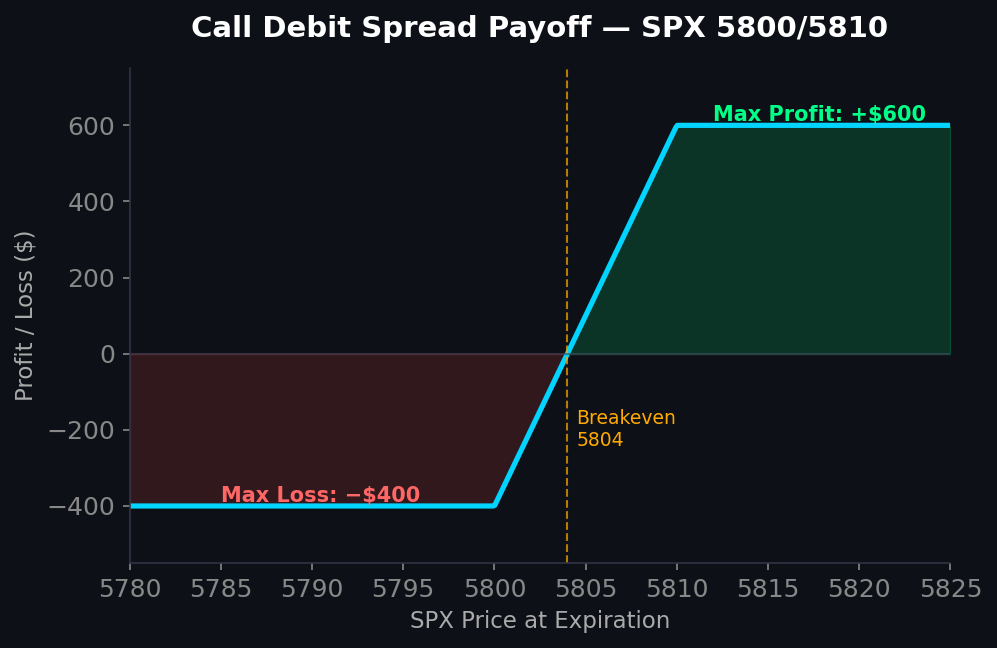
Start with the basics. Date, underlying, expiration, strategy type, strike selection, debit or credit, max risk, planned target, and realized result. You also want entry time and exit time because timing matters in short-dated options more than many traders admit. The OCC’s options education is a good grounding in the mechanics worth recording.
Then add the fields that separate process traders from gamblers.
Pre-trade thesis
This should be short. One to three sentences. What condition were you trading? Was the market balanced, trending, rejecting a level, compressing into an event, or reacting after one? Keep it factual. If you write a full paragraph trying to sound smart, you are probably just justifying the trade.
Setup tag
Every trade should belong to a defined playbook. Example: opening range continuation, failed breakdown reversal, premium-selling structure around expected range, or late-session hedge scalp. The label matters because later you can sort results by setup. If everything is tagged “discretionary,” you have nothing to study.
Risk plan
Write down max planned loss, adjustment rules if any, and the condition that invalidates the trade. This is where many traders get exposed. They say they trade defined risk, but their behavior is not defined. A journal makes that visible fast.
Sizing logic
Do not just record contracts. Record why the size was appropriate. Was it standard unit size? Reduced due to event risk? Smaller because of elevated implied volatility? If size changes without a rule, your results will be hard to trust.
Execution grade
Separate trade outcome from execution quality. A losing trade can earn an A if it followed plan. A winning trade can earn a D if the entry chased, the size was off, or the exit was emotional. This one field can change the way you think about losses.
The fields most traders skip, and should not
The biggest leak in many journals is the missing emotional and environmental context. That does not mean writing therapy notes. It means recording conditions that affect decisions.
Note your mental state before entry. Calm, rushed, distracted, revenge-minded, overconfident after a winner, hesitant after a loser. These are not soft details. They often explain why otherwise solid traders violate their own rules.
Also note market structure context. Was volatility expanding or contracting? Were you trading before a major economic release? Was the market pinned near a key level? Were flows and positioning supportive of your structure, or were you forcing a trade because you wanted action?
If you trade 0DTE SPX, this matters even more. The same structure can behave very differently depending on time of day, realized volatility, and dealer positioning. Investor-education bodies like the SEC stress recording risk and sizing decisions for exactly this reason. Your journal should reflect that reality. Stop pretending every trade happened in a vacuum.
A practical options trading journal template
Here is a clean structure that works.
Section 1: Trade facts
Record date, ticker or index, expiration, strategy, strikes, entry time, exit time, entry price, exit price, max risk, realized P and L, and contracts.
Section 2: Setup and context
Record setup tag, market condition, key levels, event context, implied volatility condition, and why this trade existed in your plan.
Section 3: Process controls
Record thesis, invalidation point, target or exit condition, size rationale, and whether the trade met all entry criteria.
Section 4: Review notes
Record execution grade, rule violations, emotional state, screenshot references if you use them, and one lesson. Just one. If every trade has five lessons, none of them will stick.
That is enough. You do not need fifty columns. You need the right columns.
Keep the journal useful, not impressive
A common mistake is overbuilding the template. Traders create a massive spreadsheet, color code everything, then stop using it after nine sessions. The best journal is the one you will complete honestly, every day.
If you are newer to structured trading, keep the first version simple. Focus on setup tag, max risk, size rationale, execution grade, and one lesson. Once you build consistency, add more nuance like volatility regime or time-of-day performance.
There is a trade-off here. Too little detail and you cannot diagnose problems. Too much detail and the journal becomes friction. The right balance depends on how often you trade and how standardized your setups are.

How to review the journal without fooling yourself
Journaling alone does not improve performance. Review does. See our full method for reviewing your trades.
The fastest way to waste a journal is to look only at net P and L. That tells you what happened, not why. Instead, review in batches of at least 20 trades per setup when possible. Look for repeatable mistakes. Are losses clustered around oversized positions? Are good setups being entered late? Are winners getting cut because recent losses changed your behavior?
Also split process from outcome. If your best-executed trades lose money over a sample, that may point to a framework issue. If your poorly executed trades are dragging down results, that is not a market problem. That is a discipline problem.
This is where serious traders separate from signal-chasers. They do not ask, “What should I trade tomorrow?” They ask, “What does my data say about my behavior?”
What your journal should reveal over time
A useful journal surfaces patterns you can act on.
You may learn that your first trade of the day is fine, but the second comes from boredom. You may find that one structure works only in balanced sessions, while another needs momentum and expansion. You may discover your sizing is stable until two losses in a row, then it drifts. That is valuable. Painful sometimes, but valuable.
For many traders, the biggest revelation is that the real problem was never win rate. It was poor loss containment, inconsistent sizing, and random entries dressed up as conviction. A journal makes those habits hard to hide.
That is why the best traders do not treat journaling as admin. They treat it as feedback. At FatTail.ai, the point is not to be right more often. The point is to run a repeatable, defined-risk process that can survive real conditions and real losing streaks.
Should you use a spreadsheet, app, or handwritten log?
It depends on your workflow.
A spreadsheet is flexible and usually the best place to start because you can tailor fields to your framework. An app can speed up imports and reporting, but only if it captures the process details that matter. A handwritten log can sharpen awareness, but it becomes hard to analyze at scale.
If you trade frequently, use something searchable. If you trade multiple structures, make sure you can sort by setup tag. If you cannot filter your own data, your review will stay anecdotal.
The tool matters less than the standard. Same fields. Every trade. No exceptions.
Build a journal that serves the trader you are trying to become
Your options trading journal template should not exist to document activity. It should exist to enforce standards.
That means it should reward clarity over complexity, process over pride, and evidence over memory. It should help you see whether your risk was defined before the trade, whether your size made sense, and whether your actions matched your plan.
If your journal does that, it becomes more than a log. It becomes a mirror. And most traders do not need another prediction. They need the courage to look at the truth long enough to improve.
Frequently Asked Questions
What is an options trading journal template?
It is a structured record that shows whether your process has an edge, whether sizing is sane, and whether losses are planned or self-inflicted. Beyond symbol, entry, exit, and P&L, it captures what you saw, what you did, and why the trade fit your framework.
What fields should an options trading journal include?
Core facts (date, underlying, expiration, strategy, strikes, debit or credit, max risk, target, result, entry and exit time) plus the fields that separate process from gambling: pre-trade thesis, setup tag, risk plan, sizing logic, execution grade, and emotional and market context.
What is an execution grade in a trading journal?
A score of how well you followed the plan, separate from the outcome. A losing trade can earn an A if it followed plan and was sized correctly; a winning trade can earn a D if the entry chased, the size was off, or the exit was emotional. It changes how you think about losses.
How often should you review your trading journal?
Log every trade, but review in batches, ideally at least 20 trades per setup, so patterns emerge without overreacting to a small sample. Split process from outcome: if well-executed trades lose over a sample it may be a framework issue; if poorly executed trades drag results, it is discipline.
Spreadsheet, app, or handwritten trading journal?
A spreadsheet is flexible and the best place to start. An app speeds imports and reporting if it captures the process details that matter. A handwritten log sharpens awareness but is hard to analyze at scale. The tool matters less than the standard: same fields, every trade, no exceptions.
FATTAIL BRIEFINGS
Get FatTail briefings in your inbox
Pick the lists you want. FOMC Alerts is selected by default.