


An alert hits your phone at 10:17 a.m.: “SPX puts here.” You have seconds to decide. You do not know the entry logic, the position size, the exit condition, or what the sender will do if the market moves against the trade. Yet you feel pressure to act.
That is the real cost of alert dependency. If you want to stop chasing option alerts, you do not need a better notification feed. You need an operating process that still works when no one tells you what to do.
Alerts can look like a shortcut to confidence. The OCC’s options education is a better place to build real understanding. Usually, they replace confidence with borrowed conviction. That distinction matters most in 0DTE SPX, where time is short, price can move fast, and an oversized decision can do more damage than several ordinary losses.
Why Option Alerts Keep Traders Stuck
The problem is not that another trader has an opinion. Experienced traders can offer useful context. The problem begins when their opinion becomes your decision-making system.
An alert gives you a conclusion without the work behind it. Investor-protection resources from the SEC warn against acting on tips and alerts you cannot verify. You may see a strike, a direction, and perhaps a target. What you do not see is the full framework: the market condition the trader was waiting for, the exposure already in their account, the risk they accepted, and the condition that would make the thesis invalid.
You cannot responsibly copy what you cannot measure.
This creates a familiar cycle. A trader takes several alerts, gets a few outcomes they like, and starts increasing size. Then one trade moves quickly, the alert provider exits differently than expected, or the trader hesitates at the exact moment discipline is required. The loss feels personal because there was never a process to lean on.
The issue is not whether the alert was “right.” It is that the trader was not in control.
The hidden trade is emotional
Alert services also train bad timing. A notification creates urgency, and urgency turns observation into action before you have assessed the structure. You enter because you are afraid the move will happen without you. You exit because someone else posts a chart, changes tone, or goes quiet.
That is not trading a plan. That is reacting to a feed.
A defined-risk trader has a different question: Does this setup meet my conditions, at my size, with risk I can accept before entry? If the answer is no, the correct trade is no trade. Missing a move is not a failure. Taking risk you did not define is.

Stop Chasing Option Alerts by Owning the Decisions
Independence does not mean trading in isolation or refusing education. It means you can explain every position in your account without referring to someone else’s message.
For an SPX 0DTE trader, that explanation should be simple. You should know where price is relative to meaningful positioning, what the day’s structure suggests, which defined-risk structure fits that environment, how much you are willing to lose, and what would cause you to manage or close the position.
Not prediction. Positioning.
Markets do not owe you a clean directional move. A process built around being right will eventually pressure you to force trades, hold too long, or increase risk to recover. A process built around defined risk gives you room to be wrong without turning one decision into an account-level event.
That is the goal: eliminate the risk of ruin first. Everything else comes after.
Replace alerts with pre-trade criteria
Before the opening bell, create a short written plan. It should identify the conditions that would make you interested in a trade and the conditions that would keep you out. For example, you may be looking for price behavior around a significant options positioning level, a range condition that supports a defined-risk premium structure, or a move that has become extended relative to the day’s structure.
The point is not to predict the exact high or low. The point is to define what you will and will not participate in. This is the core of a written trading plan.
Then establish your risk before you see a tempting move. Decide the maximum loss you are prepared to take on a single trade and the amount of total risk you are willing to have open. Size from that number, not from conviction. A strong opinion does not justify larger risk. In fact, strong opinions are often when traders most need guardrails.
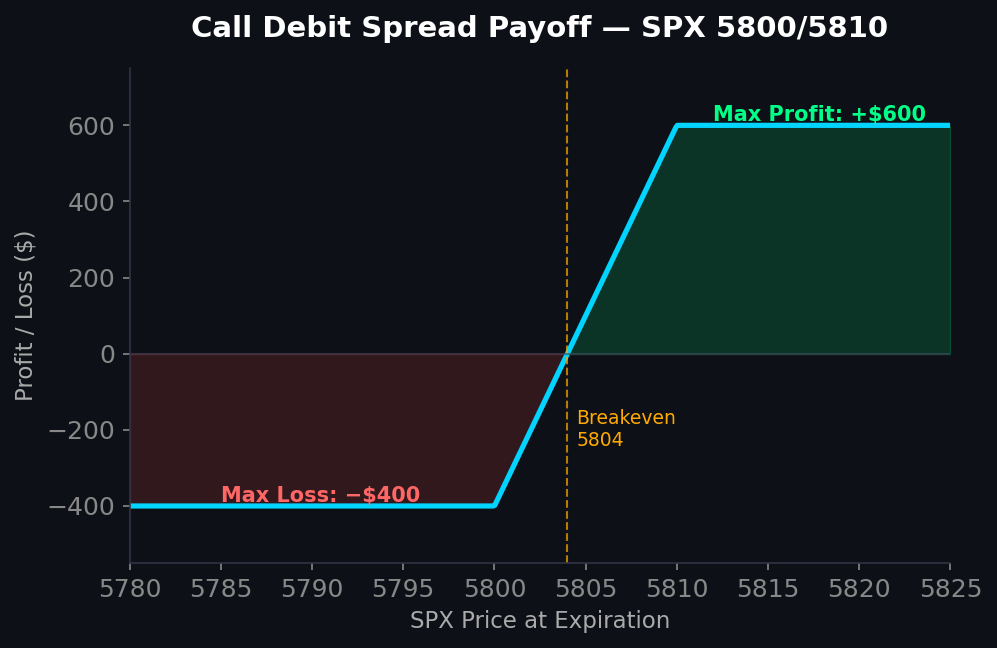
With 0DTE, time decay and convexity can change the position quickly. That is why defined-risk structures and intentional sizing matter. Your trade should be survivable before it is exciting.
Make exits part of the entry
Many alert followers enter late because the message arrives after a move has begun. They often exit even later because no one told them what to do next. The trade becomes a live negotiation with fear and hope.
Your exit logic should be known in advance. That does not mean every trade needs a rigid, identical rule. Market conditions differ. It does mean you need a decision framework: what profit condition matters, what loss threshold ends the trade, and what market behavior would tell you the structure no longer fits.
A planned loss is a completed rep. It is not evidence that the process failed.
There is a trade-off here. More flexibility can help an experienced trader respond to changing conditions, but flexibility without rules becomes improvisation. Early in a new process, simpler is usually better. Use fewer structures, smaller size, and clear management rules until your review data shows you understand what you are doing.
Build a Routine That Does Not Need a Guru
Professional behavior is repetitive on purpose. The work happens before, during, and after the trade.
Before the session, assess the day’s market structure and identify the levels or conditions that matter. During the session, wait for those conditions instead of manufacturing an opportunity. After the session, document what happened without rewriting history.
Your trade log should capture more than profit and loss. Record the setup, structure, entry time, defined risk, size, market context, management decisions, and whether you followed your own rules. A chart screenshot can help, but the written reason matters more. You are building evidence about your behavior.
Over time, patterns become visible. Maybe your best decisions come when you wait through the first burst of volatility. Maybe a certain structure performs poorly when price is trending hard. Maybe your largest losses occur after you take a trade that was never in the plan. Those are usable findings. A chat-room recap is not.
This is where live education and trade review can be valuable, provided they teach the reasoning rather than demand imitation. The useful question is not, “What did you trade?” It is, “What did you see, what risk did you define, and why did that structure fit?” FatTail.ai is built around that distinction: teaching traders to read the structure and own the decision.
What to Do When You Still Want the Alert
The urge will not disappear overnight. When a message triggers fear of missing out, pause before opening the order ticket. Ask three questions: Does this meet a setup I already recognize? Can I state the maximum loss and size in plain language? Would I take this trade if nobody had posted it?
If any answer is no, let it go.
That may feel passive at first. It is not. Restraint is active risk management. Every skipped impulse trade protects your attention and keeps your capital available for the conditions you actually understand.
You also do not need to reject all outside market commentary. A serious trading community teaches reasoning rather than handing you signals. Use it as a prompt for study, not an instruction to execute. If someone identifies an important SPX level, investigate why it might matter. Compare it with your own market read. If the information sharpens your process, it has value. If it replaces your process, it has a cost.
The trader who needs an alert is always one notification away from confusion. The trader with a defined-risk framework can listen, learn, disagree, and still act independently. Build toward that version of yourself one properly sized, properly reviewed decision at a time.
Frequently Asked Questions
Why should you stop chasing option alerts?
Because an alert gives you a conclusion without the framework behind it: the market condition, the size, the exposure already on, and the invalidation. You cannot responsibly copy what you cannot measure, and the loss feels personal because there is no process to lean on.
Are option alert services worth it?
They can offer useful context, but they become a problem when someone else’s opinion replaces your decision-making system. They also train bad timing, creating urgency that turns observation into action before you have assessed the structure. Use commentary as a prompt for study, not an instruction to execute.
What should you do instead of following alerts?
Build pre-trade criteria before the open: the conditions that make you interested and the conditions that keep you out, a defined maximum loss and total risk, and known exit logic. Size from your risk number, not from conviction, and accept that no trade is a valid decision.
How do you build trading independence?
Own every decision: know where price sits relative to positioning, which defined-risk structure fits, how much you can lose, and what would make you exit, without referring to anyone else’s message. Then review honestly so patterns in your own behavior become visible.
How do you resist FOMO from an alert?
Pause before opening the ticket and ask three questions: does this meet a setup I already recognize, can I state the max loss and size in plain language, and would I take this trade if nobody had posted it? If any answer is no, let it go. Restraint is active risk management.
FATTAIL BRIEFINGS
Get FatTail briefings in your inbox
Pick the lists you want. FOMC Alerts is selected by default.