


A defined-risk SPX trade can still create undefined behavior in your account when the position is too large. That is the central problem behind the top mistakes in 0DTE sizing. Traders often spend hours selecting strikes, reading levels, and debating direction, then treat contract quantity as an afterthought. It is not an afterthought. Size determines whether you can execute your plan after the trade moves against you.
0DTE options compress time, gamma, and decision-making into a single session. A structure with a known maximum loss is not automatically a professionally sized trade. The OCC’s options education is a good grounding in the defined-risk structures behind this. If that known loss is large enough to alter your next decision, your size is wrong.
Why 0DTE sizing is a separate skill
Sizing a 0DTE position is not the same as choosing a trade. Trade selection answers: What structure fits the market condition and my framework? Sizing answers: How much of my account and my decision-making capacity am I willing to allocate to being wrong?
Those questions must be separated. When they are blended, conviction starts driving quantity. A trader sees a clean setup, feels certain about a level, and adds contracts. That is prediction masquerading as risk management.
The better approach is mechanical. Define the risk unit before the market opens. Our full guide to the position-sizing math walks through it step by step. Define the maximum loss on a single position. Define what happens after a loss. Then let the structure and available premium determine whether the trade fits that budget. Not signals. Not urgency. Not the feeling that this one is obvious.
7 top mistakes in 0DTE sizing
1. Sizing from confidence instead of maximum loss
The most common error is increasing size because the setup looks unusually good. Maybe positioning appears supportive. Maybe price is holding a key area. Maybe several market inputs line up.
Those inputs may influence whether you take the trade. They do not change the fact that markets can move through levels, volatility can expand, and a same-day structure can deteriorate quickly. If your planned maximum loss rises with your confidence, you have turned confidence into leverage.
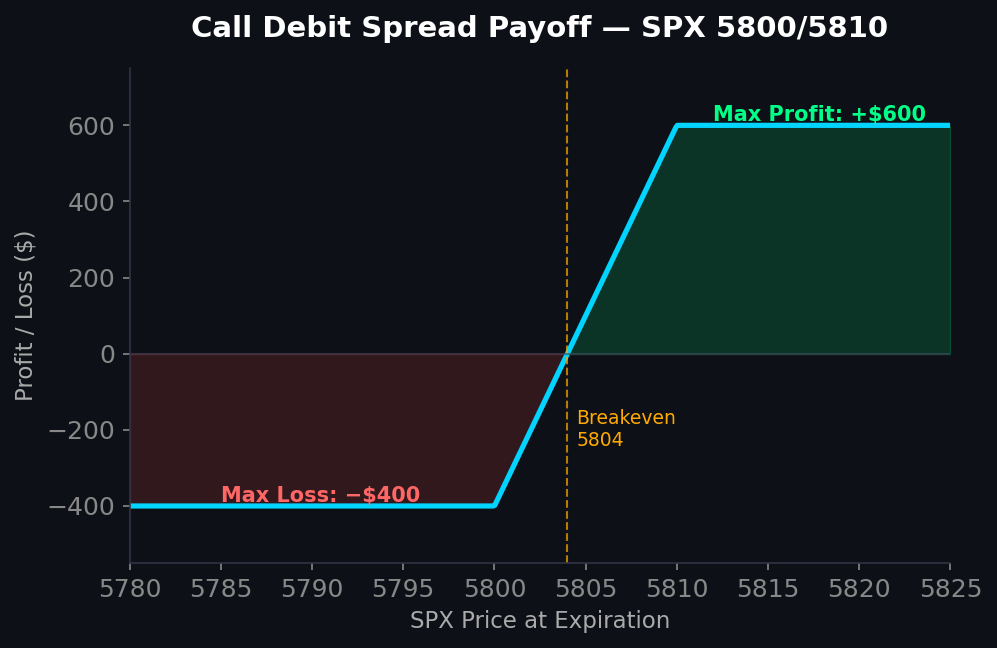
Start with the structure’s maximum loss per contract, including the debit paid or the width less credit received, as applicable. Then calculate quantity from the amount you have already decided is acceptable to lose on one trade. The sequence matters: risk budget first, contracts second.
2. Treating every defined-risk trade as equally risky
Defined risk is a property of the payoff diagram. It is not a complete measurement of practical risk.
Two spreads may have the same maximum loss but behave very differently during the day. One may be placed far from price in a quieter environment. Another may sit near the expected move during a fast, directional session. A wide spread and a narrow spread can also demand different exits, fills, and attention.
This does not mean you should improvise size based on fear. It means your sizing model needs context. Consider the distance of your short strike from price, the width of the structure, current implied volatility, time remaining, and whether the market is trending or rotating. If the environment changes the odds of needing to manage the trade, it should affect whether the planned size is appropriate.
3. Ignoring correlated exposure
Multiple positions can look diversified because they have different strikes or different entry times. In SPX 0DTE, they may still be one concentrated bet on the same market behavior.
For example, adding several bullish premium-selling structures throughout a weak session is not spreading risk. It is increasing exposure to continued downside. The same is true when traders layer positions around the same level because each individual trade appears small.
Size the combined book, not just the next ticket. Before adding exposure, ask what happens if price continues in one direction, volatility rises, and all related structures become difficult at once. Your account does not care that the losses came from separate order confirmations.
A useful rule is to maintain a daily risk ceiling that includes open risk across every related position. Once that ceiling is reached, the answer is not to find a more convincing setup. The answer is to stop adding risk. This is core risk management.
4. Using premium received as a sizing signal
A larger credit can feel safer because it creates more room between the short strike and the breakeven point. It can also tempt traders to sell more contracts because the position appears to have a favorable cushion.
That logic breaks when the larger credit is compensation for larger risk. More volatile conditions, closer strikes, wider spreads, and less time can all change the price of a structure. Credit alone says very little about whether the position belongs at a larger size.
Evaluate the entire risk graph. Know the maximum loss, the distance to the short strike, the distance to breakeven, and the market condition that makes the trade invalid. Then size from the maximum planned account impact. Premium is an input. It is not permission to press.
5. Letting a losing trade dictate the next size
After a full loss, many traders either double down on the next trade or become so cautious that their process becomes meaningless. Both reactions are emotional sizing.
A planned loss is not evidence that your framework failed. It is one observation in a sequence of trades. If the position was correctly structured, correctly sized, and managed according to plan, the loss was a normal operating cost.
Your next trade should be sized by the same prewritten rules unless a scheduled review shows that the rules need adjustment. Do not attempt to recover the day with larger exposure. Do not cut size randomly because you want emotional relief. Consistency lets you evaluate expectancy. Constantly changing quantity destroys the data.
6. Forgetting that stop rules do not replace position size
Traders sometimes justify oversized positions by saying they will exit early. Early exits can be part of a defined process, but they are not a substitute for acceptable maximum risk.
0DTE markets can move fast. Liquidity can change. A price-based or structure-based exit may occur at a worse fill than expected, especially when the market is accelerating. If your trade only feels safe because you assume perfect execution, it is not safely sized.
Build the position so that the worst-case defined loss is survivable. Then use management rules to improve consistency, not to rescue an oversized trade. This distinction is where disciplined traders separate risk control from hope.
7. Failing to size for the ability to keep trading
The real objective is not to avoid every losing day. It is to eliminate the risk of ruin and preserve the ability to execute the next qualified opportunity. Investor-education bodies like the SEC stress sizing to survive drawdowns for exactly this reason.
Oversizing damages more than account equity. It changes behavior. You hesitate at entries, close winners too quickly, hold losers too long, revenge trade, or abandon a framework after a normal drawdown. The position was too large before the loss appeared on the screen.
A sound size is one that allows you to review the result without needing the trade to have worked. That is a high standard, but it is practical. If a full loss would make you unable to follow your process tomorrow, reduce quantity today. This is why small risk per trade keeps you trading.

Build a sizing process before the opening bell
A repeatable sizing process has three layers. First, establish a single-trade risk unit based on your account, your tolerance for normal losing sequences, and the strategy’s tested behavior. Second, set a daily aggregate-risk limit that accounts for correlated positions. Third, define conditions that require reduced size or no trade at all, such as abnormal volatility, unclear structure, or a session where you cannot give the position proper attention.
Write these rules down. A sizing rule held only in memory will change when price moves.
After each session, review planned risk versus actual realized risk. Did fills, adjustments, or added positions push the account beyond the intended exposure? Did you add contracts after a loss or after a streak of winners? Did the size affect your decisions? FatTail.ai teaches this kind of review because the trade log is not a diary. It is evidence of whether your process holds under pressure.
The goal is not to make 0DTE feel risk-free. It is to make risk explicit, limited, and repeatable. When quantity is decided before emotion enters the trade, losses become planned reps instead of emergencies. That is how a trader earns the right to stay independent: one correctly sized decision at a time.
Frequently Asked Questions
What are the biggest 0DTE sizing mistakes?
Sizing from confidence instead of maximum loss, treating every defined-risk trade as equally risky, ignoring correlated exposure, using premium received as a sizing signal, letting a losing trade dictate the next size, relying on stops instead of size, and failing to size for the ability to keep trading.
How do you size a 0DTE position correctly?
Risk budget first, contracts second. Define a risk unit before the open, take the structure’s maximum loss per contract, then calculate quantity from the amount you have already decided is acceptable to lose on one trade. Never let confidence raise the planned maximum loss.
Does defined risk mean a trade is safe?
No. Defined risk is a property of the payoff diagram, not a complete measure of practical risk. Two spreads with the same maximum loss can behave very differently depending on distance from price, width, implied volatility, and time remaining, so context should inform size.
How does correlated exposure affect sizing?
Multiple positions with different strikes or entry times can still be one concentrated bet on the same market behavior. Size the combined book, not just the next ticket, and keep a daily risk ceiling that includes open risk across every related position.
Should a losing trade change your next size?
No. Doubling down to recover and shrinking size for emotional relief are both emotional sizing. Size the next trade by the same prewritten rules unless a scheduled review shows the rules need adjustment. Consistency is what lets you evaluate expectancy.
FATTAIL BRIEFINGS
Get FatTail briefings in your inbox
Pick the lists you want. FOMC Alerts is selected by default.