


The wrong platform can make you feel informed while making your trading worse. More charts, more alerts, and more indicators do not create an edge. For an SPX trader, a useful 0DTE analytics platform review starts with a harder question: does the tool help you define risk, understand positioning, and execute a repeatable process without needing to predict every move?
That is the standard. Not whether the screen looks sophisticated. Not whether it produces a confident directional opinion. A 0DTE platform should help you make fewer unforced errors when time, gamma, and price movement are working against sloppy decisions. The OCC’s options education is a good grounding in the mechanics a platform should surface.
What a 0DTE Platform Actually Needs to Do
Zero-days-to-expiration options are not ordinary options with a shorter holding period. The risk changes quickly. A position that appears comfortable at one moment can become structurally different after a sharp move, a volatility shift, or a change in dealer positioning.
A useful analytics platform must therefore do more than display a chain and a few technical indicators. It should help answer three practical questions before and during a trade: Where is positioning concentrated? What does the risk look like if SPX moves? And does this proposed position fit the account and the plan?
If the platform cannot make those answers clearer, it is decoration. You may still be able to trade from it, but you are doing the real work in your head, in a spreadsheet, or after the loss has already occurred.
Review Criterion One: Positioning Over Prediction
Many retail tools are built around a familiar promise: identify the next move. They frame the market as a forecasting contest. That encourages traders to search for confirmation, force a directional opinion, and become attached to being right.
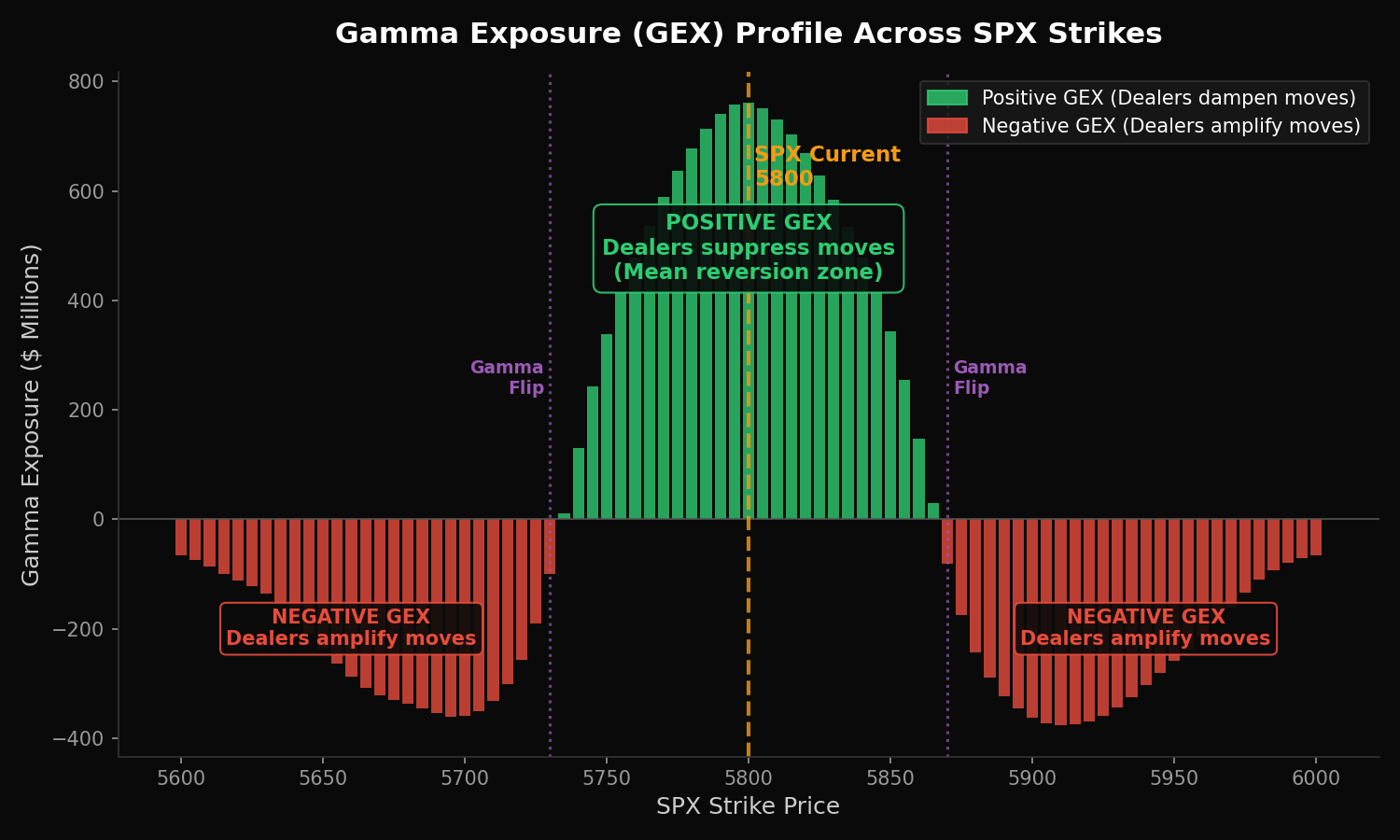
A better platform treats positioning as the starting point. For 0DTE SPX trading, that usually means giving the trader a clear view of gamma exposure, meaningful strike concentrations, and areas where price may behave differently as options dealers hedge. This is context, not prophecy.
A gamma exposure overlay or convexity heatmap can be valuable when it makes the structure of the day easier to see. It can show where concentrated options activity may matter, where the market may be more sensitive to movement, and where a trader should be alert to changing conditions. It cannot tell you what SPX must do next.
That distinction matters. A platform becomes dangerous when its visual confidence gets mistaken for certainty. The best tools leave room for uncertainty and help you build trades that can survive it.

Review Criterion Two: Risk Graphs That Tell the Truth
Defined risk is a structural decision, not a label you apply after entering a position. Before placing a spread, an iron condor, or another defined-risk structure, you need to see how much can be lost, where that loss occurs, and how the position changes as the market moves.
A platform’s risk graph should be easy to read under pressure. It should make max loss, break-even areas, width, and exposure to price movement obvious. Here is how to read a risk graph before you trade. If it takes a five-minute tutorial to interpret a payoff graph, it is unlikely to help when SPX moves quickly and the trader is tempted to improvise.
Static expiration graphs are necessary, but they are not sufficient. Intraday 0DTE decisions benefit from a view of current mark-to-market risk and an understanding of how the structure behaves before expiration. The question is not simply, “What is my maximum loss?” It is also, “What am I choosing to do if price approaches the area where this trade changes character?”
A good platform supports that decision without pretending to make it for you. No dashboard can substitute for a preplanned adjustment, exit, or hold rule. But a clear graph can stop you from discovering your real exposure after you are already emotionally involved.
Review Criterion Three: Data That Supports Proper Sizing
Most account damage is not caused by one bad market read. It comes from a position that was too large for the trader to think clearly once it moved against them.
This is where platform analytics need to connect to account-level discipline. The trader should be able to review position size, defined risk per trade, total exposure, and the effect of multiple positions taken during the same session. A trade that looks modest in isolation may be excessive when combined with other open risk.
Be skeptical of tools that focus entirely on trade selection while treating sizing as a manual afterthought. Selection matters. But a mediocre setup sized correctly can be a planned loss. A strong-looking setup sized recklessly can become an account-level event. Investor-education bodies like the SEC stress position sizing for exactly this reason.
The useful test is simple: does the platform make it easier to set a risk limit before entry and honor it afterward? If not, it may be reinforcing the same behavior you are trying to outgrow.
0DTE Analytics Platform Review: What to Look for After the Trade
Pre-trade analytics get attention because they feel actionable. Post-trade review is where the operating system is built.
A serious platform needs a trade log that captures more than entry and exit. It should let you record the structure, strikes, credit or debit, size, thesis, market context, planned risk, and reason for exit. Over time, those records reveal whether your problem is trade location, size, timing, execution, or abandoning your own rules.
This is not busywork. Without records, traders tend to remember the dramatic loss and the satisfying winner while missing the repeated behavior between them. They blame volatility, a headline, or a bad day. The log often shows something more useful: entries were late, risk was inconsistent, or exits changed whenever discomfort appeared.
The strongest review tools also make it possible to filter trades by structure, market condition, time of day, or management decision. That is how you move from opinions to evidence. You are not asking whether a strategy is “good.” You are asking whether you executed your defined process and what the data says about that execution.
AI Assistance Is Useful Only When It Creates Accountability
AI can help organize notes, surface patterns in a journal, and turn a scattered trade history into questions worth examining. Used well, it reduces administrative friction. Used poorly, it becomes another source of false authority.
Do not look for an AI feature that tells you what to trade. That recreates signal dependency in a more polished format. Look for one that helps you review whether your actions matched your stated plan, identify recurring sizing errors, or summarize conditions surrounding your decisions.
The trader still owns the judgment. That is the point. The goal is not to find a smarter voice to follow. It is to become more systematic in how you observe, decide, and review.
The Trade-Off: Simplicity Versus Depth
There is no universal best platform. A newer 0DTE trader may need a clean workflow, a readable risk graph, and a disciplined journal before adding more advanced positioning views. An experienced trader may need deeper exposure data and more granular review filters.
Too little information can leave you blind to meaningful context. Too much information can create analysis paralysis and encourage constant trade tinkering. The right platform is not the one with the longest feature list. It is the one whose information you can use consistently in a defined routine.
FatTail.ai’s analytics approach is built around that practical standard: structural context, visible defined risk, and review tools that support independent decision-making. The platform should reinforce the coaching process, not replace it with alerts or borrowed conviction.
A Better Way to Evaluate the Tool
Before committing to any 0DTE analytics platform, run a simple test over several trading sessions. Use it before the open to identify relevant positioning. Use it before entry to inspect the risk graph and size. Use it after the close to document what happened and whether you followed your rules.
Then ask whether the platform changed your behavior. Did it help you avoid an oversized position? Did it make a planned loss easier to accept? Did it reveal a repeated mistake you would otherwise have missed? Those are meaningful outcomes.
A platform is not valuable because it makes the market feel predictable. It is valuable when it helps you act professionally in a market that is not. Build your process around that distinction, and the tools on your screen will start serving your decisions instead of replacing them.
Frequently Asked Questions
What should a 0DTE analytics platform actually do?
Help you answer three questions before and during a trade: where positioning is concentrated, what the risk looks like if price moves, and whether the position fits your account and plan. If it cannot make those clearer, it is decoration, and you are doing the real work in your head or after a loss.
What makes a good risk-graph tool?
One that makes max loss, break-even areas, width, and exposure to price movement obvious under pressure. It should also show current mark-to-market risk before expiration, not just the static expiration graph, so you see how the structure behaves as price approaches key areas.
Should a platform predict market direction?
No. The best tools treat positioning as context, not prophecy. A gamma or convexity view can show where the market may be sensitive to movement, but it cannot tell you what price must do. A platform becomes dangerous when its visual confidence is mistaken for certainty.
How should a platform help with sizing?
By connecting analytics to account-level discipline: reviewing position size, defined risk per trade, total exposure, and the effect of multiple positions in a session. Be skeptical of tools that focus on trade selection while treating sizing as a manual afterthought.
Is AI useful in a trading platform?
Only when it creates accountability, organizing notes, surfacing journal patterns, and checking whether your actions matched your plan. Avoid AI that tells you what to trade; that recreates signal dependency in a polished format. The trader still owns the judgment.
FATTAIL BRIEFINGS
Get FatTail briefings in your inbox
Pick the lists you want. FOMC Alerts is selected by default.