


The covered call strategy is the gateway drug of options trading. Buy 100 shares. Sell a call against them. Collect premium. It sounds like free money — income generated from shares you already own. And that framing is exactly why most covered call traders end up underperforming a simple buy-and-hold in the same stock.
The covered call is not a bad strategy. It is a misunderstood one. Most traders deploy it as an income machine without understanding what they are actually doing: capping their upside in exchange for a small premium, while retaining the full downside of stock ownership. That tradeoff is reasonable in certain conditions. In others, it is giving away your best gains for pocket change. This guide covers how the covered call strategy actually works, what most traders get wrong, and when the structure makes sense within a broader framework.
How the Covered Call Strategy Works
You own 100 shares of a stock. You sell one call option against those shares at a strike price above the current price. You collect the premium upfront. Three outcomes are possible.
Stock stays below the strike. The call expires worthless. You keep the premium and the shares. This is the outcome covered call traders optimize for — and it is also the outcome where you would have been equally fine just holding the shares without selling anything.
Stock rises above the strike. Your shares get called away at the strike price. You keep the premium plus the gain from your purchase price to the strike. You also miss everything above the strike. If the stock runs 15% and your call was at the 5% level, you captured 5% plus the premium and left 10% on the table. That 10% is gone. You sold the right to it.
Stock drops significantly. The call expires worthless — small consolation. Your shares are down. The premium you collected does not come close to offsetting the drawdown. A $2 premium does nothing against a $15 drop. You have the same loss as any stockholder, minus a small buffer that barely matters.
The covered call strategy is, structurally, identical to selling a naked put at the same strike. The payoff diagram is the same. The risk profile is the same. This is not opinion — it is put-call parity, a mathematical identity. Most covered call traders do not realize they are running the same risk as a naked put seller with extra steps. If that realization makes you uncomfortable, pay attention to it.
What Most Traders Get Wrong
The mistakes are predictable because the strategy is taught the same way everywhere. The pitch never changes: generate income from stocks you own. The problems are in what the pitch leaves out.
Treating the premium as income. It is not income. It is compensation for selling optionality. You are being paid to give up your upside. Real income does not cap your position’s growth potential. Dividends are income. Premium from a covered call is the price of an insurance policy you sold to someone else — and when they need to use it, you pay.
Selling calls on stocks you cannot afford to lose. The covered call does not protect against downside. It buffers a small amount — the premium collected — but the full drop is yours. If you own 100 shares of a $200 stock and it drops to $140, your $3 call premium turned a $6,000 loss into a $5,700 loss. That is not protection. That is rounding error.
Systematically selling upside in a bull market. This is the most expensive mistake and the hardest to see. In a strong uptrend, covered call sellers get called away repeatedly, buy back in higher, and sell calls again. They generate consistent small premiums while missing the compounding gains that buy-and-hold delivers. Over a multi-year bull run, the covered call strategy can underperform holding the same shares by 30-50%. The premium collected does not compensate for the gains surrendered.
Ignoring opportunity cost. Every dollar of capital tied up in shares for a covered call is a dollar not deployed elsewhere. If 100 shares of a $150 stock require $15,000 in capital and generate $300/month in call premium, that is a 2% monthly return. A butterfly spread on SPX risks $50-$100 per trade with $500-$2,500 upside — and you can place ten of them before reaching the capital commitment of one covered call position.
Covered Calls vs Cash-Secured Puts: Same Trade, Different Wrapper
This section exists because most covered call education treats covered calls and cash-secured puts as completely different strategies. They are not. Put-call parity proves that a covered call (long stock + short call) has the identical payoff to a short put at the same strike.
Both strategies:
- Profit when the stock stays flat or rises slightly
- Lose when the stock drops significantly
- Have maximum profit capped at the premium collected plus any gap between current price and strike
- Have maximum loss equal to the full stock price minus premium collected
The only practical differences are margin treatment and dividend exposure. The covered call requires owning shares (more capital, but you collect dividends). The cash-secured put requires cash collateral (less capital, no dividends). The risk and reward are mathematically identical.
Why does this matter? Because the wheel strategy — which cycles between cash-secured puts and covered calls — is not a diversified approach. It is the same trade running in a loop. You are not reducing risk by switching between them. You are just changing the mechanics of how you hold the same position.
When the Covered Call Strategy Actually Makes Sense
The covered call is not always wrong. It is conditionally appropriate — and the conditions are narrower than most traders think.
Shares you are planning to sell anyway. If you own 100 shares at $80 and your target exit is $90, selling the $90 call collects premium while you wait. If the stock hits $90 and you get called away, you executed your plan and got paid to wait. This is the cleanest covered call use case — not generating income, but monetizing a predetermined exit.
Extremely low-volatility, sideways markets. When a stock is range-bound with low implied volatility, holding shares generates no return. Selling calls against them extracts small premiums that add up over time. The risk is minimal because the stock is not moving enough to trigger assignment or significant drawdowns. But low IV also means low premiums — so the income is modest.
Tax-advantaged accounts with long-term holdings. In an IRA holding a core position you never plan to sell, covered calls generate tax-deferred income on a position that would otherwise sit idle. This is the most defensible institutional use of covered calls — and it requires the discipline to never sell calls at strikes below your cost basis.
The structural framework that FatTail teaches applies here too. Before selling any covered call, you should understand the broader positioning landscape. The daily pre-market analysis in Observer ($17/week) covers GEX positioning, expected move, and VIX regime — context that determines whether selling premium makes sense on any given day. Activator ($97/month) adds real-time tools and weekly coaching. Navigator ($267/month) provides daily direct coaching with Ernie. Compare all plans here.
The Poor Man’s Version: A Capital-Efficient Alternative
The poor man’s covered call replaces the 100 shares with a deep in-the-money LEAPS call — a long-dated option with a delta of 0.80 or higher. You then sell short-term calls against the LEAPS just like you would against shares.
The advantage is capital efficiency. Instead of $15,000 in shares, you might spend $3,000 on a LEAPS with 12-18 months to expiration. The short calls you sell against it generate the same premium. Your capital commitment drops by 80%.
The disadvantage is that the LEAPS itself decays. It is an option — a wasting asset with time decay. If the stock drops significantly, your LEAPS loses value faster than shares would because of delta and vega exposure. And if the stock drops below your LEAPS strike, you can lose the entire $3,000 — whereas shares would still have residual value.
The poor man’s covered call is a better capital allocation than the traditional covered call for traders with smaller accounts. But it is still a premium-selling, upside-capping structure with the same fundamental tradeoff: small wins, capped gains, and full participation in drawdowns.
Why Structural Traders Use a Different Approach
The covered call strategy is a single-stock, directional-neutral income play. Structural trading is an index-level, positioning-informed framework. They are fundamentally different approaches to the market.
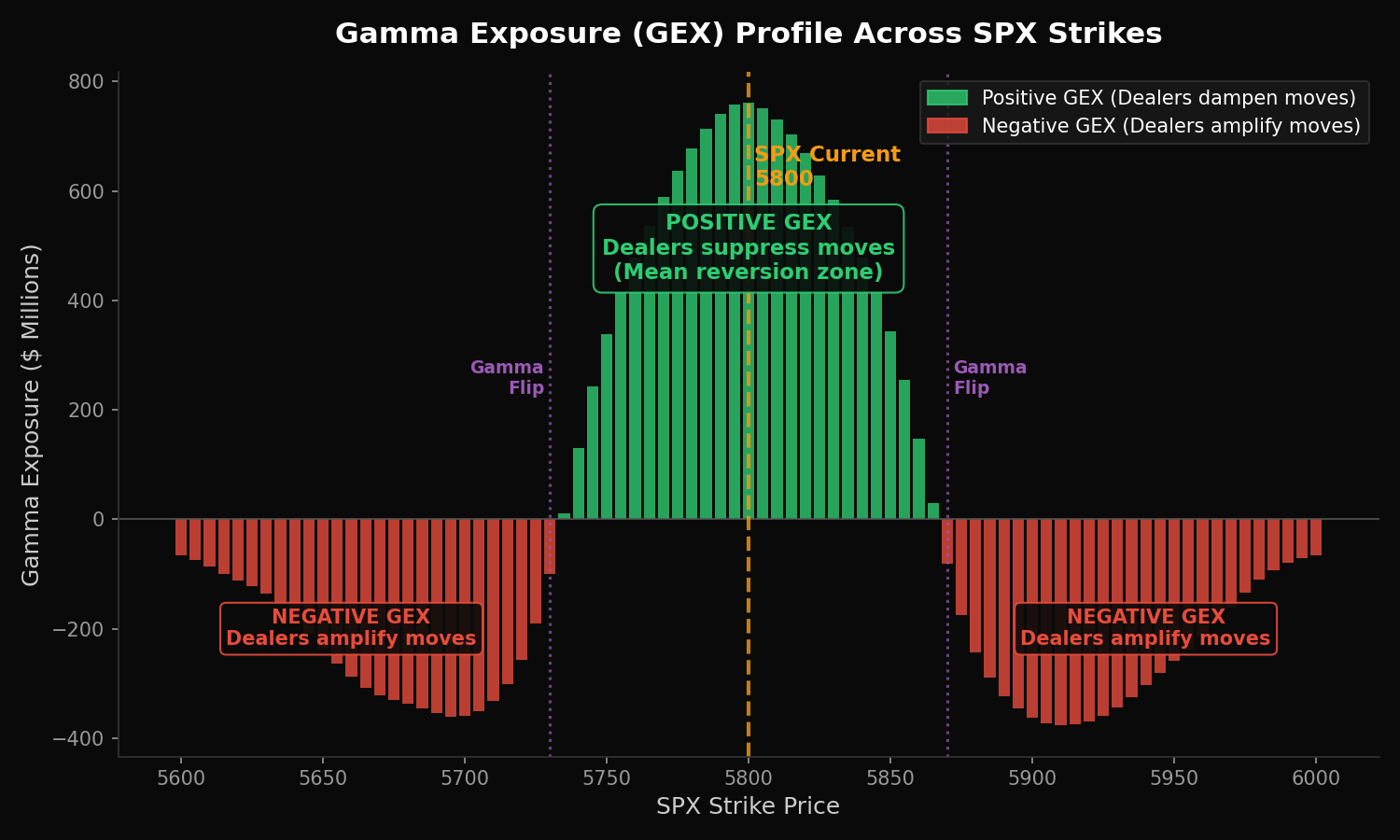
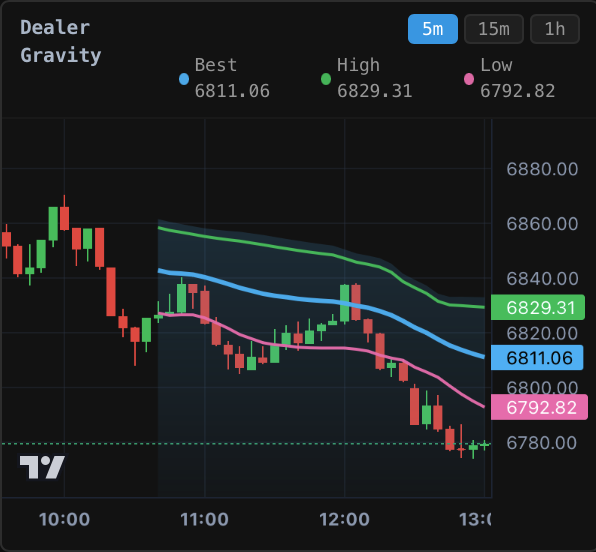
Structural traders use SPX options — cash-settled, no shares, no assignment. The GEX landscape tells them whether the session favors range-bound or trending behavior. The expected move defines the range. Dealer positioning identifies where price is likely to gravitate. They place butterfly spreads at structural targets with defined risk and asymmetric reward.
The covered call: risk $15,000 in stock to collect $300 in premium. Cap your upside. Keep your downside.
The butterfly: risk $50-$100 to target $500-$2,500. No capital locked in shares. No overnight risk. No assignment.
Same market. Completely different structure. The covered call pays you to be the insurance company. The butterfly pays you when the structure delivers. One is a slow grind with catastrophic tail risk. The other is a fast, defined-risk, asymmetric play informed by data the covered call trader does not have access to.
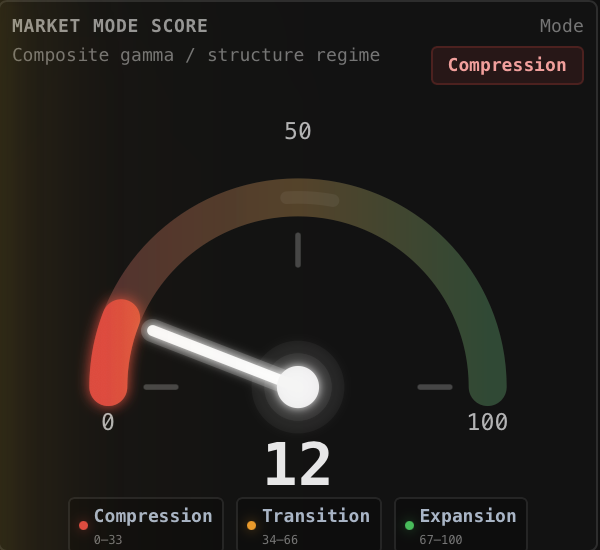
That data — GEX, market structure, VIX regime — is what changes everything. You stop guessing whether the stock will stay in range. You start reading whether the market is structurally compressed or expanded. And you deploy the right structure for what the positioning landscape is actually telling you.
Covered Call Strategy Checklist: If You Still Want to Run One
If the covered call fits your situation — long-term holdings, tax-advantaged account, shares you are planning to sell — here is the framework to do it without the common mistakes.
- Only sell calls on shares you want to own regardless. If assignment would bother you, do not sell the call.
- Sell at or above your target exit price. Never sell calls below your cost basis unless you are deliberately exiting at a loss.
- Use 30-45 DTE for optimal theta decay. Shorter expirations generate less premium per day of risk. Longer expirations tie up the position with diminishing marginal theta.
- Sell at 0.20-0.30 delta. This gives roughly an 70-80% probability of the call expiring worthless, keeping your shares.
- Do not sell calls into earnings. IV is elevated before earnings, which makes premium attractive — but the directional risk is extreme. A 10% gap up gets you called away well below the move. A 10% gap down gives you a premium that barely dents the loss.
- Track total return, not just premium collected. If your shares appreciated $5,000 but you collected $2,000 in premiums while getting called away three times and buying back higher, your total return is not $2,000. It is $2,000 minus the cost of re-entry and missed gains.
Frequently Asked Questions
What is a covered call strategy?
A covered call strategy involves owning 100 shares of a stock and selling a call option against them at a strike price above the current price. You collect the premium upfront. If the stock stays below the strike, you keep the premium and the shares. If it rises above, your shares are called away at the strike. You retain full downside risk on the shares minus the small premium collected.
Is the covered call strategy profitable?
Covered calls generate consistent small premiums in flat or slightly rising markets. Over long bull markets, they typically underperform buy-and-hold by 30-50% because the capped upside costs more than the premium compensates. Profitability depends on market conditions — the strategy is most effective in low-volatility, range-bound environments and least effective in strong trending markets.
What are the risks of selling covered calls?
The primary risk is the full downside of stock ownership. The premium collected provides only a minor buffer. A $3 premium does not meaningfully offset a $20 drop. The secondary risk is opportunity cost — getting called away during a strong rally means missing significant upside gains. You also face the behavioral risk of selling calls below cost basis after a drawdown, which can lock in losses.
What is a poor man’s covered call?
A poor man’s covered call replaces the 100 shares with a deep in-the-money LEAPS option (long-dated, high-delta call). You sell short-term calls against the LEAPS instead of shares. This reduces the capital requirement by roughly 80% while maintaining a similar payoff structure. The tradeoff is that the LEAPS itself decays over time and can lose value faster than shares during significant drawdowns.
Is a covered call the same as selling a put?
Yes, in terms of risk and reward. Put-call parity proves that a covered call (long stock + short call) has an identical payoff profile to a short put at the same strike. Both strategies profit in flat or rising markets, lose in dropping markets, and have capped upside. The practical differences are margin treatment and dividend exposure, but the risk structure is mathematically the same.
FATTAIL BRIEFINGS
Get FatTail briefings in your inbox
Pick the lists you want. FOMC Alerts is selected by default.