


The vertical spread is the first real options structure most traders learn. Buy one option. Sell another at a different strike. Same expiration. Defined risk. Defined reward. It sounds clean — and compared to naked options, it is. But most traders use vertical spread options the way they use everything else: without structural context, without positioning data, and without understanding what the trade is actually betting on.
A vertical spread is not complicated. It is a directional bet with guardrails. The problem is that the guardrails create a false sense of precision. You are not smarter for defining your risk. You are just losing less when you are wrong. And if you are wrong 60-70% of the time — which most directional traders are — the defined risk adds up fast.
This guide covers how vertical spread options work, when each variation makes sense, and why structural traders use a different framework entirely.
How Vertical Spread Options Work
A vertical spread uses two options of the same type — both calls or both puts — at different strikes with the same expiration. One is bought, one is sold. The distance between strikes defines your maximum risk and maximum reward.
Bull call spread. Buy a call at a lower strike. Sell a call at a higher strike. You pay a net debit. You profit if the underlying rises above your long strike by more than the debit paid. Maximum profit is the width of the strikes minus the debit. Maximum loss is the debit.
Bear put spread. Buy a put at a higher strike. Sell a put at a lower strike. You pay a net debit. You profit if the underlying drops below your long strike by more than the debit paid. Same math, opposite direction.
Bull put spread. Sell a put at a higher strike. Buy a put at a lower strike. You collect a net credit. You profit if the underlying stays above the short strike. Maximum profit is the credit collected. Maximum loss is the width minus the credit.
Bear call spread. Sell a call at a lower strike. Buy a call at a higher strike. You collect a net credit. You profit if the underlying stays below the short strike.
Four variations. Two are debit trades — you pay to play. Two are credit trades — you get paid to take risk. But the payoff diagrams of a bull call spread and a bull put spread at the same strikes are nearly identical — just like covered calls and naked puts. Put-call parity makes them structurally equivalent. Most traders do not realize they are choosing between packaging, not between risk profiles.
Bull Call Spread vs Bear Put Spread: Picking Direction
The debit vertical is the cleaner directional bet. You pay the premium upfront. No margin requirements beyond the debit. No assignment risk before expiration. If you are wrong, you lose what you paid. If you are right, you collect the difference between strikes minus the debit.
The problem is that most traders pick direction based on opinion. They think the stock will go up, so they buy a bull call spread. They think it will drop, so they buy a bear put spread. The vertical spread defines the risk — it does not improve the directional read. If your directional accuracy is 40%, a defined-risk structure just means you lose a defined amount 60% of the time.
This is where vertical spread options differ from a butterfly spread. A butterfly does not require you to pick direction in the traditional sense. It requires you to identify a target — a price level where the structure favors convergence. That target comes from dealer positioning and market structure, not from opinion. The vertical gives you guardrails. The butterfly gives you a map.
Debit Verticals vs Credit Verticals: Same Shape, Different Bet
Credit verticals — bull put spreads and bear call spreads — are the more popular choice among retail options sellers. The appeal is obvious. You collect premium upfront. You win if the stock does nothing. Time decay works for you. Win rates are high — 65-80% depending on strike selection.
But credit verticals are negative skew trades. You collect $80 in premium to risk $420. You win eight out of ten times. The two losses erase the eight wins. The math does not change because you added a protective wing to your short option. The wing reduces your maximum loss compared to a naked position, but the asymmetry — small wins, large losses — remains.
Debit verticals flip the skew. You risk $80 to make $420. You lose more often but win bigger when right. The problem is still directional accuracy. And time decay works against you — every day the trade sits, it loses value.
Neither structure solves the core problem: directional uncertainty. They just package it differently. Credit verticals win often and lose big. Debit verticals lose often and win big. Same uncertainty. Different payout shape. The vertical spread options trader picks the wrapper — but the directional bet inside is identical.
What Most Traders Get Wrong
The mistakes are consistent because the education is consistent. Every course teaches verticals the same way: pick a direction, choose your strikes, manage risk. The real problems with vertical spread options happen before strike selection.
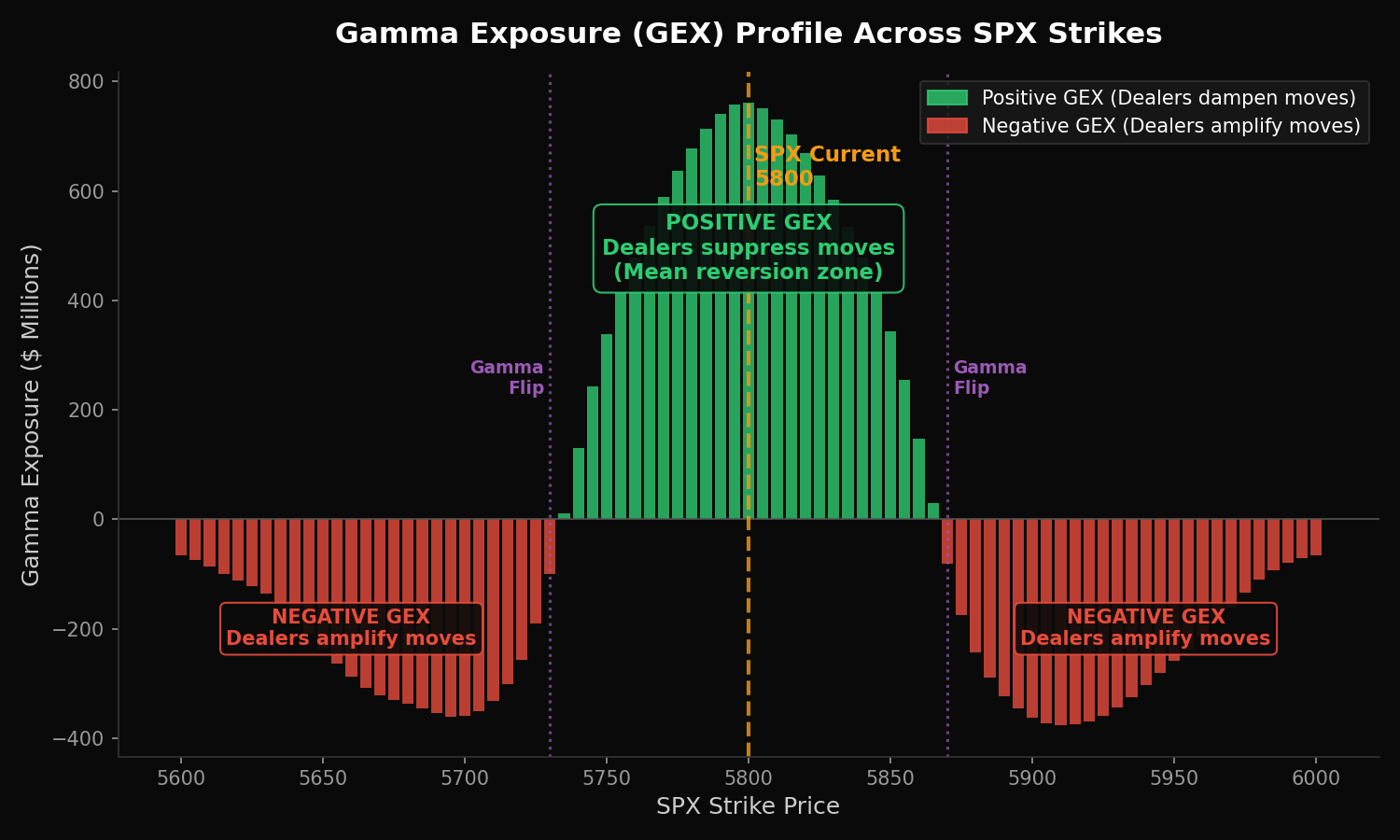
Trading verticals without structural context. A vertical spread on AAPL is a directional bet on a single stock. You have no read on where dealer hedging creates pressure. You have no GEX profile telling you whether the session favors mean reversion or trending behavior. You are guessing direction and hoping the stock cooperates. Sometimes it does. Sometimes it gaps against you on a random Tuesday.
Ignoring the expected move. If the expected move for a stock is 2% and you place your short strike 1% away, you are selling premium inside the expected range. That is not edge. That is reckless positioning disguised as income generation. The expected move exists for a reason — it defines the market’s pricing of risk.
Treating high win rates as edge. A 70% win rate on credit verticals means nothing if the 30% losses are three to four times the size of wins. Track total P&L, not win percentage. Most credit vertical traders cannot tell you their actual expectancy per trade. They can tell you their win rate. Those are different numbers.
Overcomplicating with multi-leg structures. Some traders stack verticals into iron condors or add extra legs to reduce risk. Every additional leg adds slippage, widens the bid-ask spread, and makes management harder. If your directional read is wrong, more legs do not save you. They just make the loss more expensive to exit.
The structural framework that FatTail teaches applies directly to vertical spread options. Before placing any spread, understand the broader positioning landscape. The daily pre-market analysis in Observer ($17/week) covers GEX positioning, expected move, and VIX regime — context that determines whether directional premium plays make sense on any given day. Activator ($97/month) adds real-time tools and weekly coaching. Navigator ($267/month) provides daily direct coaching with Ernie. Compare all plans here.
When the Vertical Spread Actually Makes Sense
Vertical spreads are not always wrong. They are conditionally appropriate — and the conditions matter more than the structure.
Clear directional thesis with a catalyst. If earnings, an FOMC decision, or a product launch gives you a defined directional view with a time horizon, a debit vertical lets you express that view with capped risk. The key is that your thesis has a reason beyond chart patterns and intuition. Catalysts provide structure. Opinions do not.
Hedging an existing position. A bear put spread against a long stock position provides defined-cost downside protection for a specific time window. This is cheaper than buying a standalone put and more targeted than a trailing stop. You are not generating income — you are buying insurance with a deductible.
Low-volatility environments where butterflies are too narrow. When VIX is extremely low and butterfly widths compress to the point where the risk-reward deteriorates, a directional vertical can offer a cleaner trade — if you have structural reason to believe direction. This is a narrow use case. Most of the time, the butterfly’s asymmetry outperforms the vertical’s linear payoff.
Why Structural Traders Use a Different Approach
The vertical spread is a directional bet with defined risk. The butterfly spread is a convergence bet with defined risk. Both are defined-risk. Only one uses structural data to inform the target.
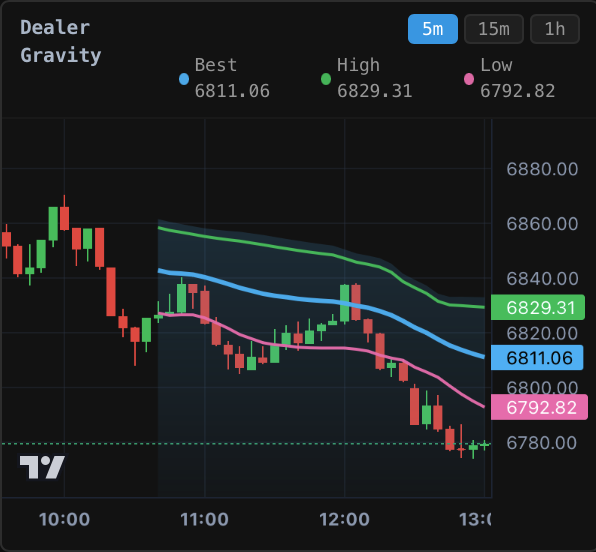
Structural traders read the GEX landscape before the session opens. They identify where dealer positioning creates gravity — price levels where hedging flows pull price toward or repel it away from. They calculate the expected move. They select butterfly widths based on the current VIX regime. Then they place the trade.
The vertical: risk $100-$500 on a directional guess. Win if the underlying moves your way by enough. Lose if it does not.
The butterfly: risk $30-$100 on a structural target. Win if price converges to the level the positioning data identified. One good trade pays for five to ten losses.
Same market. Same capital. Completely different framework. The vertical spread options approach asks you to predict direction. The butterfly asks you to read structure. One is a coin flip with guardrails. The other is a data-informed, asymmetric play.
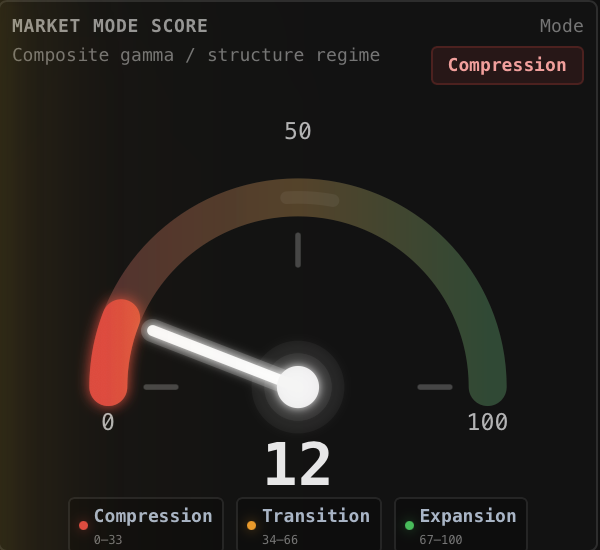
That data — GEX, market structure, VIX regime — is what changes the game. You stop guessing whether the stock will go up or down. You start reading whether the market is structurally compressed or expanded. And you deploy the right structure for what the positioning landscape is actually telling you. The daily pre-market analysis in Observer ($17/week) delivers this context every session. Activator ($97/month) adds real-time tools and weekly coaching. Navigator ($267/month) provides daily direct coaching with Ernie. Compare all plans here.
Frequently Asked Questions
What is a vertical spread in options?
A vertical spread uses two options of the same type — both calls or both puts — at different strike prices with the same expiration date. One option is bought and one is sold. The distance between strikes defines both maximum risk and maximum reward. Vertical spreads can be constructed as debit trades where you pay upfront or credit trades where you collect premium upfront.
What is the difference between a debit spread and a credit spread?
A debit spread costs money to enter — you pay the difference between the option you buy and the option you sell. You profit when the underlying moves in your direction. A credit spread pays you premium upfront. You profit when the underlying stays away from your short strike. Debit spreads win less often but win bigger. Credit spreads win more often but lose bigger. The risk-reward is inversely related to the win rate.
Are vertical spreads profitable?
Vertical spreads can be profitable if your directional accuracy exceeds the break-even rate implied by the spread’s cost relative to its width. For a debit spread costing $2 on a $5-wide spread, you need to be right more than 40% of the time to break even. Most retail traders do not achieve consistent directional accuracy above 50%, which is why structural approaches that do not depend on directional prediction often outperform over time.
What is the best vertical spread strategy?
There is no universally best vertical spread strategy. Debit verticals work better when you have a clear directional catalyst and defined time horizon. Credit verticals work better in range-bound, low-volatility conditions. Both require directional accuracy to be profitable long-term. Structural traders often prefer butterfly spreads over verticals because butterflies offer asymmetric payoffs informed by dealer positioning data rather than directional opinion.
Can you trade vertical spreads on SPX?
Yes. SPX options support vertical spreads and they are cash-settled, meaning no share assignment risk. However, structural traders who use SPX typically prefer butterfly spreads over verticals because the GEX and dealer positioning data available for SPX provides convergence targets — and butterflies are the structure designed to capitalize on convergence. Verticals require directional accuracy that the structural data does not directly provide.
FATTAIL BRIEFINGS
Get FatTail briefings in your inbox
Pick the lists you want. FOMC Alerts is selected by default.