


Ask ten traders what covered calls are and you will get one answer: own 100 shares, sell a call against them, collect the premium. That is true, but it is only one version of the trade. Covered calls are not a single strategy — they are a family of income approaches that range from the textbook stock-plus-call to capital-efficient diagonals, weekly premium programmes, and fully passive option-income funds. Each has a different cost, a different risk, and a different ideal owner. Picking the wrong one is how people end up capping their upside for a premium that never justified it.
This guide compares the main ways to run covered calls and shows which version fits which kind of account, so you can choose the structure deliberately instead of defaulting to the only one you have heard of.
What Covered Calls Actually Are
At the core, a covered call pairs a long position in the underlying with a short call option sold against it. The short call obligates you to sell your shares at the strike if the buyer exercises. In exchange, you collect the option premium up front. That premium is your income, and it is also your maximum benefit from any upside above the strike — once the stock passes it, your gains are capped.
The trade-off is the whole story: you are converting uncertain future upside into certain present income. The Options Clearing Corporation’s education site has a free payoff calculator that makes this ceiling obvious if you have never plotted it. If you are completely new to the mechanics, start with the beginner breakdown and come back here to compare the variations.
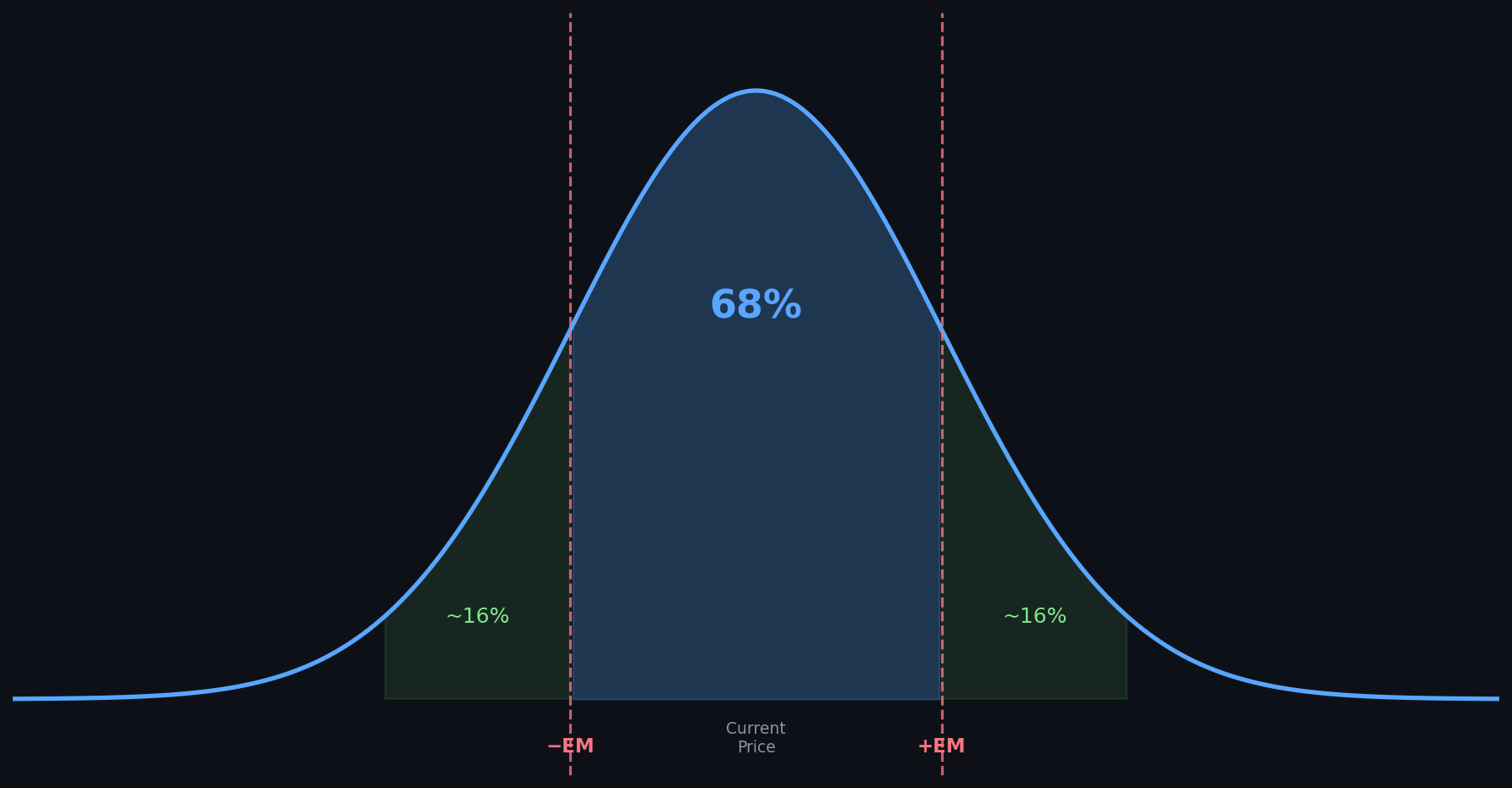
The Standard Version: 100 Shares, One Short Call
This is the version everyone learns. You own at least 100 shares of a stock or ETF, and you sell one call contract per 100 shares against them. It is the simplest structure and the easiest to manage, but it is also the most capital-intensive: holding 100 shares of a $200 stock ties up $20,000 before you have collected a cent of premium.
The standard covered call suits investors who already own the shares and want to generate yield on a position they intend to hold anyway. If you would be comfortable owning the stock with no option at all, writing calls against it is a reasonable way to manufacture income. The danger is writing calls on a stock you are not happy to part with — a strong rally forces a choice between letting the shares go or buying back the call at a loss.
The Poor Man’s Covered Call: Same Idea, Less Capital
Instead of buying 100 shares, you buy a deep in-the-money long-dated call (a LEAPS) as a stock substitute and sell shorter-dated calls against it. The long call behaves like the stock for a fraction of the capital, which is why this capital-efficient version appeals to smaller accounts.
The efficiency comes with strings. Your long call still decays, so you are racing time on both legs. You also have to manage the diagonal relationship between the two strikes and roll the long leg before it expires. It is a more demanding trade than the standard version, and it punishes sloppiness — but for traders who cannot or will not commit five figures to a single name, it opens the door to the same income mechanic.
Weekly vs Monthly Covered Calls: Which Income Cadence Wins
Once you have chosen a structure, you still have to choose an expiration. Weekly calls collect premium more often and let you reset strikes as the stock moves, which feels active and responsive. Monthly calls collect more premium per contract and demand far less management.
The instinct that weeklies “earn more because you sell 52 times a year” ignores two costs: commissions and gamma. Short-dated options carry more gamma risk, meaning a fast move can blow through your strike before you react. They also decay fastest in the final days, so the premium edge is real but smaller than the annualised math suggests. Monthlies trade some yield for stability and time. There is no universal winner — weeklies reward attention, monthlies reward patience. Match the cadence to how much you actually want to babysit the position.
Option-Income ETFs and Funds: Hands-Off Premium
If managing strikes and rolls sounds like a part-time job you did not sign up for, option-income funds run the strategy for you. These products hold an index or basket and systematically write calls against it, distributing the premium as yield. They are genuinely passive, which is their entire appeal.
What you give up is control and, often, total return. A fund that mechanically caps upside every month will lag the index badly in a strong bull market — you receive the distributions but miss the appreciation that an uncovered holder keeps. The U.S. Securities and Exchange Commission’s investor education resources are worth reading before you buy any income product, because the headline yield rarely tells the whole story. Funds are the right answer for someone who wants the income profile without the work, and the wrong answer for someone trying to beat the market.
How to Choose Strikes and Expirations
Whatever version you run, the same two dials control the outcome:
- Strike distance. A near-the-money call collects the most premium but caps upside almost immediately and is the most likely to be assigned. A further out-of-the-money call collects less but leaves room for the stock to appreciate before the ceiling kicks in. The strike is where you decide how much upside you are willing to sell.
- Delta as a shortcut. Many writers target a call delta around 0.30, which roughly corresponds to a 30% chance of finishing in the money. It is a rule of thumb, not a law, but it keeps the upside cap reasonable while still collecting meaningful premium.
- Implied volatility. Premium is richest when implied volatility is elevated. Writing calls into high IV pays you more for the same risk — but high IV usually means the market expects a big move, so the extra income is compensation, not a free lunch.
The stock you write on matters as much as the strike. Covered calls work best on names you are neutral-to-mildly-bullish on and would hold regardless. They are a poor fit for stocks you expect to rip higher, because the cap will cost you far more than the premium pays.
When the Strategy Wins, and When It Quietly Costs You
Covered calls win in flat, choppy, or slowly rising markets. When the stock drifts sideways, the premium you collect is pure return that a buy-and-hold investor never sees. They also soften losses slightly: the premium offsets the first sliver of any decline.
They lose in two scenarios. In a sharp rally, the cap forces you to forgo gains far larger than the premium — the most common and most painful failure. In a deep selloff, the premium is a rounding error against the drop in the shares; the strategy is not real downside protection, only a thin cushion. This is the critique laid out in full in our look at why this income play often costs more than it pays, and it is the single most important thing to internalise before committing capital. If outright stock ownership feels too exposed, pairing the write with a long put (a collar) or running cash-secured puts instead may suit your risk tolerance better.
Common Mistakes That Quietly Kill Returns
Three errors recur:
First, writing calls on stocks you love. If you would be upset to sell at the strike, you are in the wrong trade. The whole point is willingness to part with the shares.
Second, chasing the fattest premium by selling at the money on volatile names. The income looks great until the stock gaps and you are assigned at a strike well below where it now trades, or you panic-buy the call back at a loss.
Third, treating the strategy as safe because it is “covered.” Covered refers to your obligation being backed by shares, not to your downside being protected. Your capital is still fully exposed to a falling stock. For a structured way to think about that exposure across every income trade, the premium-selling framework ties it together.
Frequently Asked Questions
Are covered calls a good strategy for beginners?
The standard version is one of the more beginner-friendly options trades because the risk is defined by the stock you already own and there is no naked exposure. The key caution is to only write calls on shares you are genuinely willing to sell at the strike.
What is the difference between covered calls and a poor man’s covered call?
A standard covered call uses 100 actual shares as the backing. A poor man’s covered call replaces the shares with a deep in-the-money long-dated call (LEAPS), achieving similar exposure for far less capital, at the cost of added complexity and time decay on the long leg.
Can you lose money selling covered calls?
Yes. The premium offsets only a small portion of a falling stock, so a significant decline in the underlying produces a net loss. You can also lose relative to buy-and-hold if the stock rallies sharply above your strike, because your upside is capped.
How much income can covered calls generate?
It varies with the stock’s volatility, the strike chosen, and the expiration. Writers often target a few tenths of a percent to a couple of percent of the position value per month, but higher yields always reflect higher risk, not free money.
What happens if my covered call is assigned?
Your shares are sold at the strike price and you keep the premium. If the stock finished well above the strike, you still profit up to the strike but miss the additional gain. Many writers roll the call to a later expiration to avoid assignment when they want to keep the shares.
The Bottom Line
Covered calls are a family, not a formula. The standard stock-plus-call suits investors with the capital and the willingness to sell; the poor man’s version opens the trade to smaller accounts; weeklies reward active management and monthlies reward patience; funds hand the whole job to a manager in exchange for control. Choose the version that matches your capital, your time, and your view on the stock — and never write a call on a position you would hate to lose. Want to see how disciplined traders run income strategies on SPX in real time? FatTail teaches the structural approach through live sessions and a serious options community.
FATTAIL BRIEFINGS
Get FatTail briefings in your inbox
Pick the lists you want. FOMC Alerts is selected by default.