


A losing 0DTE trade does not prove you traded badly. A winning one does not prove you traded well. That distinction is where a real live options trading coach starts. If the coaching experience is built around calling the next move, celebrating every winner, and explaining away every loser, it is not building a trader. It is building dependency.
For self-directed SPX traders, live coaching should do something harder and more useful. It should teach you how to define risk before entry, recognize positioning instead of chasing headlines, size a trade so one bad outcome cannot damage the account, and review execution without inventing a story after the fact. For the full checklist, see how to choose a program.
That is not as exciting as a stream of alerts. It is much more durable. A solid grounding in the mechanics, such as the OCC’s options education, is table stakes.
A Live Options Trading Coach Is Not a Signal Service
The retail trading world has trained people to ask the wrong question: “What should I trade right now?” A coach who answers that question all day may feel helpful. But if you cannot explain the structure, the risk, the reason for the location, and the conditions that would invalidate the idea, you do not own the trade.
You borrowed it.
Signals create a false sense of certainty. They make the coach responsible for the outcome and leave the trader with no framework when conditions change. That problem gets worse in 0DTE SPX options, where time is compressed, gamma can accelerate exposure, and an oversized position can turn a normal loss into an emotional event.
Good live coaching teaches decision-making in public. You should hear why a trade is being considered, why it may be passed, how risk is capped, and what would make the setup less attractive. You should also see disciplined non-action. Not every market condition deserves a position.
The goal is not to become someone who follows a coach well. The goal is to become someone who needs no one.

What Live Coaching Should Actually Teach
A useful coaching environment has an operating system behind it. The market is live, but the process should not be improvised. Traders need a repeatable sequence for preparation, execution, management, and review.
Start With Structure, Not a Market Prediction
Many traders begin with an opinion. Bullish. Bearish. Certain the market has gone too far. Then they search for an options trade that expresses the opinion.
That is backward.
A defined-risk SPX framework begins by studying the environment: price location, expected movement, intraday behavior, and options positioning. The question is not whether you can correctly predict the next candle. The question is whether the available structure offers acceptable risk relative to the conditions.
This matters because prediction is fragile. You can be directionally right and still lose from poor structure, bad timing, excessive size, or an unrealistic expectation of how quickly the market should move. You can also be wrong about direction and still have a controlled, planned outcome because risk was defined from the start.
A coach should show you how to separate an observation from a conclusion. “Price is approaching a level with concentrated options positioning” is an observation. “Therefore the market must reverse” is a conclusion. Markets do not owe you the second part.
Define Risk Before You Care About Reward
The first job of a trade is not to make money. The first job is to survive the loss if it happens.
Defined-risk structures make that possible. Before entering, you should know the maximum planned loss, the exposure created by the position, and whether that loss fits the account and the day. If those answers are unclear, the trade is not ready.
This is where live coaching can be especially valuable. Traders often understand position sizing in theory, then abandon it when the screen is moving. Seeing risk discussed before entry helps turn discipline from a slogan into a routine.
A competent coach will not frame every loss as a mistake. Some losses are planned reps. They are the cost of running a process with uncertainty built into it. The mistake is not losing. The mistake is taking risk you did not understand, could not absorb, or had no reason to take.
Treat Sizing as a Core Skill
Most account damage does not come from being slightly wrong about the market. It comes from being far too large for the trade.
A live options trading coach should repeatedly bring the conversation back to size. Not because sizing is glamorous, but because it determines whether you can execute the next valid setup after this one loses. The trader who sizes small enough to remain clear-headed has an advantage over the trader whose position makes every tick feel personal.
Correct size depends on the maximum defined risk of the structure, the account’s risk limits, the number of positions already open, and the trader’s ability to follow the plan. That last point is often ignored. A size that looks reasonable on a spreadsheet may be too large if it causes you to panic, interfere, or revenge trade.
Small size is not timid when it protects the ability to gather clean data and stay in the game. It is professional.
Why the “Live” Part Matters
Recorded lessons are useful for learning terminology and reviewing frameworks. But live markets expose the gap between knowing and doing.
A chart at the end of the day is clean. The decision at 10:17 a.m. is not. Volatility changes. A level breaks and then reclaims. A position that looked straightforward suddenly requires patience. This is where traders discover whether their rules are real or merely aspirational.
Live training gives context to those moments. It can show how an experienced trader evaluates a setup without pretending to know the future. It can also demonstrate the less visible skills: waiting, passing, reducing risk, and accepting that a planned trade did not work.
The standard should not be constant action. A coach filling every minute with trades is often responding to the audience’s desire for stimulation, not the market’s actual opportunity. There are sessions when the best lesson is why no trade was taken.
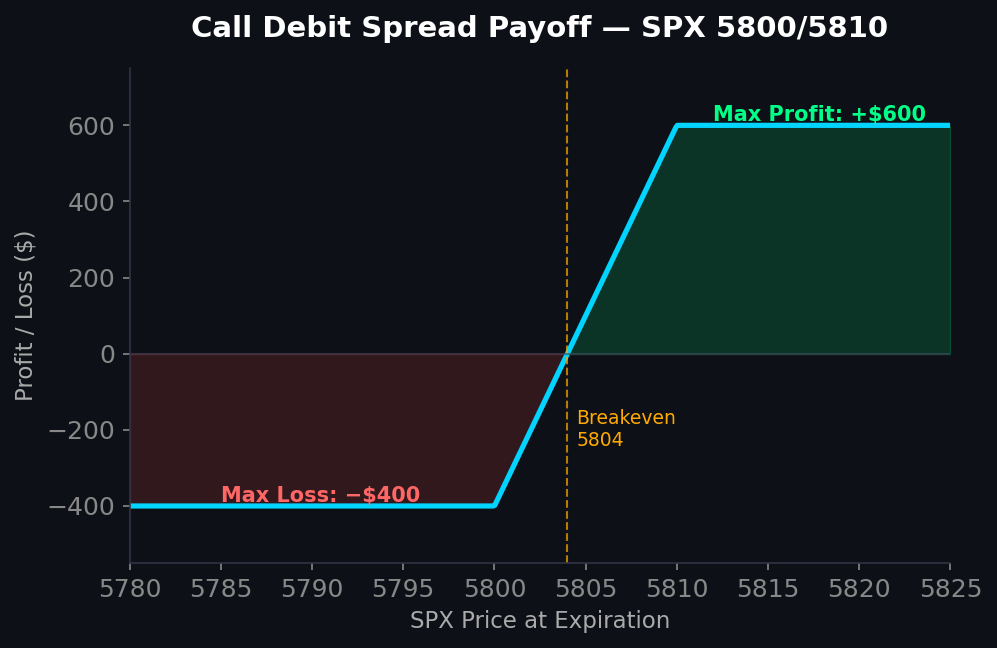
That said, live access alone is not enough. Watching another person trade can become entertainment if there is no structure around it. A serious trading community pairs live access with structure. Traders need preparation materials, clear definitions, risk graphs, trade logs, and a way to review decisions after the market closes. The live session is one part of the feedback loop, not the entire education.
The Post-Trade Review Is Where Independence Is Built
Most traders review P&L. Professional improvement requires reviewing process.
After a trade, the useful questions are direct. Was the position sized according to plan? Was the maximum risk understood? Did the entry match the framework? Did you follow management rules? Did emotion change the decision? Was the trade a valid setup that lost, or an invalid trade that happened to win?
Those questions separate outcome from quality. Without that separation, traders tend to reinforce bad behavior after winners and abandon good behavior after losses. A high-quality review corrects that distortion.
Tools matter here. A trade log should capture more than entry and exit prices. It should preserve the rationale, the structure, the risk, the market context, and the lesson. Risk graphs and options-positioning views can help a trader see what was actually owned, rather than relying on memory after the fact.
At FatTail.ai, the point of live market exposure and purpose-built analytics is not to give members a trade to copy. It is to make the decision process visible, measurable, and repeatable.
Questions to Ask Before Choosing a Coach
Before committing to any coaching program, look past the marketing. Our guide on choosing an options course covers what to look for. Ask whether the education centers on defined risk or on exciting outcomes. Ask whether the coach explains losing trades with the same clarity as winners. Ask whether position sizing is taught as seriously as entries. Investor-protection resources from the SEC are worth reading before you pay for any trading education.
Also ask what happens when you are not watching live. Is there a clear framework you can apply on your own? Can you review your own trades against it? Are you learning how to interpret market structure, or simply waiting for the next instruction?
A strong coach will welcome those questions. Their value is not that you remain dependent on their presence. Their value is that, over time, you become capable of making a disciplined decision without it.
The market will always contain uncertainty. Your process does not have to. Build one that defines the loss, respects the size, records the decision, and gives you another clean opportunity tomorrow.
Frequently Asked Questions
What should a live options trading coach teach?
How to define risk before entry, recognize positioning instead of chasing headlines, size so one bad outcome cannot damage the account, and review execution honestly. The goal is not to follow a coach well; it is to become a trader who needs no one.
Is options coaching just a signal service?
It should not be. A coach who answers “what should I trade right now?” all day builds dependency. Good live coaching teaches decision-making in public, why a trade is considered, why it may be passed, how risk is capped, and shows disciplined non-action.
Why does the “live” part of coaching matter?
Recorded lessons teach terminology, but live markets expose the gap between knowing and doing. A chart at the end of the day is clean; the decision at 10:17 a.m. is not. Live training shows how an experienced trader evaluates a setup without pretending to know the future.
What questions should you ask before choosing a coach?
Whether the education centers on defined risk or exciting outcomes, whether losing trades are explained with the same clarity as winners, whether sizing is taught as seriously as entries, and what happens when you are not watching live, is there a framework you can apply alone?
How is a coach different from an alert service?
An alert hands you a conclusion and makes the sender responsible for the outcome, leaving you with no framework when conditions change. A coach makes the reasoning visible so you can eventually make a disciplined decision without their presence.
FATTAIL BRIEFINGS
Get FatTail briefings in your inbox
Pick the lists you want. FOMC Alerts is selected by default.