


Every options expiration, a quiet gravitational pull seems to drag the underlying toward a specific strike — the one where the largest number of contracts expire worthless. Max pain theory is the idea that this is no accident: that the market, through the mechanical hedging of the dealers who sold those options, tends to settle at the price that inflicts the greatest total loss on option buyers. It is one of the most debated concepts in options trading, dismissed by some as superstition and treated by others as a genuine edge. This guide explains what the theory actually claims, the mechanism that could make it real, how the number is calculated, and — the part that matters — whether it holds up.
What Max Pain Theory Actually Says
Max pain theory states that as expiration approaches, the underlying price tends to gravitate toward the strike at which option holders, in aggregate, lose the most money. This strike is called the max pain point, and by definition it is the price where the combined value of all in-the-money puts and calls is at its minimum — meaning the sellers of those options keep the most premium.
The logic rests on a simple asymmetry: option buyers pay premium and mostly lose it, while option sellers — largely market makers and institutions — collect it. The theory proposes that the collective hedging activity of those sellers, not a conspiracy, nudges price toward the level of maximum expiring worthlessness. If you want the broader question of whether max pain actually predicts price answered in depth, the main analysis covers the evidence; this post focuses on the theory and its mechanism.
The Mechanism: Option Writers, Hedging, and Pinning
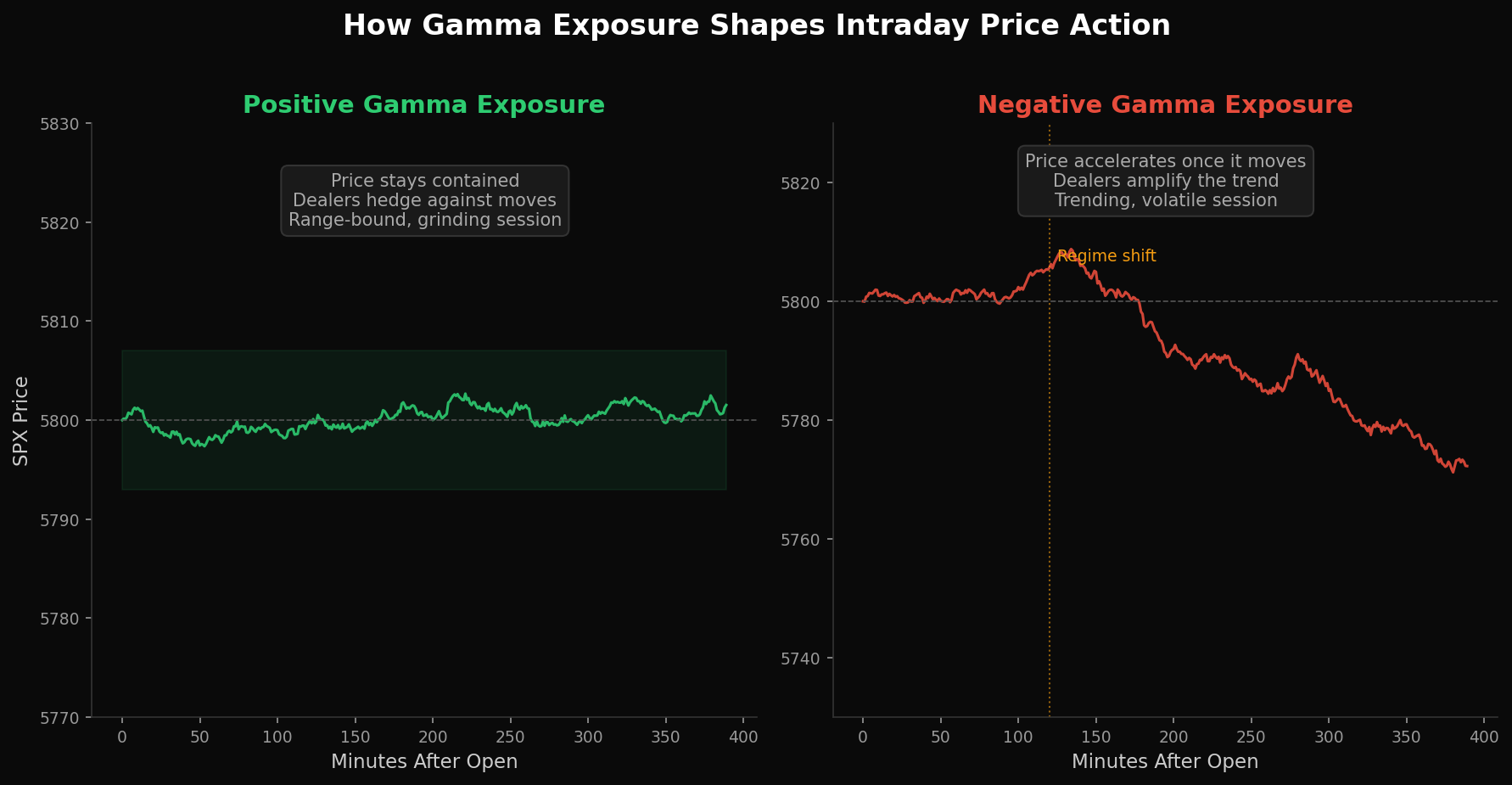
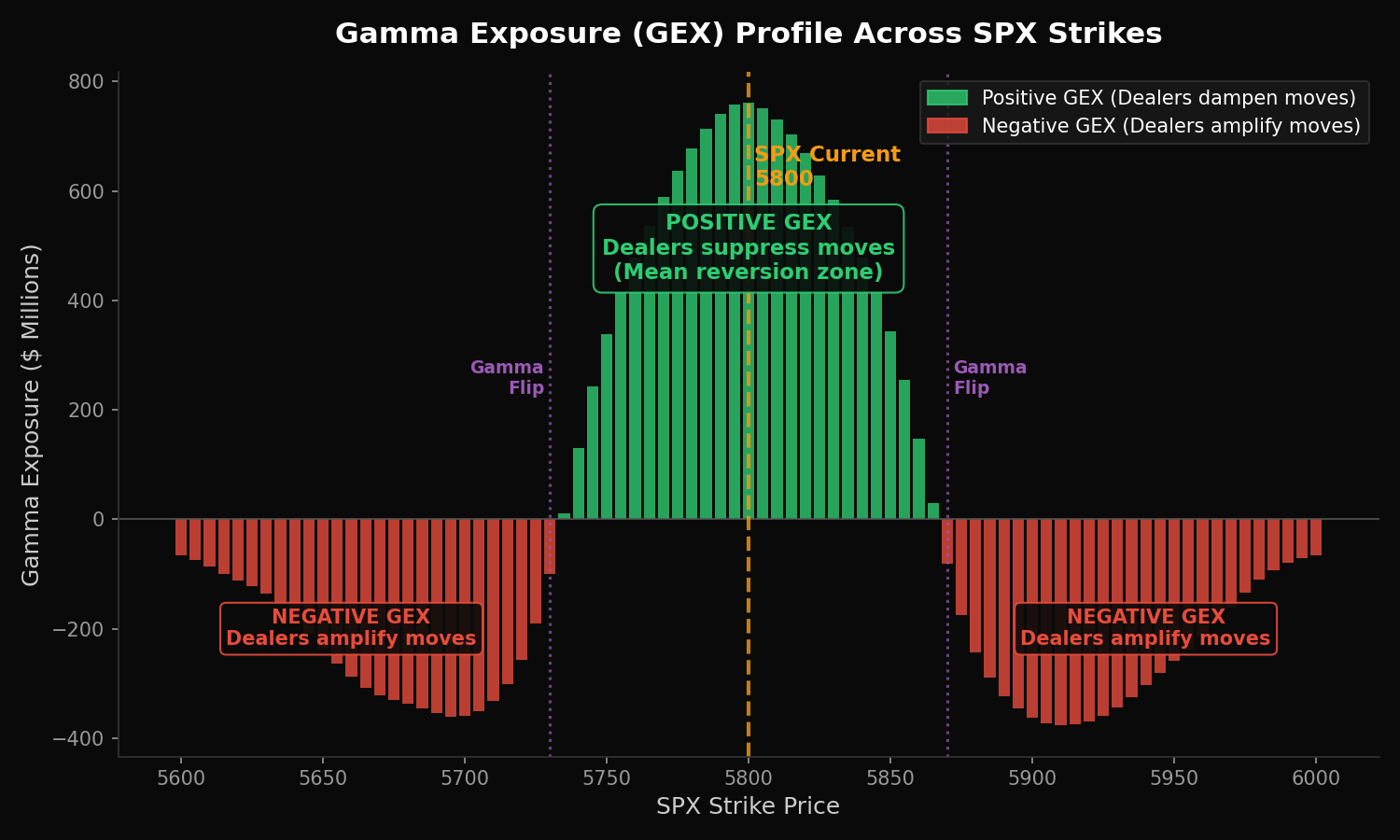
The theory is only credible because there is a real mechanism behind it, and that mechanism is dealer hedging. When market makers sell options to the public, they do not want directional exposure, so they hedge by buying and selling the underlying to stay delta-neutral. As expiration nears and gamma concentrates around the most heavily traded strikes, that hedging becomes self-reinforcing.
Near a strike with large open interest, dealers who are short those options must buy the underlying as it falls and sell as it rises to stay neutral — activity that dampens moves and effectively “pins” price to the strike. This is the same dealer gamma hedging that drives so much of intraday index behaviour, and it is why pinning is strongest in names with concentrated open interest and heavy options volume. Max pain is, in effect, the price level where this pinning pressure is most balanced.
How the Max Pain Price Is Calculated
The max pain price is not guessed — it is computed from the options chain. For every strike, you calculate the total dollar value that would be lost by option holders if the underlying settled there, summing across all in-the-money calls and puts weighted by their open interest. The strike that produces the smallest total payout to option holders is the max pain point.
In practice the calculation works like this:
- For each strike, take the open interest of every call and put.
- Calculate how much those options would be worth if the underlying expired at that strike.
- Sum the total value across all strikes for that expiration price.
- Repeat for every candidate price; the one with the lowest total option-holder value is max pain.
Because it is driven by open interest, max pain shifts as positions are opened and closed, and it is only meaningful close to expiration when open interest has stabilised. A max pain reading three weeks out is far less reliable than one on expiration morning.
Does Max Pain Theory Actually Work?
Here is the honest answer: sometimes, in specific conditions, and never as a precise timing tool. The pinning effect is real and measurable in heavily traded names on expiration day, particularly for weekly and monthly expirations where open interest concentrates. Academic and practitioner studies have found a modest tendency for prices to close nearer to max pain than random chance would predict — but the effect is weak, noisy, and easily overwhelmed by news, earnings, or macro moves.
What max pain theory is not: a reliable predictor of where a stock will be days or weeks ahead, or a signal you can blindly trade. Treating the max pain strike as a magnet that guarantees a destination is how traders lose money. It is a pressure, not a promise. The market makers’ hedging creates a gentle bias toward the strike, and any genuine catalyst can and does override it.
How Traders Use It, and How to Misuse It
Used well, max pain is a context tool, not a trigger. Traders who respect it use the max pain strike as one input among many: a sense of where pinning pressure sits going into expiration, useful for setting up neutral strategies like iron condors or butterflies centred near that level, or for judging whether a position is fighting or riding the expiration bias.
The misuse is treating it as prophecy — buying or selling purely because price sits above or below max pain, or assuming the underlying must travel to the strike by Friday. It carries no timing information and no guarantee. The Options Clearing Corporation’s education resources are a good grounding in the expiration mechanics that underpin all of this, and worth reading before you lean on any expiration-based signal.
The Limits of Max Pain Theory
Three limitations keep max pain honest. First, it is backward-looking: it reflects current open interest, which can shift rapidly as expiration approaches. Second, it is only meaningful in liquid, options-heavy underlyings — on thinly traded names there is not enough dealer hedging to create pinning. Third, and most important, it is trivially overpowered by real news. An earnings surprise, a Fed decision, or a macro shock will send price wherever fundamentals dictate, max pain be damned.
The pinning effect also fades as you move away from expiration. The contract specifications from Cboe matter here for index products like SPX, where cash settlement and the specific expiration timing change how pinning expresses itself compared with single stocks that settle in shares.
Max Pain on Indices vs Individual Stocks
The theory behaves differently depending on the underlying. On individual equities, pinning to round-number strikes with heavy open interest is a well-documented phenomenon, especially on monthly expirations — the behaviour explored in our look at max pain on single stocks. On broad indices like the S&P 500, the sheer size and diversity of participants, plus the constant flow of 0DTE options, make the picture noisier, though dealer positioning still shapes intraday ranges. For the full toolkit of how positioning signals like this fit together, the market-structure framework lays them out side by side.
Frequently Asked Questions
What is max pain theory?
Max pain theory is the idea that an underlying tends to gravitate toward the strike price where the greatest number of options expire worthless, because the hedging activity of the dealers who sold those options creates pinning pressure at that level. That strike is called the max pain point.
Is max pain theory reliable?
Only modestly, and only near expiration in liquid, options-heavy names. Studies find a weak tendency for prices to close nearer to max pain than chance would predict, but the effect is easily overwhelmed by news, earnings, and macro moves. It is a pressure, not a prediction.
How is the max pain price calculated?
For each possible expiration price, you sum the total value of all in-the-money calls and puts weighted by their open interest. The strike that produces the smallest total payout to option holders — and therefore the largest gain for option sellers — is the max pain point.
Why does price move toward max pain?
The proposed mechanism is dealer hedging. Market makers who sold the options hedge to stay delta-neutral, buying dips and selling rallies near heavily traded strikes. This activity dampens moves and pins price toward the strike with the most concentrated open interest.
Can you trade using max pain theory?
It is best used as context rather than a trigger — for example, centring neutral strategies like iron condors near the max pain strike going into expiration. Trading it blindly, as if price must reach the strike, is a common and costly mistake because it carries no timing guarantee.
The Bottom Line
Max pain theory is neither magic nor myth. It describes a real effect — dealer hedging pinning price toward the strike of maximum expiring worthlessness — that shows up measurably in liquid names on expiration day and vanishes into noise everywhere else. Use it as a lens on where expiration pressure sits, not as a crystal ball, and pair it with the fuller picture of positioning and open interest rather than trading it in isolation. Want to see how disciplined traders read expiration positioning and dealer flow on SPX in real time? FatTail teaches the structural approach through live sessions and a serious options community.
FATTAIL BRIEFINGS
Get FatTail briefings in your inbox
Pick the lists you want. FOMC Alerts is selected by default.