


Most people who hear about selling stock options for income picture one trade: writing a call against shares they own and pocketing the premium. That is half of it. The full strategy is two-sided — you sell calls to generate income on stock you hold, and you sell puts to get paid while waiting to buy stock you want. Run together, these two engines turn a static equity portfolio into one that produces cash flow in flat and choppy markets. Run carelessly, they cap your upside and hand you shares at the worst possible moment. This guide covers how the strategy actually works, what it realistically pays, and where it bites.
What Selling Stock Options for Income Actually Means
At its core, selling stock options for income means collecting premium by taking on an obligation. When you sell an option, the buyer pays you up front for the right to transact at a set price. You keep that premium no matter what. In exchange, you accept the obligation to deliver or buy shares if the option finishes in the money.
There are two clean ways to do this on equities. You sell covered calls against shares you already own, capping your upside in return for income. Or you sell cash-secured puts, setting aside the cash to buy shares at a lower price and getting paid while you wait. Both are defined, conservative income trades — neither involves naked risk — and together they form the backbone of nearly every premium-selling programme. For the full catalogue of structures ranked by risk, the premium-selling framework lays them out side by side.
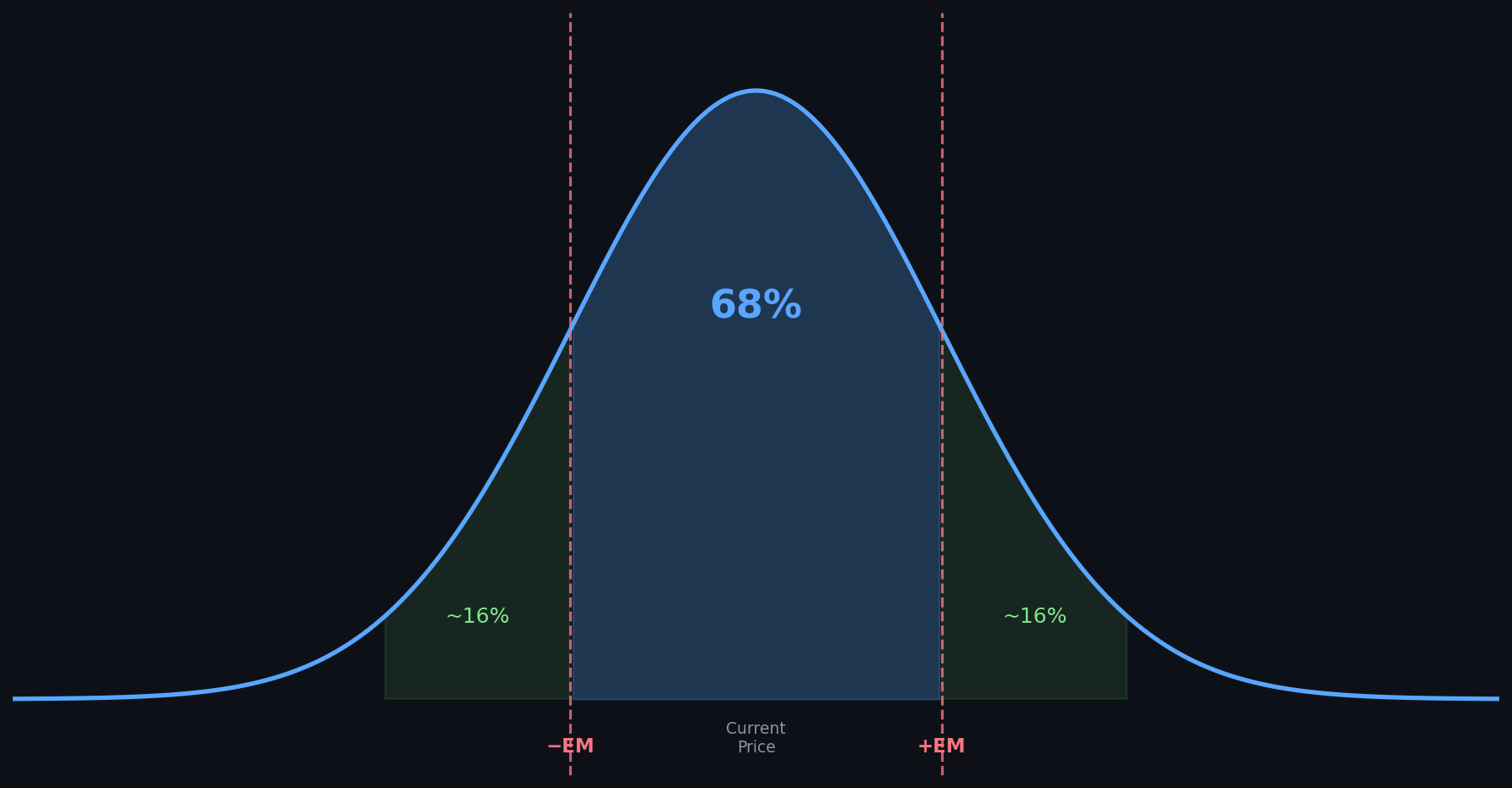
The Two Engines: Covered Calls and Cash-Secured Puts
The first engine is the covered call. You own 100 shares, you sell a call against them, and you collect premium. If the stock stays below your strike, the call expires worthless and you keep both the shares and the income. If it rises above the strike, your shares are called away at that price — you profit up to the strike but forgo the rest.
The second engine is the cash-secured put. You sell a put on a stock you would be happy to own, holding enough cash to buy 100 shares at the strike. If the stock stays above your strike, you keep the premium as pure income. If it falls below, you buy the shares at the strike — a price you already decided was attractive — with the premium lowering your effective cost.
Notice the symmetry: covered calls generate income on stock you hold, cash-secured puts generate income on stock you want. That is why they pair so naturally.
What the Strategy Realistically Pays
This is where expectations need anchoring. Conservative premium selling on liquid, moderate-volatility stocks typically generates somewhere in the range of a few tenths of a percent to one or two percent of the position value per month, depending on how close to the money you sell and how volatile the underlying is.
That can annualise into a meaningful single-digit to low-double-digit yield on top of any dividends — but only if you avoid the blowups. Higher headline premiums always come from higher-volatility stocks or strikes closer to the money, and that extra income is compensation for real risk, not a free lunch. Premium is richest when implied volatility is elevated, which is precisely when the underlying is most likely to move against you. Anyone promising consistent double-digit monthly returns from selling options is selling something other than options.
The Wheel: Combining Both Into a Cycle
The two engines combine into a repeatable cycle known as the wheel. You sell cash-secured puts on a stock you want until you are assigned the shares. Then you sell covered calls against those shares until they are called away. Then you start selling puts again. At every stage you are collecting premium, which is the whole point.
The wheel is popular because it gives the income strategy a clear set of rules and keeps you collecting through assignment rather than panicking at it. It is not magic, though — its weakness is the same as its components: if the stock drops hard while you hold it, the premium you collected is a thin cushion against a much larger paper loss. The full mechanics, including how assignment moves you between the two stages, are covered in the wheel walkthrough.
Where the Income Comes From, and What You Give Up
The premium you collect is not free money — it is payment for two things you surrender. With covered calls, you give up upside: any gain above your strike belongs to the option buyer. With cash-secured puts, you give up flexibility: your cash is committed to potentially buying a stock that may keep falling.
The income is real, but it is structurally capped on the upside and fully exposed on the downside. That asymmetry is the single most important thing to understand. These strategies shine when a stock drifts sideways or rises gently — exactly the conditions where buy-and-hold earns little and premium selling earns steadily. They underperform badly in a sharp rally (you cap out) and lose money in a deep selloff (the premium barely dents the drop). The Options Clearing Corporation’s education tools let you plot these payoffs before you commit capital, which is worth doing until the trade-off is second nature.
Choosing Strikes, Stocks, and Timing
Three decisions drive the results:
- The stock. Only sell options on stocks you genuinely want to own (for puts) or are happy to sell (for calls). The strategy fails fastest on names you are emotionally attached to or that you secretly expect to rocket higher.
- The strike. Selling closer to the money collects more premium but raises the odds of assignment and caps upside sooner. A common starting point is around the 0.30-delta strike, which balances income against the chance of being assigned.
- The expiration. Shorter-dated options decay faster, letting you collect more often, but they demand more management and react more sharply to moves. Many income sellers favour 30-to-45-day expirations as a balance, harvesting the fastest stretch of time decay without the whipsaw of weeklies.
Risks: Assignment, Drawdowns, and Capped Upside
Three risks deserve respect. The first is assignment — being required to buy or deliver shares. This is not inherently bad if you set the trade up correctly, but it surprises sellers who never expected to actually transact. The second is drawdown: in a market crash, every short put can be assigned at once and every covered call’s premium becomes irrelevant against falling shares. The third is the opportunity cost of capped upside in a strong bull run, which feels worse the longer the rally lasts.
None of these are reasons to avoid the strategy. They are reasons to size positions so a bad month is survivable, to diversify across underlyings rather than concentrating in one name, and to keep cash in reserve. The income is sustainable only if the risk is.
Common Mistakes When Selling Stock Options for Income
Three errors recur. First, chasing the fattest premiums on volatile or speculative stocks — the income looks great right up until the underlying gaps and you are assigned deep in the red. Second, selling against shares you would hate to lose or puts on stocks you do not actually want, which turns a routine assignment into a problem. Third, treating the premium as guaranteed and ignoring the downside — the strategy can produce a string of small wins and then a single large loss that erases months of income if positions are oversized.
Avoiding these is mostly discipline: sell on quality names you are neutral-to-positive on, size conservatively, and treat every premium as compensation for a real obligation you must be willing to honour. For income sellers who prefer to focus purely on the put side, the dedicated put-writing programme covers that approach in depth.
Frequently Asked Questions
How much income can you make selling stock options?
Conservative premium selling on liquid, moderate-volatility stocks typically generates a few tenths of a percent to one or two percent of the position value per month. Higher yields are possible but always reflect higher risk, not free money.
Is selling stock options for income safe?
Covered calls and cash-secured puts are among the more conservative options strategies because neither involves naked risk. However, your capital remains fully exposed to a falling stock, so the strategy is safe only when positions are sized sensibly and run on quality underlyings.
What is the best strategy for selling options for income?
The two foundational strategies are covered calls (income on stock you own) and cash-secured puts (income on stock you want to own). Combined into the wheel, they form a repeatable income cycle that keeps you collecting premium through assignment.
What happens if I get assigned?
With a cash-secured put, you buy 100 shares at the strike using your reserved cash. With a covered call, your 100 shares are sold at the strike. In both cases you keep the premium, and assignment is only a problem if you were not genuinely willing to transact at that price.
How much money do I need to start selling stock options for income?
Because covered calls require 100 shares and cash-secured puts require enough cash to buy 100 shares, the practical minimum depends on the stock’s price. On a $30 stock that is roughly $3,000 per contract; on higher-priced names it can be far more, which is why many beginners start with lower-priced quality stocks or ETFs.
The Bottom Line
Selling stock options for income is a two-sided strategy: covered calls turn shares you own into a yield, and cash-secured puts pay you to wait for shares you want. Combined, they produce steady cash flow in the flat and gently rising markets where buy-and-hold stalls. The catch is permanent — capped upside and full downside exposure — so the income is only as durable as your discipline around stock selection and position sizing. Treat each premium as payment for a real obligation, size so a bad month cannot wreck you, and the strategy becomes one of the most reliable ways to make an equity portfolio work harder. Want to see how disciplined traders structure income trades on real positions? FatTail teaches the structural approach through live sessions and a serious options community.
FATTAIL BRIEFINGS
Get FatTail briefings in your inbox
Pick the lists you want. FOMC Alerts is selected by default.