


The call vs put option distinction is where every options trader starts — and where most of them stop learning. A call gives you the right to buy. A put gives you the right to sell. That definition fits on a flashcard. It also tells you almost nothing about how these instruments behave in a live market, how they interact with the Greeks, or why one side of the chain consistently costs more than the other.
Most options education treats calls and puts as mirror images. They are not. The structural dynamics behind each — dealer positioning, skew pricing, institutional flow — create asymmetries that affect every trade you place. This guide breaks down the call vs put option relationship from the structural angle that matters: how each instrument actually behaves, what drives its price, and when each one gives you an edge.
Call vs Put Option: The Basic Structure
A call option gives the buyer the right to purchase the underlying at the strike price before expiration. A put option gives the buyer the right to sell the underlying at the strike price before expiration. The seller of each contract takes the opposite obligation.
The payoff profiles are straightforward. A long call profits when the underlying rises above the strike price plus the premium paid. A long put profits when the underlying drops below the strike price minus the premium paid. Both have defined risk — the maximum loss is the premium paid. Both have asymmetric upside — the potential profit exceeds the cost of entry.
However, this symmetry exists only on paper. In practice, the call vs put option dynamic is shaped by forces that make puts structurally more expensive, more actively traded, and more sensitive to market regime. Understanding these differences separates traders who understand the instrument from traders who merely know the definition.
Why Puts Cost More Than Calls
At equidistant strikes from the current price, out-of-the-money puts carry higher implied volatility than out-of-the-money calls. This is options skew — and it fundamentally changes the call vs put equation.
Three forces drive this asymmetry. First, institutional hedging demand. Portfolio managers buy puts as insurance against drawdowns. This demand is persistent and largely price-insensitive. Consequently, OTM put premiums stay permanently inflated.
Second, crash risk asymmetry. Markets drop faster than they rise. A 5% decline can happen in a single session. A 5% rally typically takes weeks. As a result, the tail risk embedded in puts is structurally larger than in calls.
Third, dealer positioning. Market makers who sell puts to institutional hedgers carry negative gamma at lower strikes. They charge higher IV on those puts to compensate for the risk of having to hedge in a falling market — the exact scenario where their losses accelerate.
For traders, this means buying puts is structurally expensive and buying calls is structurally cheap. Every directional trade must account for this premium differential. A bearish thesis expressed through long puts faces a headwind that a bullish thesis expressed through long calls does not.
How the Greeks Differ Between Calls and Puts
The Greeks do not affect calls and puts identically. Understanding the differences is essential for managing positions.
Delta. Call delta ranges from 0 to +1. Put delta ranges from 0 to -1. At-the-money options have approximately +0.50 (calls) or -0.50 (puts) delta. The important nuance is that delta also represents the approximate probability of finishing in the money. A 0.30 delta call has roughly a 30% chance of expiring ITM. A -0.30 delta put has the same probability on the downside.
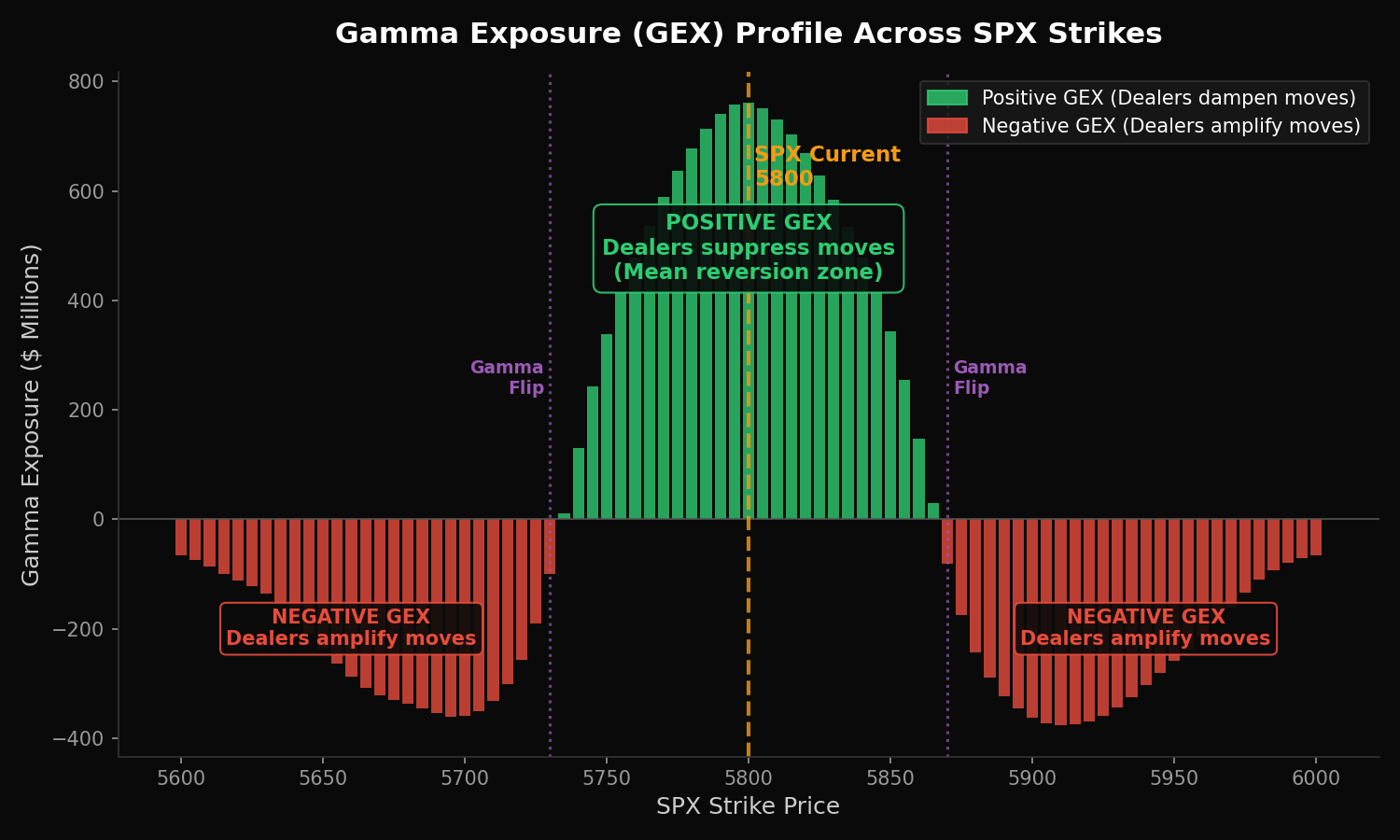
Gamma. Gamma is identical for calls and puts at the same strike and expiration. Both accelerate at the same rate as the underlying moves. In practice, this means gamma exposure affects both sides equally — but the dealer positioning that results from call vs put flow creates different market dynamics on each side.
Theta. Theta decay is also identical for calls and puts at the same strike. Both lose the same amount of time value per day. The practical difference is that put theta is often higher in absolute terms because puts carry more extrinsic value due to skew.
Vega. Vega is equal for calls and puts at the same strike. Both gain or lose the same amount from a 1-point change in implied volatility. However, because puts sit on the steeper part of the skew curve, their IV is higher — meaning a percentage change in IV produces a larger dollar impact on puts than on equidistant calls.
When to Use Calls vs Puts
The choice between a call vs put option is not simply bullish vs bearish. The structural context determines which instrument offers better risk-reward in each environment.
Bullish thesis in positive GEX. In a positive gamma exposure environment, dealer hedging dampens downside moves. Calls benefit from the structural floor beneath the market. Furthermore, calls are cheaper than puts due to skew — you get more directional exposure per dollar of premium. This is the most favorable environment for long calls.
Bearish thesis in negative GEX. In a negative gamma environment, dealer hedging amplifies downside moves. Puts are expensive because of skew, but the directional edge is genuine — when negative gamma fuels a decline, the move often exceeds the expected move. The elevated put cost is offset by the structural support for the thesis.
Range-bound environments. When neither calls nor puts offer a clear directional edge, structural traders shift to defined-risk structures — butterflies for convergence targets or credit spreads for premium collection. Both use calls and puts as building blocks rather than standalone directional bets.
Earnings and catalysts. Before known events, both calls and puts are inflated by elevated IV. The IV crush after earnings erodes both sides equally in percentage terms, but puts lose more in dollar terms because they started with higher IV. Directional earnings bets with long options require the move to exceed the expected move — regardless of whether you use calls or puts.
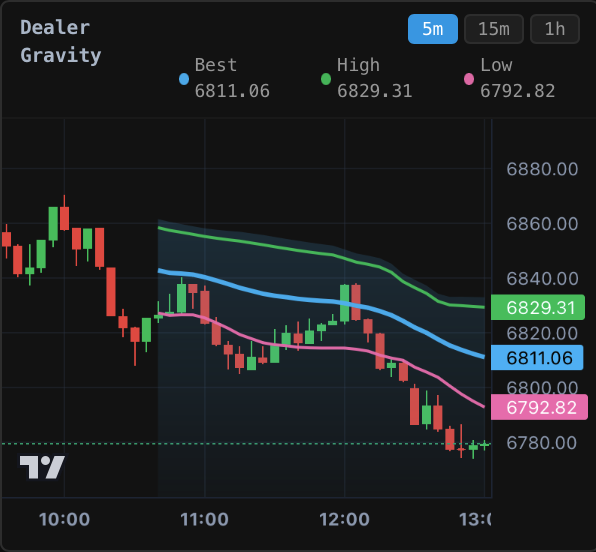
The daily pre-market analysis in Observer ($17/week) delivers the context that determines whether calls or puts have structural support — GEX profile, VIX regime, expected move, and dealer gravity levels. Activator ($97/month) adds real-time tools and weekly coaching. Navigator ($267/month) provides daily direct coaching with Ernie. Compare all plans here.
Call vs Put Option in Spread Structures
Most professional options trading uses calls and puts as components of multi-leg structures rather than standalone positions. The call vs put option choice within a spread depends on the structure and the market regime.
Iron condors use both. The call side (bear call spread) and the put side (bull put spread) each collect credit. Due to skew, the put side typically collects less credit for the same width. Structural traders recognize that the two sides carry different risk profiles — the put side faces steeper skew and negative gamma amplification in selloffs.
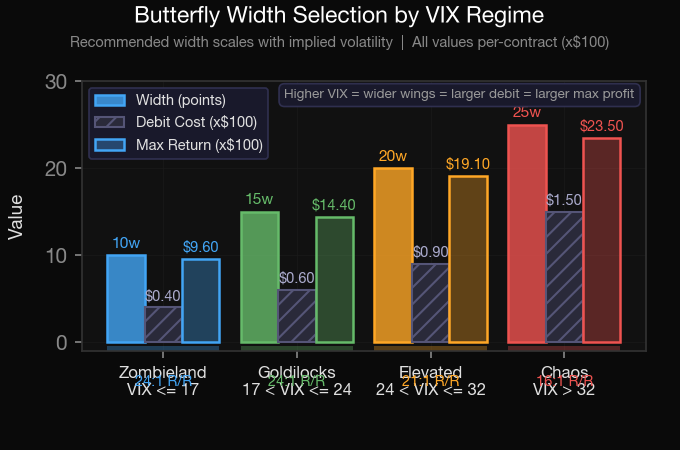
Butterflies can be constructed with all calls, all puts, or a combination (iron butterfly). The choice affects the cost due to skew. Put butterflies placed below the market benefit from skew pricing — the wings are cheaper relative to the body. Call butterflies above the market face the opposite dynamic.
Vertical spreads. A bull put spread and a bear call spread are both credit structures, but they sit on different sides of the skew curve. The put spread is compressed by skew (less credit). The call spread is expanded by skew (more credit). This asymmetry matters when selecting which side to deploy.
The Bottom Line
The call vs put option distinction goes far deeper than “bullish vs bearish.” Calls and puts are priced differently, behave differently in extreme moves, and respond differently to the Greek variables that drive options pricing. Treating them as mirror images leads to overpaying for puts, underestimating the value of calls, and misreading the premium landscape that defines every trade.
Structural traders choose between calls and puts based on the environment — GEX regime, VIX level, skew steepness, and order flow direction. The call vs put option decision is the last one, not the first. The environment tells you which side of the options chain has the structural edge. Everything else is a coin flip.
That structural read starts with Observer ($17/week): daily GEX profiles, gravity levels, expected move, and VIX context. Activator ($97/month) adds real-time tools and weekly coaching. Navigator ($267/month) provides daily direct coaching with Ernie. Compare all plans here.
Frequently Asked Questions
What is the difference between a call and a put option?
A call option gives the buyer the right to purchase the underlying at the strike price. A put option gives the buyer the right to sell the underlying at the strike price. Calls profit when the underlying rises above the break-even. Puts profit when the underlying drops below the break-even. Both have defined risk equal to the premium paid.
Why are put options more expensive than call options?
Out-of-the-money puts carry higher implied volatility than equidistant calls due to options skew. Institutional hedging demand, crash risk asymmetry, and dealer positioning all inflate put premiums. This means bearish directional trades via long puts face a structural cost disadvantage compared to bullish trades via long calls.
Should beginners trade calls or puts?
Neither in isolation. Buying naked calls or puts exposes beginners to theta decay that erodes the position daily. Defined-risk structures like vertical spreads limit the impact of time decay and remove the need to be precisely right on timing. The call vs put option choice within those structures depends on the market regime.
Can you lose more than you invest with calls and puts?
As a buyer, no. Maximum loss on a long call or long put is the premium paid. As a seller, losses can exceed the premium collected — significantly so for naked positions. Selling naked puts has theoretically unlimited risk if the underlying drops to zero. Selling naked calls has unlimited risk if the underlying rallies indefinitely.
How does the VIX affect calls and puts?
The VIX measures implied volatility across the SPX options chain. When the VIX rises, both calls and puts become more expensive because the vega component of their pricing increases. When the VIX drops, both become cheaper. However, puts are more sensitive to VIX spikes because they sit on the steeper part of the skew curve.
FATTAIL BRIEFINGS
Get FatTail briefings in your inbox
Pick the lists you want. FOMC Alerts is selected by default.