


Most options coaching fails its students before the first trade. It gives them something to follow instead of a process to run. A useful options coaching review starts there: does the program make you more dependent on someone else’s calls, or more capable of making disciplined decisions when no one is available?
That question matters most in 0DTE SPX trading. The contracts move quickly. A small lapse in sizing, structure, or exit discipline can turn an ordinary losing trade into damage that takes weeks to recover from. Good coaching cannot remove losses. It can teach you to plan them, contain them, and keep showing up with a process intact. The OCC’s options education is a good grounding in the mechanics coaching builds on.
What an Options Coaching Review Should Measure
Do not judge coaching by the number of market opinions shared in a room. Opinions are plentiful. A repeatable operating framework is not.
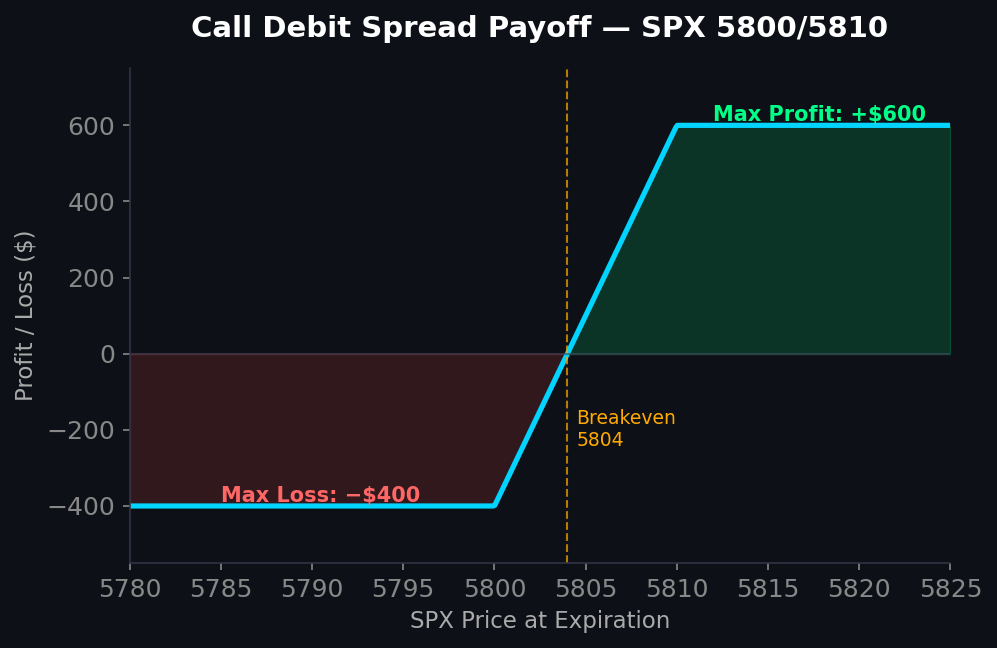
Start with risk. Does the education center defined-risk structures, position sizing, and maximum planned loss? Or does it spend most of its energy finding the next supposedly obvious direction? If a program treats losses as evidence that you failed to predict correctly, it trains the wrong reflex. Markets do not owe anyone confirmation. A professional process assumes some trades will fail and makes sure those failures are survivable.
Next, look for a clear explanation of trade construction. You should understand why a structure fits a particular market condition, where the risk sits, what would invalidate the premise, and how the position behaves as time and price change. “Sell this now” is not education. It is outsourced judgment.
Then ask whether the coach teaches positioning rather than prediction. Index options are shaped by more than a bullish or bearish view. Dealer positioning, key strikes, expected movement, liquidity, and time remaining can all affect the conditions around a trade. No tool makes the future certain. But a good framework helps you identify where risk may be better defined and where the market is asking you to guess.
Finally, assess whether the program creates accountability. You need a way to record trades, review decisions, and separate a sound process from a lucky outcome. Without that loop, traders tend to remember the exciting wins, rationalize oversized losses, and repeat the same errors under a different market label.

The Difference Between Coaching and Alerts
Alerts create a tempting illusion: someone else has already done the hard part. This is the crux of signals vs coaching. You see an entry, copy it, and wait for the result. It feels efficient until conditions change, the alert arrives late, you size differently, or the person issuing it is unavailable.
Coaching should work differently. The live trade may be useful, but it is not the product. The product is the reasoning around it. Why was that risk level selected? Why was a trade passed on? Why was a planned loss accepted instead of adjusted into a larger one? Those are the decisions that build a trader who needs no one.
This distinction is especially important for traders who have spent years moving from chat room to chat room. A service can look impressive while quietly teaching dependence. If you cannot explain a position in your own words, identify its maximum risk, and state the condition that would keep you out, you are not running a system. You are borrowing conviction.
That does not mean every coaching environment must be solitary. Live sessions can accelerate learning because you see market conditions unfold in real time rather than only in polished examples. The test is whether the coach uses that access to explain the process, including skipped trades and planned losses, or simply broadcasts conclusions.
What Strong 0DTE Instruction Looks Like
A credible 0DTE program has to respect the speed of the product. Broad options concepts matter, but they are not enough when expiration is measured in hours. Traders need a routine that is simple enough to execute under pressure and detailed enough to prevent improvisation.
Look for instruction that connects preparation, execution, and review. Preparation should establish the day’s relevant structural levels, expected movement, risk limits, and the conditions that would make trading inappropriate. Execution should define what a valid setup looks like, how position size is determined, and how the trade is managed. Review should ask whether you followed the plan, not merely whether the trade made money.
Purpose-built analytics can help when they clarify decisions rather than add noise. Risk graphs, trade logs, options positioning overlays, and convexity views can make abstract exposure visible. But tools are not a substitute for judgment. If the platform produces ten new signals and no better decision rules, it has added activity, not edge.
FatTail.ai approaches this through defined-risk SPX structures, live market training, and tools designed to make risk, positioning, and post-trade review concrete. The value of that model is not a promise that every session produces a trade. It is the insistence that passing is a decision too, and often the correct one.
Questions to Ask Before You Join
A sales page will rarely tell you whether a coaching room actually improves decision-making. Here is how to choose the best coaching program. Ask direct questions instead. Can you see how losses are discussed? Is there a documented approach to sizing? Are there archived lessons that explain the framework from first principles? Does the training show full context, including trades that were avoided or closed for a planned loss?
Also examine the pace. A newer options trader may need time to learn structure, order mechanics, and risk language before attempting frequent intraday decisions. An experienced trader may need less theory but more help identifying where discretion has turned into inconsistency. The right coaching format depends on your current skill, available screen time, and willingness to maintain a routine.
Be honest about what you expect from the relationship. If you want certainty, no legitimate program can provide it. Investor-protection resources from the SEC are worth reading before you pay for any trading education. If you want a daily signal that removes the need to think, coaching may frustrate you because it will keep putting the decision back in your hands. That is not a flaw. It is the point.
For smaller accounts or retirement accounts, access and trading permissions can vary by broker and account type. Verify what is available with your broker and, where relevant, your advisor before building a routine around any product or strategy. The framework still begins with the same question: can you define the risk before you enter?
The Review Standard That Actually Matters
The best options coaching review is not written immediately after a winning week. It is written after volatile conditions, a few losing reps, and enough time to see whether the process holds. Did you become calmer around planned losses? Did position sizing become less emotional? Can you explain why you took one trade and rejected another without pointing to a guru’s message?
Those are better measures than excitement. Trading education should reduce the chance that one bad decision becomes a threat to your account. It should make your actions more deliberate, your records more useful, and your relationship with uncertainty more honest.
Choose coaching that teaches you to define the loss before pursuing the opportunity. The market will always offer another opinion. A disciplined process gives you something more valuable: a way to decide what not to risk. See what serious SPX coaching looks like.
Frequently Asked Questions
What should an options coaching review measure?
Whether the program makes you more dependent on someone else’s calls or more capable of disciplined decisions when no one is available. Judge it on risk (defined-risk structures, sizing, max loss), trade construction, positioning over prediction, and whether it builds an accountability loop, not on the number of market opinions shared.
What is the difference between coaching and alerts?
Alerts create the illusion that someone else did the hard part; you copy an entry and wait. Coaching should make the reasoning the product, why a risk level was chosen, why a trade was passed, why a planned loss was accepted, so you can eventually decide without anyone.
What does strong 0DTE instruction look like?
It respects the speed of the product and connects preparation, execution, and review. Preparation sets levels, expected movement, and risk limits; execution defines a valid setup, sizing, and management; review asks whether you followed the plan, not merely whether the trade made money.
What questions should you ask before joining?
Can you see how losses are discussed, is there a documented sizing approach, are there archived lessons that teach the framework from first principles, and does the training show full context including avoided trades and planned losses? Assess whether the pace fits your skill and screen time.
How do you know if coaching is working?
Not from a winning week. Judge it after volatile conditions and a few losing reps: did you become calmer around planned losses, did sizing become less emotional, and can you explain why you took one trade and rejected another without pointing to a guru?
FATTAIL BRIEFINGS
Get FatTail briefings in your inbox
Pick the lists you want. FOMC Alerts is selected by default.