


What Selling Covered Calls Looks Like in Practice
Selling covered calls is the act of writing call options against shares you already own to collect premium income. The theory is simple — you own stock, you sell someone the right to buy it at a higher price, and you keep the premium. The practice is a week-by-week process of choosing when to sell, which strike to sell, when to roll, and when to sit out entirely.
Most guides treat selling covered calls as a single trade. It is not. It is a continuous programme that you run against a stock position for months or years. The decisions compound — a good rolling discipline over 12 months adds 3-5% more annualised return than a sloppy one. This guide covers the operational side: the recurring decisions that separate consistent income from haphazard premium collection.
Choosing When to Sell
Not every week is a good week to sell calls. The premium you collect depends on implied volatility, and IV fluctuates. Selling when IV is low means accepting thin premium for the same upside cap — a poor trade-off.
Sell when IV is above the 30th percentile. Check the stock’s IV rank or IV percentile before writing a new call. If IV is in the bottom 30% of its 52-week range, the premium is not worth the upside you surrender. Wait for a volatility expansion — a market pullback, a sector rotation, or an approaching earnings cycle — before selling the next call.
Sell after a rally, not after a decline. When the stock has just rallied 3-5%, call premiums are richer (higher IV at higher strikes) and you are selling at an elevated price. If the stock gets called away, you exit at a high point. Selling after a decline means you are locking in a low exit price and collecting thin premium — the worst combination.
Do not sell into earnings unless you accept assignment risk. Earnings inflate IV dramatically, making call premiums look irresistible. But the stock can gap 10-20% in either direction. If it gaps up, your shares are called away and you miss the move. If it gaps down, you keep the premium but hold a stock that just dropped $15. Either sell the call after earnings when IV normalises, or sell deliberately through earnings as part of an exit strategy.
The Delta and Expiration Decision
Delta selection
The delta of the call you sell determines the probability of assignment and the premium collected. The delta is your dial between income and upside preservation:
- 15-20 delta: Conservative. Low premium ($0.50-$1.50 on a $150 stock) but only 15-20% chance of assignment. Best when you want to keep the shares and treat the premium as a small bonus. Annualised income: 4-8%.
- 25-30 delta: The standard. Moderate premium ($1.50-$3.00) with 25-30% assignment probability. This is where most covered call programmes operate — enough premium to matter, enough buffer to avoid constant assignment. Annualised income: 8-14%.
- 35-45 delta: Aggressive. High premium ($2.50-$5.00) but 35-45% probability of being called away. Use only when you would happily sell the stock at the strike price. Annualised income: 14-20%, but with frequent assignment disruptions.
Expiration selection
Weekly (5-7 DTE): Higher annualised premium but requires weekly attention. You roll every week, pay commissions and bid-ask spreads each time, and cannot step away for a week without managing the position. Transaction costs eat 10-15% of gross premium on small accounts.
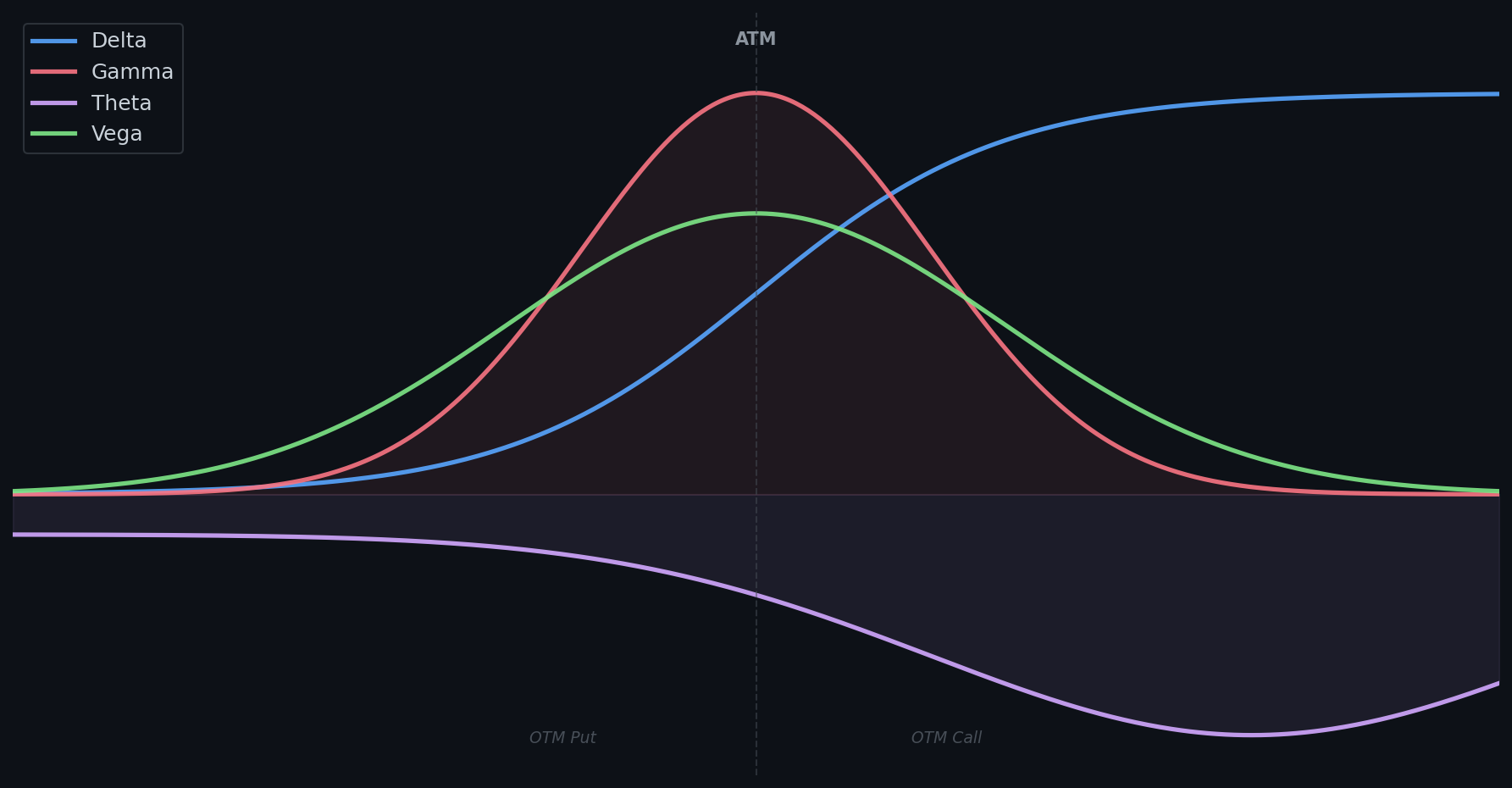
Monthly (30-45 DTE): The practical default. Theta decay accelerates in the final 30 days, so you capture the steepest portion of the decay curve. One management event per month. Premium is meaningful relative to transaction costs. This is the expiration window recommended by the CBOE BuyWrite Index (BXM) methodology.
Bi-monthly (45-60 DTE): Useful if you want to sell less frequently. Higher absolute premium per trade but lower annualised return per day held. Good for traders who manage positions monthly rather than weekly.
Week-by-Week Management
Once you sell the call, the management follows a predictable cadence:
Week 1 (entry): Sell the call at the chosen delta and expiration. Record the strike, premium collected, and the stock price at entry. Set a mental or actual alert at the strike price.
Weeks 2-3 (monitoring): If the stock stays below the strike and the call has lost 50%+ of its value, you have a decision: close early and sell a new call (resetting the premium clock), or let it ride until expiration. Closing at 50% and re-selling is generally better — it locks in profit and redeploys capital immediately rather than waiting for the remaining $0.50 to decay over two more weeks.
Final week (7 DTE): If the call is nearly worthless ($0.05-$0.15), let it expire or buy it back for the minimum. If the stock is approaching the strike, decide now: accept assignment or roll. Do not wait until expiration day to make this decision — by then, the roll mechanics are worse (wider spreads, less time premium in the next month’s options).
Post-expiration: If the call expired worthless, sell a new one. If shares were called away, decide whether to re-enter the stock position and restart the programme, or deploy the capital elsewhere. If you rolled, monitor the new position from week 1.
Rolling: The Core Skill
Rolling is buying back the current short call and simultaneously selling a new one — typically at a higher strike and/or further expiration. This is where most of the operational alpha in selling covered calls lives.
When to roll
- The call has lost 50-80% of its value with 10+ DTE remaining. Close it and sell a new one. You recapture premium faster than waiting for the last 20-50% to decay.
- The stock is approaching the strike with 5-10 DTE remaining. Roll up (higher strike) and out (further expiration) for a credit or small debit. This preserves your shares and collects additional premium.
When NOT to roll
- The stock has blown through the strike. If the stock is $5-10 above your strike, rolling up far enough to avoid assignment may cost more than the premium you collect. Accept assignment and re-enter if you want the stock back.
- The roll is for a debit. Rolling should generate a net credit or at worst break even. If the roll costs money, you are paying to delay assignment — just accept the assignment instead.
- You no longer want the stock. If your thesis has changed, let the shares get called away. The covered call is providing an exit with bonus premium.
Rolling mechanics
Execute the roll as a single spread order — “buy to close” the current call and “sell to open” the new call simultaneously. Do not leg it. The spread order ensures you get a net credit on the roll and avoids the execution risk of closing one leg and getting whipsawed before opening the other.
Selling Through Earnings
Earnings are the highest-IV, highest-premium opportunity for selling covered calls — and the most dangerous.
Option A — sell before earnings (high premium, high risk): IV expansion makes premiums 2-3× richer than normal. You collect $4-$8 instead of $1.50-$3.00. But earnings gaps can be enormous. If the stock gaps up 15%, your shares are called away at the strike and you miss the rally. If it gaps down 15%, you keep the premium but hold a stock that just cratered. Only sell through earnings if you are genuinely willing to exit at the strike price.
Option B — sell after earnings (lower premium, lower risk): Wait for the earnings announcement, let IV crush deflate option prices, then sell the call when the stock has settled. The premium is lower but the stock price reflects the new information — you are not guessing through a binary event. This is the safer approach for long-term covered call programmes.
Option C — skip the cycle entirely. Do not sell a call during the earnings month. Hold the stock without a short call through the announcement, then resume the programme after earnings. You miss one month of premium but retain full upside exposure through the event. This makes sense when you are bullish into earnings and do not want any cap on the upside.
Real Income Numbers Over 12 Months
Here is what selling covered calls actually generates in a real-world programme. These numbers assume a 30-delta call, monthly expiration, and consistent execution on a moderate-IV stock ($150, IV rank averaging 40th percentile):
- Gross monthly premium: $200-$400 per 100-share position ($15,000 stock value)
- Annual gross premium: $2,400-$4,800 (16-32% of stock value)
- Calls assigned (shares sold): 3-4 months out of 12. You re-enter each time, paying the bid-ask spread on 100 shares.
- Roll costs: $50-$150 per roll, occurring 2-3 times per year
- Transaction costs: $100-$300 annually (commissions + slippage on 12+ trades)
- Net annual income after costs: $1,800-$4,000 (12-27% of stock value)
- Realistic expectation: 10-15% annualised income. The 25%+ numbers require perfect execution and elevated IV all year.
The OCC options calculator can model these scenarios at different IV levels to set realistic expectations before you start.
The hidden cost: The income above does not account for the upside you missed on months where the stock rallied past the strike. For the full analysis of this structural trade-off, see why the income play costs more than it pays. The summary: if the stock appreciates 20% in a year, a covered call programme captures 12-15% of that appreciation (stock gains up to the strike plus premium) and misses 5-8%. Whether that trade-off is worth it depends on your outlook — bullish investors should not sell calls against positions they expect to run.
When to Stop Selling Calls
Selling covered calls is not always the right play. Recognise when to pause the programme:
The stock is breaking out. If the stock is making new highs on increasing volume with a catalyst (earnings beat, sector rotation, macro tailwind), stop selling calls. Let it run. You can resume the programme when the stock consolidates at a new level. Capping upside during a breakout is the most expensive mistake in covered call selling.
The stock is in a downtrend. If the stock is making lower lows and lower highs, the premium you collect does not justify continuing to hold a declining asset. Either exit the stock entirely or add a protective put to create a collar. Selling $1.50 calls while the stock drops $3/week is a losing proposition.
IV is extremely low. When IV is below the 15th percentile, call premiums are so thin that the income is negligible relative to the risk. A $0.30-$0.50 premium for a month of capped upside is not a trade worth making. Wait for IV to expand.
You have changed your thesis. If you no longer want to own the stock, do not sell calls against it — sell the stock. The wheel strategy assumes you want to own the underlying. If that assumption changes, the entire framework breaks down.
Example: 6-Month Covered Call Campaign on XYZ
Setup: 100 shares of XYZ at $150. 30-delta calls, monthly expiration. Target: 10-15% annualised income.
Month 1: Sell $157.50 call, 32 DTE, $2.20 premium. Stock ends at $153. Call expires worthless. Income: $220.
Month 2: Sell $160 call, 30 DTE, $2.50 premium. Stock rallies to $158 by week 3. Call down to $0.60 (76% profit). Close early and re-sell $162.50 call, 20 DTE, $1.80. Stock ends at $159. Both calls expire worthless. Income: $190 + $180 = $370.
Month 3: Earnings month. Skip selling. Stock rallies to $167 after earnings beat. No call in place — full upside captured. Income: $0. Stock gain: $800.
Month 4: Sell $172.50 call, 30 DTE, $2.80 premium (post-earnings IV still elevated). Stock settles at $170. Call expires worthless. Income: $280.
Month 5: Sell $175 call, 30 DTE, $2.30 premium. Stock rallies to $177. Roll up and out: buy back $175 call for $3.50, sell $180 call next month for $3.00. Roll cost: $0.50. Stock ends month at $176. New call still open. Income: $2.30 – $0.50 roll debit = $180 net.
Month 6: $180 call from roll. Stock at $174. Call expires worthless. Income: $300 (the $3.00 from the rolled call).
6-month totals:
- Total premium income: $1,350
- Stock appreciation (unrealised): $150 → $174 = $2,400
- Total return: $3,750 on a $15,000 position = 25.0% (50% annualised)
- Premium as % of total return: 36%
This was a good 6-month run — the stock appreciated, IV cooperated, and the skipped earnings month avoided a cap on the biggest move. Results vary. In flat or declining markets, the premium income becomes a larger percentage of (smaller) total returns.
Frequently Asked Questions
How often should you sell covered calls?
Monthly (every 30-45 days) is the practical cadence for most investors. Sell a new call each month after the previous one expires or is closed. Skip months where IV is too low (below 15th percentile) or when the stock is in a strong breakout. Active traders can sell weekly, but the additional transaction costs and management burden reduce the net income advantage over monthly selling.
What happens when your covered call gets assigned early?
Early assignment is rare and almost always occurs just before an ex-dividend date when the call is in the money. Your shares are sold at the strike price and you keep all premium collected. If you want to continue the programme, buy the shares back at the market price and sell a new call. Be aware of wash sale rules if you repurchase within 30 days at a price below your original cost basis.
Should you sell covered calls on dividend stocks?
Yes, with one caveat: if the stock goes ex-dividend while you have an in-the-money call outstanding, you risk early assignment the night before. The call buyer may exercise early to capture the dividend. To avoid this, either close or roll the call before the ex-dividend date, or accept that assignment is possible and factor the dividend into your income calculation.
Is selling covered calls worth it on a small account?
Only if you can own 100 shares of a quality stock. On a $5,000 account, you are limited to stocks under $50/share — many of which have wider bid-ask spreads and lower liquidity. A better approach for small accounts is a poor man’s covered call (PMCC), which replaces the 100 shares with a LEAPS call and requires far less capital. See the PMCC guide for details.
How do taxes work on covered call income?
Premium collected from selling covered calls is generally treated as short-term capital gains, taxed at your ordinary income rate. If the call expires worthless, the premium is a short-term gain in the year of expiration. If the shares are called away, the premium is added to the sale price of the stock, which may affect whether the stock gain is short-term or long-term depending on your holding period. Consult a tax professional for your specific situation — covered call taxation has nuances around holding periods and wash sales.
FATTAIL BRIEFINGS
Get FatTail briefings in your inbox
Pick the lists you want. FOMC Alerts is selected by default.