


How Selling Put Options for Income Actually Works
Selling put options for income means repeatedly writing cash-secured or margin-secured puts on stocks you are willing to own, collecting premium each cycle, and either keeping the premium when the put expires worthless or buying the stock at a price you chose in advance. The income is the premium. The risk is owning the stock at the strike price during a decline.
The appeal is straightforward: you get paid to wait for a stock to reach your buy price. If it never drops that far, you keep the premium. If it does drop, you buy shares at a discount to where the stock was when you sold the put — and you keep the premium on top. This is the structural logic behind selling put options for income, and it works in practice as long as you understand what you are actually trading.
This guide covers the recurring income mechanics — how to select strikes, how often to sell, what to do when assigned, and the real numbers on a 12-month put-selling programme.
The Income Mechanics: What You Collect and When
Each put you sell generates a credit that hits your account immediately. The premium amount depends on four factors:
- Strike selection (delta): A 20-delta put on a $150 stock might pay $1.00-$2.00. A 30-delta put pays $2.00-$3.50. Higher delta = more premium = higher probability of assignment.
- Implied volatility: Higher IV inflates put premiums. In a 70th-percentile IV environment, the same 20-delta put might pay $2.50-$4.00. In a 20th-percentile IV environment, it pays $0.50-$1.00. IV is the single biggest driver of income variability.
- Days to expiration: More time = more premium. A 30-DTE put pays roughly 2x what a 7-DTE put pays, but the time decay per day is steeper in the final 30 days — making monthly puts the sweet spot for income efficiency.
- Stock price level: Higher-priced stocks generate larger absolute premiums because the options control more dollar value. A $300 stock’s 20-delta put might pay $3.00 ($300/contract) versus $1.00 ($100/contract) on a $50 stock.
Realistic monthly income per position: On a single 100-share position ($15,000-$30,000 in buying power), expect $150-$400 per month in premium at normal IV levels (30th-60th percentile). That translates to 6-16% annualised on capital committed. During high-IV periods, monthly income can reach $400-$800 per position.
Strike Selection for Consistent Income
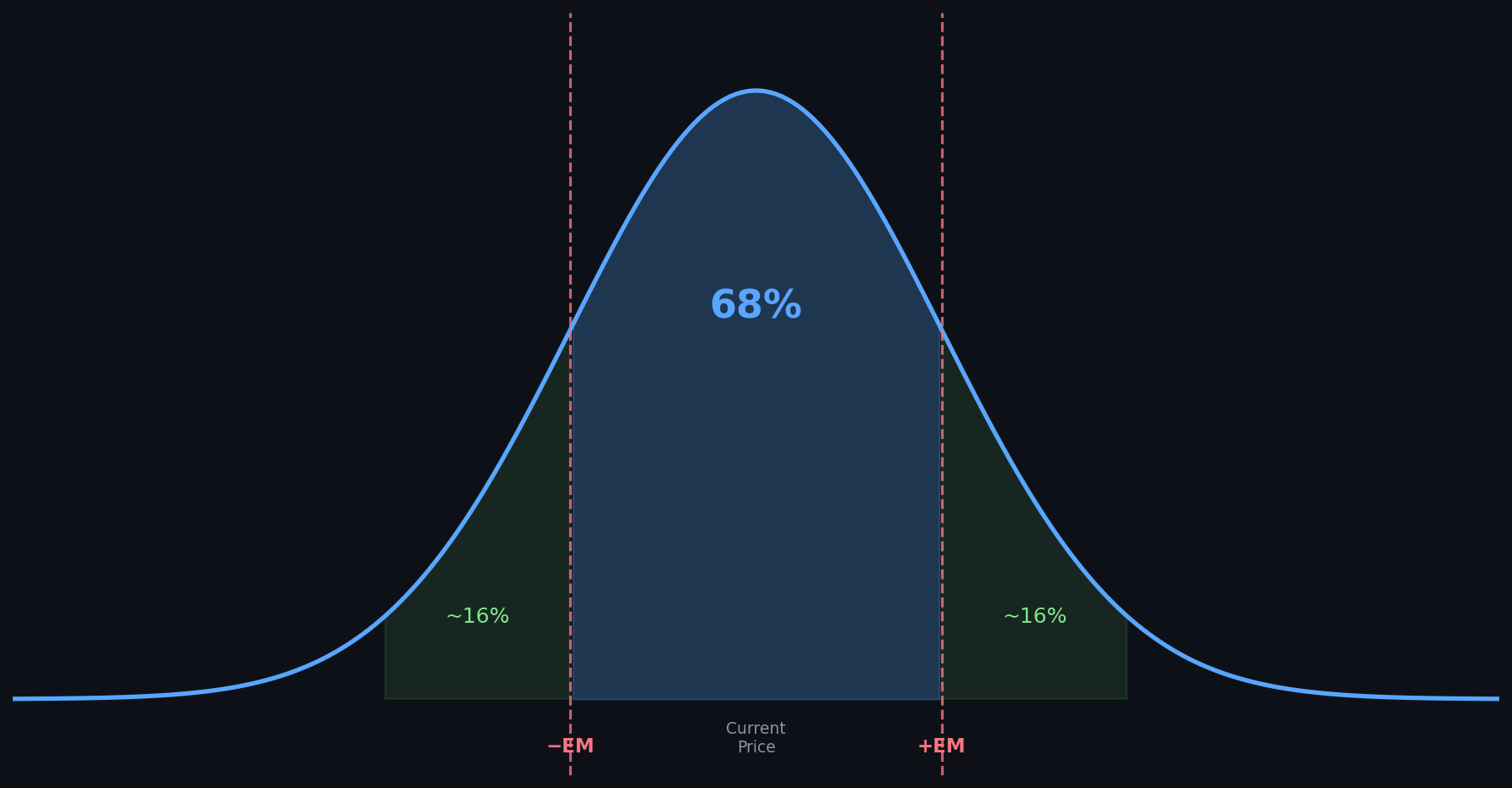
The strike you choose determines the trade-off between income and assignment frequency. There is no free lunch — more premium always means more risk of owning shares.
Conservative: 15-20 delta
Premium per month: $100-$200 on a $15,000 position. Assignment frequency: roughly 1-2 months out of 12. This is the “get paid to set a limit order” approach. You are placing the strike 5-10% below the current price and collecting a small premium for the commitment. If the stock drops 8% and you get assigned, you are buying at a 10-13% discount (the drop plus the premium). Best for blue-chip stocks you genuinely want to accumulate.
Standard: 25-30 delta
Premium per month: $200-$400 on a $15,000 position. Assignment frequency: roughly 3-4 months out of 12. This is the workhorse range for income-focused put sellers. The premium is meaningful, the assignment risk is manageable, and the math works over 12 months even accounting for the months where you take assignment. Most wheel strategy programmes operate in this range.
Aggressive: 35-45 delta
Premium per month: $350-$600 on a $15,000 position. Assignment frequency: roughly 5-6 months out of 12. You are selling near the money and will own the stock frequently. The income looks high on paper, but the constant assignment-and-repurchase cycle creates friction: transaction costs, bid-ask spread losses on share purchases, and capital tied up in stock for weeks before you can sell again. Only works if you are genuinely running a buy-and-write programme where you want to own shares.
The Monthly Cycle: Week by Week
Selling put options for income is a recurring process, not a one-time trade. Here is the monthly cadence:
Week 1 (entry): Check IV rank on your target stock. If IV is above the 30th percentile, sell a 25-30 delta put with 30-45 DTE. Record the strike, premium, and stock price. Set an alert at the strike price.
Week 2 (monitoring): If the stock has rallied and the put has lost 50%+ of its value, you have a choice. Close early and redeploy (sell a new put), or let it decay further. Closing at 50% profit and re-selling is the higher-income approach — you reset the premium clock rather than waiting for the remaining $0.50 to decay over two more weeks.
Week 3 (decision point): If the stock is approaching your strike, decide now: accept assignment or roll the put down and out. Rolling means buying back the current put and selling a new put at a lower strike and further expiration for a net credit. If the roll costs a debit, do not roll — accept the assignment.
Week 4 (expiration): If the put is nearly worthless ($0.05-$0.10), let it expire or buy it back for the minimum. If the stock is below your strike, either accept assignment and begin selling covered calls against the shares, or roll if a credit roll is available.
Post-expiration: If the put expired worthless, sell a new one. If you were assigned, begin the covered call phase of the wheel. Repeat indefinitely.
What to Do When You Get Assigned
Assignment is not a failure — it is the expected outcome roughly 25-35% of the time at the standard delta range. The stock dropped to your strike and you bought 100 shares at the price you chose.
Step 1: Assess the situation. Why did the stock drop? If it was a broad market pullback, the thesis is intact and you have shares at a discount. If it was a company-specific problem (earnings miss, guidance cut, regulatory issue), re-evaluate whether you still want to own this stock.
Step 2: Sell a covered call. If you still want the stock, sell a covered call against your new shares. This converts your put-selling programme into the wheel strategy — you collect premium on both sides of the trade. Choose a strike at or above your assignment price so that if the shares are called away, you exit at breakeven or better plus all premiums collected.
Step 3: Track your cost basis. Your effective cost basis is the strike price minus all premiums collected (from both the put sale and any subsequent covered calls). On a $140 strike assignment where you collected $2.50 in put premium and then $1.80 in covered call premium, your effective basis is $135.70 — even if the stock is currently at $137.
Step 4: Know when to exit. If the stock continues to decline and your thesis breaks, sell the shares and take the loss. Do not keep selling $0.30 covered calls while the stock drops $5/month. The premium does not justify holding a declining asset. Cut the position and redeploy to a better candidate.
Choosing the Right Stocks for Put Selling Income
Not every stock is suitable for a recurring put-selling programme. The ideal candidate has these characteristics:
- You want to own it. This is the non-negotiable filter. If you would not buy the stock at the strike price, do not sell the put. Every put sale is an agreement to buy — treat it like a purchase commitment, not a premium play.
- Adequate option liquidity. Tight bid-ask spreads on the puts (under $0.10 spread on a $2.00 option). Wide spreads eat your income. Check open interest — strikes with fewer than 500 contracts of open interest often have poor fill quality.
- Moderate to high IV. Stocks with IV rank consistently above the 30th percentile generate enough premium to justify the commitment. Low-IV stocks (utilities, consumer staples with IV rank below 20th percentile) pay so little that the income is negligible relative to the risk.
- Stock price $50-$300. Below $50, the absolute premium per contract is too small — a $0.40 premium on a $30 stock is $40/contract. Above $300, each position requires $30,000+ in buying power, which limits diversification on smaller accounts.
- No imminent binary events. Do not sell puts through earnings unless you explicitly accept the gap risk. If earnings are within the DTE of the option, either wait until after the announcement or sell a shorter-dated put that expires before the event.
Popular put-selling candidates: Large-cap tech (AAPL, MSFT, GOOGL), mega-cap ETFs (SPY, QQQ, IWM), and high-IV sector leaders. The CBOE options listings show which underlyings have the deepest option chains and tightest spreads.
Real Numbers: 12-Month Put Selling Programme
Here is what a disciplined put-selling programme generates over 12 months. Assumptions: one stock position, $15,000 in buying power committed, 25-delta puts, monthly expiration, IV averaging 40th percentile.
- Months selling puts: 9 out of 12 (skipped 3 months: 2 for low IV, 1 for earnings uncertainty)
- Average monthly premium: $250 ($2.50/share per contract)
- Gross premium collected: 9 x $250 = $2,250
- Months assigned: 3 out of 9. Held shares for an average of 4 weeks each time before being called away via covered calls
- Covered call premium (during assignment periods): $200 per assignment period x 3 = $600
- Total gross income: $2,250 + $600 = $2,850
- Transaction costs: $150 (commissions + slippage on ~20 option trades + 3 share purchases/sales)
- Net income: $2,700 on $15,000 committed = 18% annualised return from premium alone
The 18% assumes the stock is roughly flat over the year. If the stock appreciated, you also captured some upside (up to the call strike during assignment periods). If the stock declined, your income partially offset the unrealised loss but did not eliminate it.
The realistic range: 10-20% annualised income from premium is achievable with consistent execution. Above 20% requires elevated IV all year and aggressive delta selection. Below 10% typically means IV was low or the trader was too conservative on strike selection. The OCC options calculator can model different IV scenarios to set expectations before starting.
The Risks That Eat Your Income
Selling put options for income has structural risks that premium does not always compensate for:
Gap risk. The stock can drop 15-30% overnight on an earnings miss, regulatory action, or macro shock. Your $140 put on a stock that was at $155 is now deep in the money with the stock at $125. You are forced to buy at $140 — a $15/share unrealised loss that wipes out 6+ months of premium income. This is the tail risk that makes put selling a negative-skew strategy: you collect small premiums consistently but occasionally suffer large losses.
Opportunity cost. The $15,000 in buying power committed to securing your put cannot be used for anything else. If the market rallies 20% and your put expires worthless, you collected $250 in premium while missing $3,000 of stock appreciation. The premium is real income, but it comes at the cost of not being invested.
IV contraction. If you start selling puts during a high-IV period and IV normalises, your monthly income drops. A programme that generated $400/month in elevated IV might generate $150/month when IV contracts to the 20th percentile. The income is not stable — it fluctuates with market conditions.
Correlation risk. Selling puts on 5 stocks feels diversified until all 5 drop together during a market selloff. In a correlated decline, you get assigned on multiple positions simultaneously, tying up all your capital in falling stocks. Manage this by limiting total put-selling exposure to 50-60% of your account and diversifying across sectors.

When to Pause or Stop the Programme
IV is below the 15th percentile. The premium is too thin to justify the commitment. A $0.50 premium for 30 days of capital commitment on a $15,000 position is a 0.33% return for the month — not worth the assignment risk. Wait for IV to expand before selling the next put.
The stock’s fundamentals have deteriorated. If the company reported poor earnings, lost a major customer, or faces regulatory headwinds, stop selling puts. You are committing to buy a stock in decline — the premium does not compensate for catching a falling knife.
You are over-concentrated. If more than 60% of your buying power is committed to put-selling positions, stop adding. A market-wide selloff will assign you on multiple positions simultaneously, leaving no cash for better opportunities. Keep 40%+ of buying power unallocated as a buffer.
The market is in a sustained downtrend. Selling puts into a falling market means getting assigned at progressively lower prices while the stock continues to decline. The premium you collect does not offset the paper losses. During a bear market, either widen your delta to 10-15 (less premium but less assignment risk) or pause entirely until the market stabilises. A collar on existing positions is more appropriate than adding new long exposure through put assignment.
Selling Put Options for Income vs Other Income Strategies
How does put selling compare to other options income strategies?
- vs selling covered calls: Covered calls require owning 100 shares first ($15,000+ in stock). Put selling requires only the buying power to purchase shares if assigned. Put selling is more capital-efficient — you earn premium without deploying the full stock investment upfront. The risk profiles are equivalent at expiration (both have the same payoff as a covered call at the same strike).
- vs iron condors: Iron condors are defined-risk, non-directional, and require no stock commitment. Put selling is undefined-risk (stock can go to zero) and implicitly bullish. Iron condors produce lower per-trade income but never result in stock ownership. Put selling produces higher income but sometimes forces you into a stock position you need to manage.
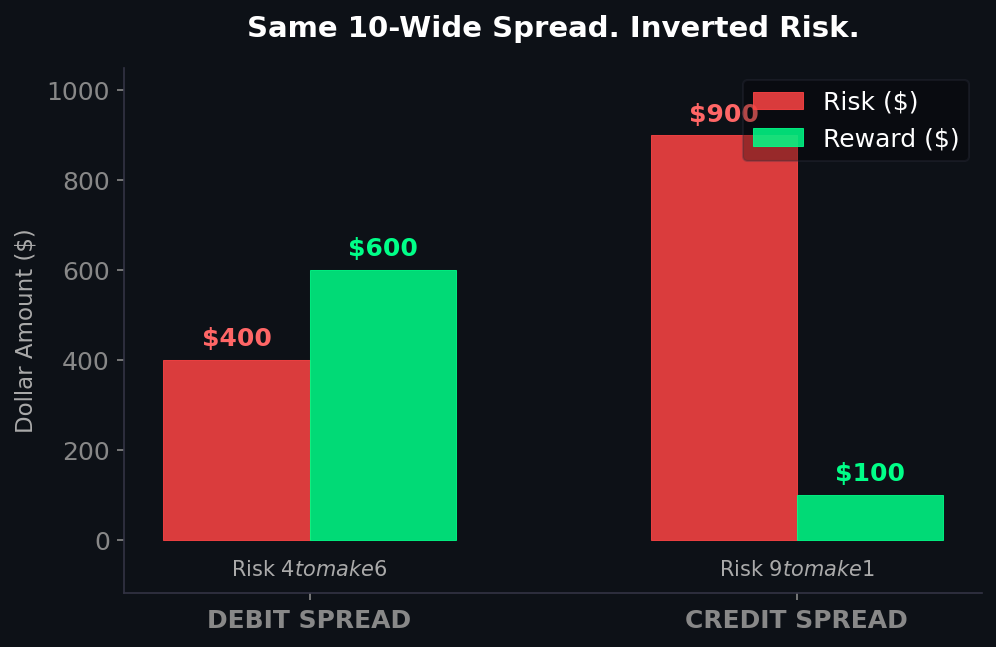
- vs credit spreads: A put credit spread caps your downside by buying a lower-strike put. You collect less premium but your maximum loss is defined. Naked put selling collects more premium but has larger potential losses. For pure income with controlled risk, credit spreads are safer. For income with the intention of stock acquisition, naked puts are more natural.
Frequently Asked Questions
How much money do you need to start selling put options for income?
You need enough buying power to purchase 100 shares at the strike price. On a $50 stock, that is $5,000 per position. On a $150 stock, $15,000. Most brokers require either the full cash (cash-secured puts) or margin (typically 20-25% of the notional value). A practical minimum is $15,000-$25,000, which allows 1-2 concurrent positions on moderate-priced stocks with a cash buffer for assignment.
Is selling put options for income safe?
It is not risk-free. You are committing to buy a stock that may decline significantly. The maximum loss on a single put sale is the strike price minus the premium (the stock goes to zero). In practice, losses are usually limited to 5-15% drawdowns during market corrections. The strategy is safest when you genuinely want to own the stock at the strike price, the stock has strong fundamentals, and you limit total exposure to 50-60% of your account.
What happens if you sell a put and the stock crashes?
You are assigned 100 shares at the strike price regardless of how far the stock has fallen. If you sold a $140 put and the stock drops to $110, you buy at $140 and hold a position with an immediate $30/share unrealised loss (minus the premium collected). Your choices are: hold the shares and sell covered calls to recover, or sell the shares and take the loss. The premium you collected reduces the loss but does not prevent it.
Should you sell puts on margin or cash-secured?
Cash-secured puts require the full strike price in cash, meaning $14,000 for a $140 put. Margin-secured puts require only 20-25% ($2,800-$3,500). Margin is more capital-efficient but amplifies losses — if assigned and the stock keeps falling, the margin loss is larger relative to the capital committed. Beginners should start cash-secured. Experienced traders can use margin to run more concurrent positions, but must size to survive a scenario where all positions are assigned simultaneously.
How often should you sell puts for income?
Monthly (every 30-45 days) is the standard cadence. Sell a new put after the previous one expires or is closed at 50%+ profit. Skip months where IV is too low (below 15th percentile) or when a binary event like earnings falls within the option’s expiration. Active traders can sell weekly, but the additional transaction costs and management burden reduce the net income advantage compared to monthly selling.
FATTAIL BRIEFINGS
Get FatTail briefings in your inbox
Pick the lists you want. FOMC Alerts is selected by default.